
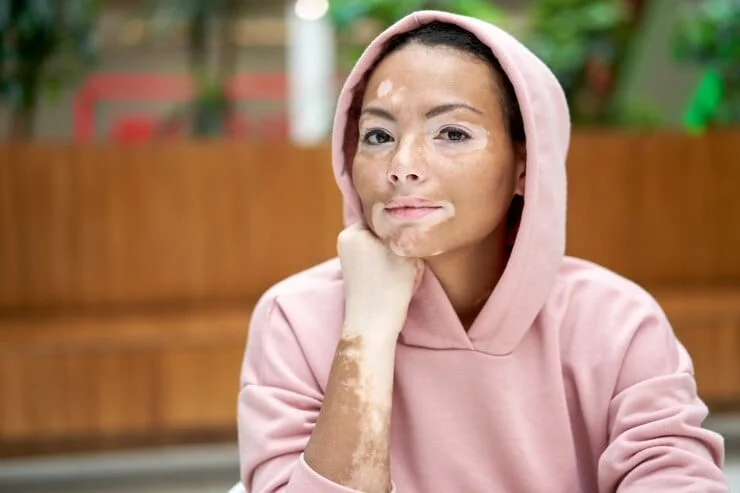
It is crucial to understand that Vitiligo is non-infectious and non-transmittable; it is a pigment disorder, not a contagious disease. Treatment focuses on restoring digestive health, purifying the blood, and using specific herbs to stimulate repigmentation.
Leucoderma or Vitiligo, is a condition characterized by the gradual loss of skin pigment. While it often begins on sun-exposed areas, it frequently appears first on bony joints or areas with lower blood circulation. It is crucial to understand that Vitiligo is non-infectious and non-transmittable; it is a pigment disorder, not a contagious disease.
Note : Leucoderma and vitiligo both cause white patches on the skin due to loss of pigment (melanin), but differ primarily in cause: Vitiligo is an autoimmune condition, while leucoderma is a broader term for any skin depigmentation, often triggered by physical trauma, burns, or chemical exposure. While vitiligo patches often spread symmetrically, trauma-induced leucoderma is typically localized.
While it affects people of all ages and genders globally, there is a higher prevalence in Asia. From an Ayurvedic perspective, the condition is rooted in an imbalance of the Pitta Dosha (specifically Bhrajak Pitta, which governs skin colour). When Pitta is aggravated, it leads to the buildup of Ama (toxins) in deep tissues like the blood, muscles, and lymph. Treatment focuses on restoring digestive health, purifying the blood, and using specific herbs to stimulate repigmentation.
Ayurveda view and Treatment of Vitiligo
In Ayurveda, vitiligo is known as Shwitra or Kilāsa, a skin condition categorized under Kushta (skin disorders) caused by an imbalance of the three doshas (Vata, Pitta, and Kapha), particularly the Pitta dosha which governs skin metabolism and pigmentation. It is viewed as an internal imbalance of the body's three doshas—Vata, Pitta, and Kapha—affecting the skin (Twak), blood (Rakta), muscles (Mamsa), and fat (Medas) tissues.
Causes
- Viruddha Ahara (Incompatible food): Consuming food combinations like fish with milk, sour fruits with dairy, or eating heavy, fermented foods.
- Psychological Factors: Prolonged stress, anxiety, or shock (chinta).
- Lifestyle Choices: Poor digestion, irregular eating habits, excessive sun exposure, and a sedentary lifestyle.
- Genetics: A family history of vitiligo can increase risk.
Ayurvedic care for Vitiligo is a holistic journey designed to address root causes rather than just surface symptoms. By focusing on internal detoxification and cellular regeneration, we aim to restore Dosha balance and stimulate natural repigmentation. At Ketav’s Ayush Health Paradise, our personalized treatment protocols typically integrate the following core pillars:
- Shodhana Chikitsa (Detoxification/Purification): These are cleansing procedures like Vamana (therapeutic emesis) and Virechana (therapeutic purgation) that help eliminate accumulated toxins (ama) and balance vitiated doshas from the body.
- Shamana Chikitsa (Pacifying Treatment): This involves internal medication to manage symptoms and restore balance.
- External Applications (Lepam): Medicated oils and pastes are applied topically to the white patches.
- Dietary Adjustments (Ahara): Strict avoidance of Viruddha Ahara (incompatible food combinations, such as dairy and fish), as well as reducing sour, spicy, and fermented foods to curb the progression of the patches.
- Soorya Pada Santhapam (Natural Phototherapy): The application of certain herbal oils followed by controlled sun exposure is recommended to stimulate melanin production.
- Lifestyle & Stress Management (Vihara): Incorporation of yoga, meditation, and pranayama to manage stress, which is a key trigger for the spread of vitiligo.
This holistic strategy nourishes skin from the inside out to spark natural repigmentation and lasting health. While the core intensive therapy typically spans 21 to 30 days, sustained results require adhering to follow-up medications and specific lifestyle and dietary guidelines to support the ongoing healing process