
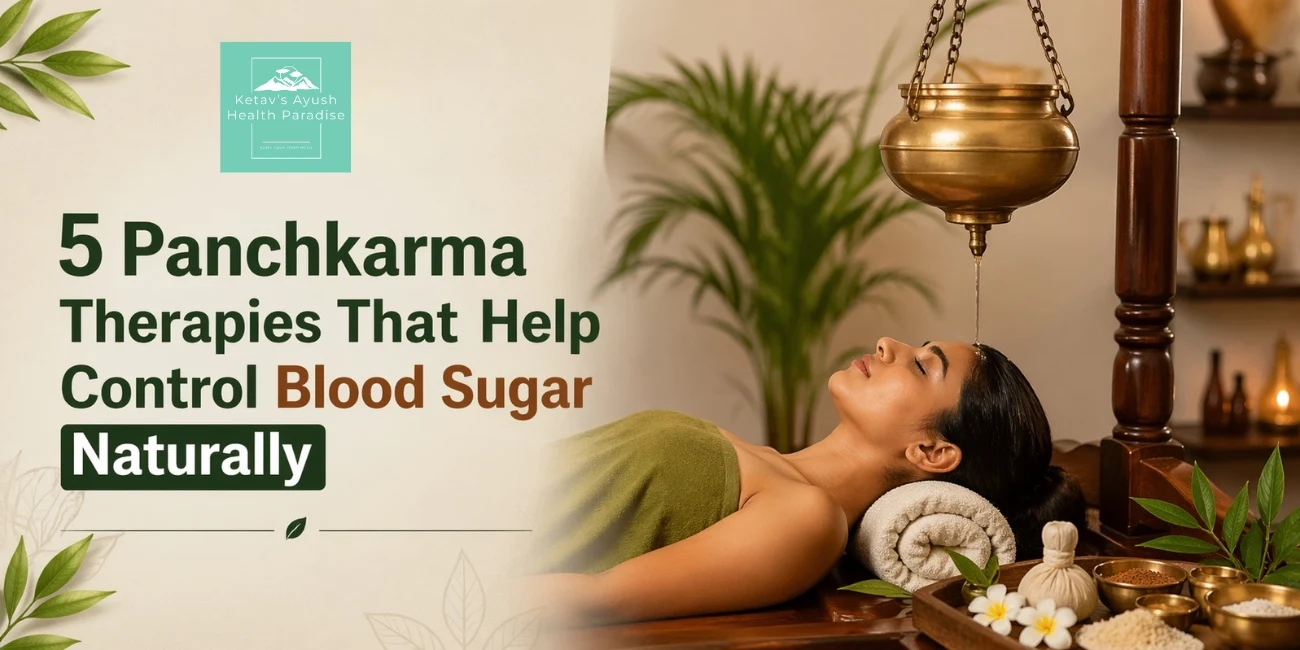
Managing blood sugar levels is a lifelong challenge for millions of people living with diabetes. While modern medicine offers pills, injections, and monitoring tools, many patients are now turning to Ayurveda — specifically Panchkarma — for a deeper, root-cause approach to metabolic health.
Managing blood sugar levels is a lifelong challenge for millions of people living with diabetes. While modern medicine offers pills, injections, and monitoring tools, many patients are now turning to Ayurveda — specifically Panchkarma — for a deeper, root-cause approach to metabolic health.
Panchkarma is one of Ayurveda's most profound healing systems. The word literally means "five actions" — referring to five classical detoxification and rejuvenation therapies designed to eliminate deep-seated toxins (Ama), restore dosha balance, and strengthen the body's natural metabolic intelligence.
At Ayush Panchkarma in the serene Himalayas of Palampur, we've helped hundreds of patients manage their blood sugar more effectively through personalized Panchkarma programs. In this blog, we explore five powerful therapies that play a key role in natural diabetes management.
Why Panchkarma for Diabetes?
Before diving into the therapies, it's important to understand what Ayurveda says about diabetes. In Ayurvedic science, diabetes (called Madhumeha) is not viewed as simply a lack of insulin. It's understood as a deep metabolic imbalance — particularly an aggravation of Kapha dosha — that weakens digestive fire (Agni), causes toxin accumulation (Ama), and blocks the body's channels (Srotas).
Panchkarma therapies work by:
- Removing toxins that impair insulin sensitivity
- Restoring Agni (digestive fire) for better glucose metabolism
- Pacifying excess Kapha that causes sluggish metabolism
- Improving circulation to peripheral tissues
- Reducing stress hormones that spike blood sugar
Now let's look at the five therapies most commonly used for diabetic patients.
1. Virechana (Therapeutic Purgation)
Virechana is considered one of the most effective Panchkarma therapies for metabolic disorders. It involves the administration of medicated herbal laxatives that systematically cleanse the liver, small intestine, and digestive tract.
How it helps in diabetes:
The liver plays a crucial role in glucose regulation — it stores glycogen and releases glucose into the bloodstream. In diabetic patients, liver function is often compromised. Virechana directly targets Pitta dosha (which governs digestion and metabolism) and clears excess Pitta-Kapha from the digestive system.
After Virechana, many patients report:
- Better digestion and appetite regulation
- More stable post-meal blood sugar levels
- Reduced inflammation in the digestive tract
- Improved liver function markers
The therapy begins with several days of internal oleation (Snehapana) — consuming medicated ghee — followed by a gentle but thorough purgation day, and then a carefully guided recovery protocol. The entire process is done under medical supervision.
2. Basti (Medicated Enema Therapy)
Basti is often referred to as the "king of Panchkarma therapies" in classical Ayurvedic texts. It involves the introduction of medicated decoctions or herbal oils into the colon through the rectum. This may sound counterintuitive, but the colon is considered the seat of Vata dosha in Ayurveda — and balancing Vata is essential for overall metabolic health.
How it helps in diabetes:
In Type 2 diabetes, poor nutrient absorption and impaired gut health are common issues. Basti therapy:
- Nourishes and cleanses the colon, improving nutrient absorption
- Pacifies Vata dosha, which governs all movement including nerve impulses
- Supports the nervous system — particularly important for diabetic neuropathy
- Helps regulate bowel function and reduces constipation (common in diabetics)
There are two main types used in diabetes management:
- Kashaya Basti: A decoction-based enema with anti-diabetic herbs
- Anuvasana Basti: An oil-based enema using medicated sesame oil, deeply nourishing for nerve tissue
A typical Basti course involves alternating these two types over several days, individually designed for each patient.
3. Abhyanga (Therapeutic Full-Body Oil Massage)
Abhyanga is a deeply therapeutic full-body oil massage using warm medicated herbal oils. While it may seem like a simple relaxation therapy, in the Ayurvedic system, Abhyanga is a powerful treatment that works on both the physical and energetic levels.
How it helps in diabetes:
Diabetic patients often experience poor circulation, peripheral neuropathy, dry skin, and general fatigue — all of which are addressed by Abhyanga.
- Improves blood circulation to the extremities (hands, feet, legs)
- Reduces peripheral neuropathy symptoms through nerve nourishment
- Pacifies Vata dosha and reduces anxiety — a major blood sugar trigger
- Opens micro-channels (Srotas) for better nutrient delivery to cells
- Promotes lymphatic drainage and toxin elimination
For diabetic patients, specific oils are chosen based on their Prakriti (constitution) and dosha imbalance. Often, Ksheerabala oil or Dhanwantaram oil is used, both known for their nerve-nourishing and Vata-balancing properties.
Abhyanga is typically followed by Swedana (steam therapy), which opens the pores and allows deeper penetration of the herbal oils.
4. Swedana (Herbal Steam Therapy)
Swedana literally means "to sweat" — it is a medicated steam therapy that follows Abhyanga as part of a complete treatment protocol. The patient sits in a steam chamber or is covered with steam from herbal decoctions while the head is kept cool.
How it helps in diabetes:
- Mobilizes deep-seated toxins from tissues into the digestive system for elimination
- Improves circulation and metabolism in peripheral tissues
- Reduces heaviness, stiffness, and fatigue — common complaints among diabetics
- Opens body channels blocked by Kapha and Ama
- Promotes weight management (a critical factor in Type 2 diabetes)
For diabetic patients, the choice of herbs used in the steam is specifically Kapha-pacifying. Common herbs include Dashamoola (a group of ten roots), Eranda (castor), and Nirgundi — all known for their anti-inflammatory and metabolic benefits.
An important precaution: Steam duration and intensity are carefully controlled for diabetic patients to avoid dehydration and hypoglycemia. This is why Panchkarma for diabetes must always be conducted under an experienced Ayurvedic physician.
5. Shirodhara (Medicated Oil Stream on Forehead)
Shirodhara is perhaps the most iconic of all Panchkarma therapies. It involves the continuous, rhythmic pouring of warm medicated oil (or medicated buttermilk, depending on the patient) in a gentle stream over the forehead — specifically over the "third eye" region.
How it helps in diabetes:
Stress is one of the most underestimated causes of elevated blood sugar. Cortisol — the stress hormone — directly raises blood glucose levels. Chronically elevated cortisol also promotes insulin resistance over time.
Shirodhara works profoundly on the nervous system:
- Deeply calms the hypothalamic-pituitary-adrenal (HPA) axis, reducing cortisol
- Brings the brainwave patterns into a deeply relaxed (alpha) state
- Reduces anxiety, insomnia, and mental fatigue — all of which worsen diabetes
- Balances Vata in the nervous system, improving nerve function
- Enhances sleep quality, which directly impacts insulin sensitivity
Many patients describe Shirodhara as a profoundly meditative experience. Regular sessions not only help blood sugar management but also improve overall mental and emotional well-being — leading to better dietary choices and lifestyle compliance.
Combining Therapies for Maximum Effect
At Ayush Panchkarma in Palampur, we never apply these therapies in isolation. A well-designed Panchkarma program for diabetes weaves together multiple therapies across a residential stay of 7 to 21 days, based on:
- Your Prakriti (Ayurvedic body constitution)
- The stage and type of diabetes (Type 1, Type 2, pre-diabetes)
- Current medications and health status
- Any existing complications (neuropathy, kidney issues, vision problems)
Throughout the program, herbal medicines, a customized Kapha-pacifying diet, specific yoga asanas for metabolic health, and pranayama breathing practices complement the Panchkarma therapies for comprehensive results.
Note: Panchkarma is a complementary approach and should always be pursued alongside regular medical monitoring. Never discontinue medications without consulting your doctor.
Ready to Explore Natural Diabetes Management?
If you or a loved one are looking for a holistic, evidence-informed Ayurvedic approach to managing diabetes, Ayush Panchkarma offers personalized residential programs in the healing environment of the Himalayas.
Our experienced Ayurvedic physicians will assess your condition and design a customized treatment plan that addresses the root causes of your blood sugar imbalance — not just the symptoms.
Book your personalized consultation today at: https://ayushpanchkarma.com/book-appointment