
Book Your Consultation Ready to experience authentic Himalayan Ayurveda? Contact Ayush Panchkarma to begin your personalized treatment journey. Located in Gopalpur, Palampur, Himachal Pradesh — in the pristine foothills of the Himalayas. Website: ayushpanchkarma.com | Email: doctor@ayushpanchkarma.com | WhatsApp: +91-8894356919
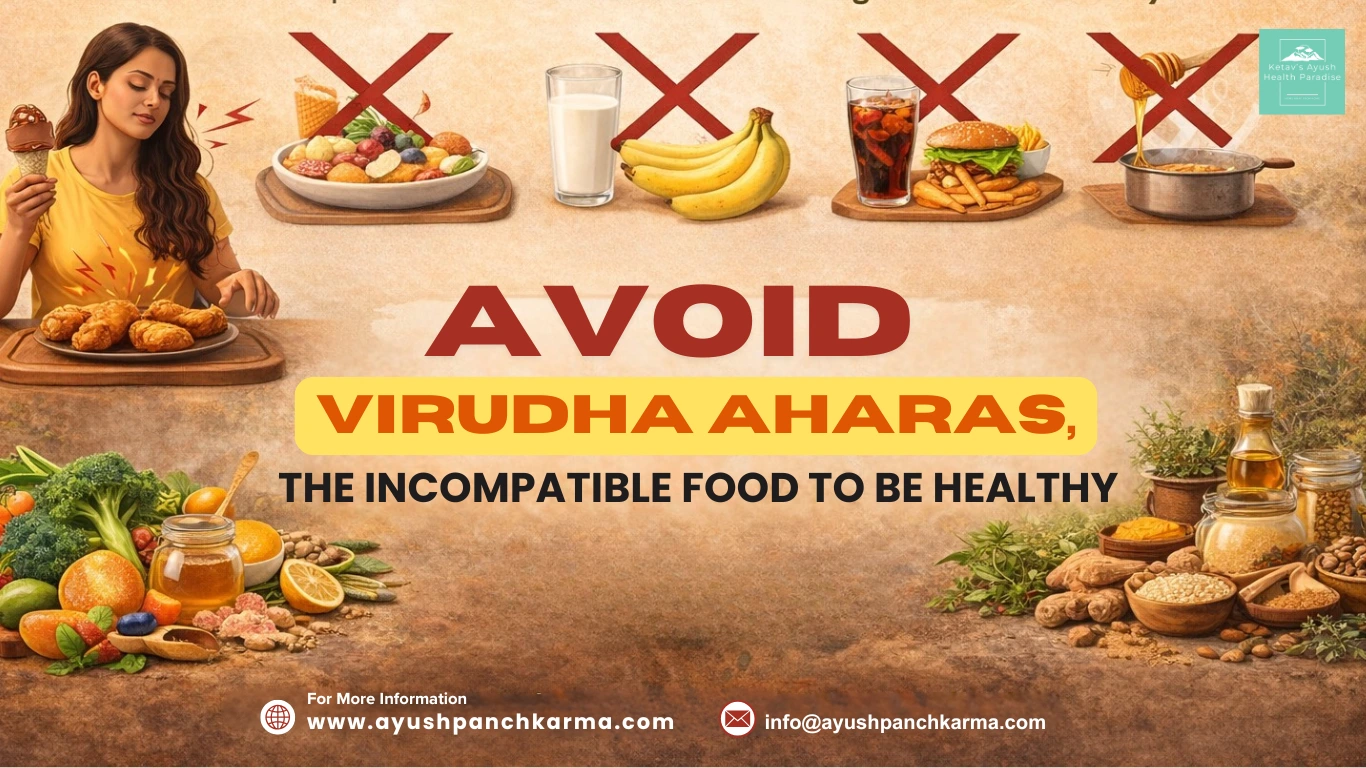
What Is Virudh Aahara? — Ayurvedic Concept of Incompatible Foods
Virudh Aahara — literally meaning 'opposing' or 'incompatible' diet — is one of the most important and clinically relevant concepts in Ayurvedic nutrition. It refers to specific food combinations, processing methods, and eating habits that, although each individual food may be perfectly safe and nutritious on its own, become harmful — even toxic — when combined or consumed in certain ways.
What we eat has a far greater impact on our health than most of us realise.
Ayurveda teaches that every food substance has its own Rasa (taste), Guna (qualities), Veerya (potency), Vipaka (post-digestive effect), and Prabhava (specific action) — and that when two foods with opposing or incompatible properties are combined, they disrupt the body's digestive intelligence (Agni), generate Ama (toxic metabolic residue), and lay the groundwork for chronic disease.
Critically, incompatibility is not just about the foods themselves — it also depends on:
• The quantity of each food in the combination
• The method of preparation and cooking
• The season, time of day, and geographical location
• The individual's Prakriti (body constitution) and strength of Agni (digestive fire)
• The person's age, health status, and habitual dietary patterns (Satmya)
The consequences of regularly consuming Virudh Aahara range from minor digestive discomfort all the way to chronic inflammatory diseases, skin disorders, autoimmune conditions, and — in severe cases — life-threatening systemic illness.
For a deeper understanding of how incompatible foods cause disease, explore our Ayurvedic health resources.
14 Common Incompatible Food Combinations You Must Avoid
These are the most prevalent Virudh Aahara (food incompatibilities) that are unknowingly consumed in daily life — many of them even celebrated as delicious combinations — and how they damage your health over time.
1. Fruit Eaten After a Full Meal
Eating fruit as dessert after a cooked meal is one of the most widespread dietary mistakes in modern life. Fruit contains simple sugars that require minimal digestion and naturally pass through the stomach quickly.
However, heavier foods rich in proteins, fats, and starches (which form the bulk of a meal) require prolonged stomach residence — often 3–4 hours — for complete digestion.
When fruit is eaten on top of a meal, the fruit sugars are trapped in the stomach alongside fermenting food. The result: fermentation, acidity, bloating, gas, and indigestion. Over time, this persistent fermentation produces Ama and weakens the digestive fire.
✅ Healthy Alternative
Eat fruit on an empty stomach — ideally 30 minutes before a meal, or as a standalone snack between meals at least 2 hours after eating. Fruits digest best alone.
2. Drinking Liquids With or Immediately After Meals
When cold or room-temperature liquids are consumed with food, they pass rapidly into the intestines, carrying away the digestive enzymes and diluting the hydrochloric acid needed for protein breakdown. This significantly impairs the efficiency of digestion — exactly as if you extinguished a cooking fire by pouring water on it.
Ayurveda recommends: drink warm water 10–15 minutes before eating. Avoid cold beverages during and immediately after meals. If needed, small sips of warm water during the meal are acceptable and can actually aid digestion. Larger quantities of liquid should be consumed 30–60 minutes after eating.
3. Banana and Milk (Your Favourite Milkshake!)
Banana milkshake is beloved across India — but Ayurveda classifies this combination as one of the heaviest and most Ama-generating food combinations.
Bananas are sour in their post-digestive effect (despite tasting sweet) while milk is sweet — these opposing Vipakas (post-digestive properties) clash in the stomach, impair digestion, produce Ama, cause heaviness, slow mental clarity, and over time can contribute to sinus congestion, allergies, and sluggish metabolism.
✅ Healthier Milkshake Tips
If you love milkshakes, follow these rules: (1) Never combine sour fruits (mango, strawberry, pineapple) with milk.
(2) Use only fully ripened sweet fruit with milk. (3) Always add digestive spices — cardamom, cinnamon, or a pinch of dry ginger — to counteract the heaviness and stimulate Agni.
4. Cold or Iced Drinks With Meals
Cold beverages — iced water, cold sodas, chilled juices — consumed during or after meals are directly antagonistic to the digestive fire (Agni).
Just as ice extinguishes fire, cold liquids suppress Jatharagni (the main digestive fire), impair enzyme activity, cause food to congeal rather than digest, and produce Ama. Long-term consequences include: chronic indigestion, food allergies, recurrent colds, malnourishment despite adequate food intake, and a progressively weakened immune system.
5. Eating Leftover or Reheated Food
Freshly cooked food is rich in Prana (vital life energy), optimal nutritional content, and digestive-friendly qualities. The moment food is cooked, its qualities begin to degrade. By the time food becomes a leftover — especially if more than 12–24 hours old — its Prana is diminished, its qualities have shifted toward heaviness and dullness (Tamasic), and it becomes significantly more taxing on the digestive system.
Reheating food — especially in a microwave — further alters its molecular structure. While cooking fresh food every single meal may not be practical, aim to avoid food cooked more than 24 hours prior, and never combine fresh food with leftovers in the same meal.
6. Milk and Meat Together
This is a textbook Virudh Aahara (incompatible food combination). Milk is cooling, sweet, and building (Snigdha) in nature. Meat is heating, heavy, and stimulating (Ushna) in nature. Their opposing Veeryas (potencies) directly counteract each other in the digestive tract, severely disturb Agni (digestive fire), and produce significant quantities of Ama. Common manifestations include: heaviness, lethargy, sluggish digestion, skin eruptions, and over years — inflammatory conditions.
7. Milk and Melon
Both milk and melon are cooling foods — but here the incompatibility is functional, not temperature-based. Milk is laxative while melon is diuretic — these opposing actions create conflicting signals in the gut. Additionally, milk requires a longer digestion time than melon, and the hydrochloric acid produced during melon digestion causes milk to curdle prematurely in the stomach, creating a difficult-to-digest coagulated mass. This principle extends broadly: Ayurveda advises against combining milk with any sour fruit, yogurt, sour cream, cheese, or fish.
8. Animal Protein and Heavy Carbohydrates Together
Combining concentrated animal proteins (meat, eggs, fish) with heavy starchy carbohydrates (bread, potatoes, rice, pasta) creates a digestive conflict. Proteins require an acidic stomach environment for digestion (stimulated by pepsin and HCl), while carbohydrates require an alkaline environment (stimulated by salivary and pancreatic amylase).
When eaten together, these opposing digestive requirements neutralise each other's efficiency — resulting in proteins putrefying and carbohydrates fermenting simultaneously. The consequence: gas, flatulence, bloating, and over time, a chronically congested digestive system. Try to build meals around one major macronutrient.
9. Milk in Tea or Coffee (Green Tea / Black Tea + Milk)
Tea — especially green tea and black tea — contains powerful antioxidant compounds called catechins and flavonoids that are strongly cardioprotective and anti-inflammatory. However, adding milk introduces casein proteins that bind to and neutralise these catechins, significantly reducing or eliminating tea's health benefits.
From an Ayurvedic perspective, milk and tea also have opposing properties that can generate Ama in sensitive individuals. For maximum health benefits from tea: drink it plain, or with a slice of lemon or a dash of ginger.
10. Tomatoes With Dairy and Starchy Carbohydrates (Pasta, Pizza)
Tomatoes are highly acidic foods (due to their high citric and malic acid content). When combined with dairy (cheese, cream) and carbohydrates (pasta, bread, pizza dough), the acidity of tomatoes inhibits the alkaline enzymes needed to digest starches, while the dairy proteins curdle in the acidic environment. The result is a heavy, poorly-digested meal that leaves you tired and sluggish — because your body is expending enormous metabolic energy attempting to process these incompatible elements simultaneously. This is why post-pasta fatigue is so common.
11. Cooking or Heating Honey
This is one of the most critical and uniquely Ayurvedic warnings about food processing. Honey, when heated above 40°C (104°F) or cooked, undergoes molecular changes that make it toxic (Ama-karana) in Ayurveda. Modern food science partially supports this — heating honey destroys its enzymes, antioxidants, and antimicrobial properties, and can generate hydroxymethylfurfural (HMF), a potentially harmful compound.
In Ayurveda, heated honey is said to produce sticky molecules that adhere to the mucous membranes lining the digestive channels (Srotas), progressively blocking these channels and preventing adequate nutrition from reaching the deeper tissues. The result: toxin accumulation in tissues (Ama), impaired immunity, and chronic disease.
⚠️ Never Heat Honey
Do not add honey to hot tea, boiling milk, or baked goods. Always add honey to warm (not hot) drinks. Never cook with honey at high temperatures. Use jaggery (Gur) or Mishri (rock sugar) in recipes that require cooking.
12. Milk After Radish, Garlic, Tulsi (Holy Basil), or Moringa
Milk is an extremely pure and potent Sattvic (pure/balancing) food in Ayurveda — but it conflicts with several otherwise highly medicinal foods. Consuming cold milk immediately after eating radish, garlic, Tulsi (Holy Basil), or Moringa (Drumstick) can disturb the skin-supporting Rakta (blood) and Rasa Dhatu and has been classically associated with skin disorders and aggravation of inflammatory skin conditions. Note: while garlic and milk are combined in certain Ayurvedic medicinal preparations (after specific processing), cold, unprocessed milk consumed immediately after these foods is considered incompatible.
13. Fish and Radish
Fish and radish are cited as a classic Ayurvedic food incompatibility (Samana Guna Viruddha — incompatibility due to similar qualities that, when combined, excessively amplify a particular Dosha). Both fish and radish have heating, stimulating properties that, when combined, create an extreme Pitta-Rakta vitiation (excess heat and blood inflammation) far beyond what either food causes alone. This combination is specifically linked to skin diseases, inflammatory conditions, and blood disorders. Be mindful of the salad accompanying your fish dishes.
14. Equal Quantities of Ghee and Honey
This is perhaps the most classically cited food incompatibility (Matra Viruddha — quantity incompatibility) in Ayurvedic texts. Ghee is cooling; honey is heating. Consumed in equal quantities by weight, these opposing potencies produce a toxic combination (Visha) described in the classics. However — in a 2:1 ratio (two parts ghee to one part honey by weight) — the combination is not only safe but therapeutically valuable and is used in many Ayurvedic formulations. This exemplifies the principle of Prabhava (the specific, unexplainable action of a substance) — where exact quantities transform a toxic combination into a medicine.
Incompatible Food Combinations — Quick Reference Table
Use this table as a practical daily reference for avoiding common Virudh Aahara food pairings:
Incompatible Combination Ayurvedic & Physiological Consequence
Fruit + Cooked Meal Fruit ferments alongside undigested food → acidity, bloating, Ama
Cold drinks + Meals Suppresses Jatharagni (digestive fire) → indigestion, Ama, weak immunity
Banana + Milk Opposing Vipakas → Ama, heaviness, congestion, clouded mind
Milk + Meat Opposing Veeryas (heating vs cooling) → severe Agni disturbance, Ama
Milk + Melon Opposing gut actions (laxative vs diuretic) → curdling, indigestion
Milk + Sour Fruits Acid curdles milk → congestion, skin issues, Ama
Fish + Milk / Dairy Classic incompatibility → skin diseases, Pitta-Rakta vitiation
Fish + Radish Both heating → extreme Dosha amplification → skin and blood disorders
Heated Honey Becomes toxic (Ama-karana) → blocks channels, impairs immunity
Tea + Milk Casein neutralises beneficial catechins → no antioxidant benefit
Animal Protein + Heavy Carbs Opposing digestive environments → putrefaction + fermentation → gas
Tomato + Dairy + Carbs (Pasta/Pizza) Acid inhibits starch digestion → fatigue, heaviness, poor absorption
Ghee + Honey (equal weight) Opposing potencies → toxic combination (use 2:1 ratio only)
Milk after Garlic/Tulsi/Radish/Moringa Disturbs Rakta Dhatu → skin disorders, inflammatory reactions
Fresh food + Leftovers (same meal) Mismatched digestive properties → incomplete digestion, Ama
Factors That Reduce the Harmful Effects of Incompatible Food
Ayurveda is fundamentally an individualised science. It acknowledges that not everyone is equally affected by the same food incompatibility. Several factors can significantly reduce — though not eliminate — the damage caused by Virudh Aahara:
1. Strong Digestive Fire (Tikshna Agni)
A robust, well-functioning digestive fire is the body's most powerful defence against incompatible foods. Individuals who exercise regularly, have naturally strong digestion, are young, or are in good general health can process mild food incompatibilities with relatively less damage. However, even a strong Agni cannot indefinitely neutralise repeated exposure to severe incompatibilities.
2. Cooking Foods Together (Samskarana)
When incompatible ingredients are cooked together from the beginning (rather than combined on the plate), their qualities blend during the cooking process and partially neutralise each other's opposing nature. This is why certain Indian recipes that combine seemingly incompatible ingredients are less harmful when slow-cooked together versus when combined raw or at the last moment.
3. Spices and Herbs as Digestive Corrections (Anupana)
This is the genius of traditional Ayurvedic cooking. Spices and herbs — ginger, cumin, coriander, asafoetida (Hing), turmeric, cardamom, black pepper, cinnamon — are strategically added not merely for flavour but to neutralise the incompatible properties of food combinations and to stimulate Agni.
For example: cooling coriander and cumin added to spicy chilli offset the excess heat. Cardamom and dry ginger in banana-based recipes partially counteract the heaviness and Ama-forming tendency.
4. Appropriate Quantities (Matra Viruddha)
Different quantities of incompatible foods can dramatically change the outcome. The most famous example: equal quantities of ghee and honey are toxic, but a 2:1 ratio (ghee:honey) is safe and medicinal. Consuming very small amounts of an incompatible combination reduces — but does not eliminate — its negative effect.
5. Adaptation Through Long Habit (Satmya)
If a person has consumed a specific food combination throughout their entire life, their body may develop a degree of physiological adaptation (Satmya) to it. This explains why some individuals seem unaffected by combinations that cause problems in others.
However, Satmya does not make an incompatible combination safe — it merely means the damage accumulates more slowly or manifests at a systemic level rather than immediately. Eventually, Satmya reaches a threshold and systemic disease can manifest.
Diseases Caused by Long-Term Consumption of Incompatible Foods
The Ayurvedic classics describe a remarkably comprehensive list of diseases that arise from habitual Virudh Aahara consumption. Modern clinical experience confirms that many chronic conditions are rooted in years of poor dietary combinations:
- Disease / Condition Ayurvedic Mechanism
Skin Disorders Eczema, psoriasis, urticaria, spreading skin diseases (Kushtha) — from Rakta-Pitta vitiation
Digestive Disorders Chronic indigestion (Ajirna), IBS, bloating, acid dyspepsia, inflammatory bowel disease
Autoimmune Conditions Long-term Ama accumulation creates an immune dysregulation environment
Anaemia Impaired Rakta Dhatu (blood tissue) formation from chronic Agni suppression
Liver Disorders Hepatic Ama accumulation from years of incompatible, heavy food combinations
Ascites (Fluid in Abdomen) Advanced consequence of chronic liver and lymphatic dysfunction
Oedema (Swelling) Impaired Rasa Dhatu circulation from chronic digestive congestion
Fertility Issues / Sterility Ama blockage of Shukra / Artava Dhatu (reproductive tissue channels)
Mental Disorders / Anxiety Ama-induced Vata vitiation affecting the nervous system and mind (Manas)
Recurrent Fevers & Infections Weakened immune system (Ojas depletion) from chronic Ama burden
Fistula, Abscesses Deep Ama and Pitta accumulation in localised channels
Rhinitis & Sinus Congestion From banana-milk, cold drinks, and similar Kapha-increasing combinations
Foetal/Developmental Issues Maternal incompatible food intake affecting foetal Dhatu formation
Accelerated Ageing Chronic oxidative and inflammatory burden from Ama accelerates cellular ageing ⚠️ Important Guidance on Dietary Transitions
Ayurveda gives specific guidance on how to change poor eating habits: never make sudden, drastic dietary changes. Abrupt discontinuation of long-habitual foods — even unhealthy ones — causes uneasiness and destabilising symptoms in the body. Similarly, suddenly adopting very healthy practices when the body is not prepared can cause its own imbalances.
The Ayurvedic principle: gradually phase out harmful combinations and gradually introduce healthy practices — methodically, over weeks to months. This allows your digestive system and body tissues to adapt healthily.
Ayurvedic Treatment to Reverse the Effects of Incompatible Food
If you have been consuming incompatible food combinations for years, the good news is: Ayurveda has a structured, proven three-phase treatment protocol to eliminate accumulated Ama, restore digestive fire, rebalance the Doshas, and rejuvenate the affected Dhatus (tissues). At Ketav's Ayush Health Paradise, this treatment is delivered through Classical Ayurvedic Panchakarma under the guidance of experienced Vaidyas.
Phase 1 — Ama Pachana (Digesting and Neutralising Accumulated Toxins)
Before detoxification can begin, the accumulated, sticky Ama must be converted from a solid, sticky state into a more liquid, mobile form that the body's channels can transport to the digestive tract for elimination. This is achieved through:
• Specific light, Ama-pacifying herbs — Trikatu (ginger, black pepper, long pepper), Chitrak, and Vidanga are used to rekindle Jatharagni without further taxing the system
• Controlled fasting or light dietary protocols — giving the digestive system complete rest to focus on processing accumulated Ama
• Warm water therapy (Ushna Jala) — sipping warm water throughout the day liquefies Ama and supports its mobilisation through the channels
Phase 2 — Shodhana (Panchakarma Purification)
Once Ama is mobilised, Panchakarma detoxification therapies are used to physically eliminate it from the body's deep tissues and channels. The main Shodhana therapies relevant to Virudh Aahara toxin accumulation include:
• Virechana (Therapeutic Purgation) — the primary therapy for Pitta and Rakta Dhatu vitiation from incompatible foods; uses medicated herbal purgatives to flush Ama and excess Pitta from the liver and intestines
• Basti (Medicated Enema) — the most powerful Vata-pacifying therapy; a course of medicated oil and decoction enemas clears Ama from the colon — the primary site of Vata and the source of many systemic imbalances
• Vamana (Therapeutic Emesis) — indicated specifically when excess Kapha and Ama have accumulated in the upper digestive tract and lungs, causing congestion, allergies, and skin disorders from food incompatibilities
Explore our full range of Panchakarma treatments available at Ketav's Ayush Health Paradise.
Phase 3 — Shamana and Rasayana (Rejuvenation and Restoration)
After Shodhana, the body's channels are clear and the Dhatus are ready to receive deep nourishment. Shamana (palliative treatment) addresses any remaining Dosha imbalances using targeted herbal formulations, while Rasayana (rejuvenation therapy) rebuilds the tissues that were depleted or damaged by years of Ama accumulation — restoring immunity, vitality, and metabolic health. Book a consultation with our Vaidyas to receive a personalised Rasayana protocol.
Jatharagni — The Master Key to Digestive Health
In Ayurveda, Jatharagni — the primary digestive fire seated in the stomach and small intestine — is considered the most important single factor determining health or disease. It governs all other metabolic fires in the body: the five Bhutagnis (elemental fires) and the seven Dhatvagnis (tissue-specific metabolic fires). When Jatharagni is strong and balanced, food is completely digested and transformed into pure nourishment, Ama is not produced, and the entire bodily system thrives.
Conversely, when Jatharagni is weakened — primarily through incompatible foods, irregular eating, cold foods and drinks, stress, and sedentary lifestyle — every metabolic process in the body suffers. The first sign is Ama production; the eventual consequence is systemic disease.
This is why Ayurveda's foundational dietary principle is not just "what you eat" but "how, when, and with what you eat" — because all three dimensions determine whether Jatharagni can do its work effectively and keep you healthy. Optimise your Jatharagni, and your diet becomes your most powerful medicine and immunity booster.
🌿 Panchakarma — Root-Level Detoxification
"Panchakarma roots out all toxins from body and mind, fights ageing, and gives longevity of life."
After years of incompatible food consumption, Panchakarma at Ayush Health Paradise offers the most thorough, root-level cleanse available in Ayurvedic medicine — resetting your digestive intelligence and rebuilding your health from the foundation up.
Practical Daily Guide — How to Build a Virudh Aahara-Free Diet
Small, consistent changes to daily eating habits can dramatically reduce your Ama burden and strengthen your Agni over weeks and months:
1. Eat fruit separately — 30 minutes before meals or at least 2 hours after. Never as dessert.
2. Drink warm water throughout the day. Avoid cold, iced, or carbonated drinks entirely, especially with meals.
3. Add digestive spices to every cooked meal — fresh ginger, cumin, coriander, turmeric, asafoetida. These are Agni-stimulating and Ama-preventing.
4. Eat fresh, hot food whenever possible. Avoid leftovers older than 24 hours and never mix fresh with leftover food.
5. Build meals around one protein or one starch — not both in large quantities simultaneously.
6. Never heat honey — add it only to warm (not hot) beverages or take it raw.
7. Drink tea plain — without milk; with lemon or ginger for added benefit.
8. Allow 3–4 hours between meals — so Jatharagni can fully complete digestion before new food is introduced.
9. Eat your largest meal at midday — when Agni is naturally at its peak (corresponding to the sun's highest point).
10. Practise mindful eating — chew thoroughly (20–30 chews per mouthful). Thorough chewing is the first step of digestion and can partially compensate for mild food incompatibilities.
Frequently Asked Questions — Virudh Aahara & Ayurvedic Food Compatibility
Q1. What does Virudh Aahara mean in Ayurveda?
Virudh Aahara translates to 'incompatible diet' in Ayurveda. It refers to specific food combinations, quantities, processing methods, or eating habits that — even if each individual food is safe — become harmful when combined. The incompatibility disturbs Agni (digestive fire), produces Ama (metabolic toxins), vitiates the Doshas, and over time causes a wide spectrum of chronic diseases.
Q2. Is banana and milk really bad for health?
According to Ayurveda, yes. Banana and milk have opposing Vipakas (post-digestive effects) that are incompatible and produce Ama (metabolic toxin). They create heaviness, slow mental clarity, and promote congestion and allergies over time. If you enjoy milkshakes, use fully ripe fruit, add cardamom or dry ginger, and do not combine sour fruits with milk.
Q3. Why is it bad to eat fruit after a meal?
Fruits contain simple sugars that digest rapidly and are designed to pass through the stomach quickly. A cooked meal containing proteins, fats, and carbohydrates takes 3–4 hours to digest. When fruit is eaten after a meal, it is trapped in the stomach alongside the slower-digesting food, causing the fruit sugars to ferment — producing gas, bloating, acidity, and Ama.
Q4. Is it really harmful to heat honey?
Yes — Ayurveda is unequivocal on this. Heated honey undergoes molecular changes that make it difficult to digest and, in Ayurvedic terms, toxic (Ama-karana). It creates sticky molecules that adhere to mucous membranes lining the body's channels (Srotas), blocking nutrition transport and accumulating toxins in the tissues. Always add honey to warm (not hot) beverages.
Q5. How can I fix years of eating incompatible foods?
Through a structured Ayurvedic approach: (1) Ama Pachana — kindle digestive fire and mobilise accumulated toxins using specific herbs and warm water; (2) Panchakarma Shodhana — deep cleansing through Virechana, Basti, or Vamana to physically eliminate Ama; (3) Rasayana — rejuvenation to rebuild depleted tissues. Contact Ketav's Ayush Health Paradise for a personalised 21-day detoxification programme.
Q6. Can some people eat incompatible foods without getting sick?
Yes — temporarily. Individuals with very strong Agni, those who are young and physically active, or those who have developed long-term habit (Satmya) to certain food combinations may not show immediate symptoms. However, Ayurveda warns that Satmya simply delays the manifestation — the underlying Ama accumulation is ongoing and will eventually cross a threshold where systemic disease appears.
Q7. Is Ayurvedic food combination advice the same as food combining (Western)?
They share some overlap — both caution against mixing proteins with heavy starches, for example. But Ayurvedic Virudh Aahara is far more comprehensive, covering not just macronutrient combinations but also temperature incompatibilities, quantity-based incompatibilities (Matra Viruddha), time-based incompatibilities (Kala Viruddha), and preparation-based incompatibilities (Samskara Viruddha) — making it a much deeper and more nuanced system.
🏥 Detox Your Body from Years of Incompatible Foods — Consult Our Experts
At Ketav's Ayush Health Paradise, our experienced Ayurvedic physicians offer personalised dietary assessments, Panchakarma detoxification programmes, and Rasayana rejuvenation therapies to help you reverse the effects of long-term Virudh Aahara and restore your digestive and systemic health.
👉 Visit Ayush Health Paradise | 👉 Explore Panchakarma Therapies | 👉 Book a Consultation
⚠️ Medical Disclaimer
This article is written by Dr. Seema Santoshi for general educational and informational purposes only. It does not constitute medical advice or dietary prescription. Individual dietary needs vary significantly based on Prakriti, health status, age, and other factors. Please consult a qualified Ayurvedic physician before making significant dietary changes or beginning any Panchakarma programme.