
Book Your Consultation Ready to experience authentic Himalayan Ayurveda? Contact Ayush Panchkarma to begin your personalized treatment journey. Located in Gopalpur, Palampur, Himachal Pradesh — in the pristine foothills of the Himalayas. Website: ayushpanchkarma.com | Email: doctor@ayushpanchkarma.com | WhatsApp: +91-8894356919
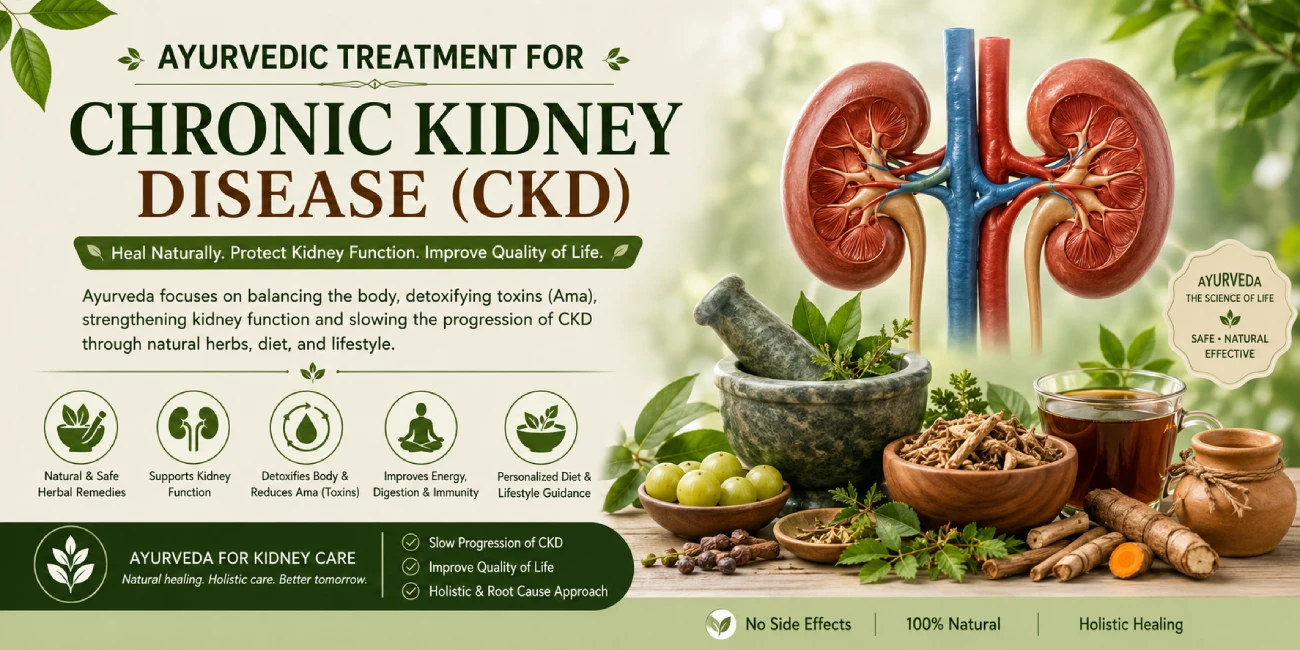
Chronic kidney disease (CKD) — defined as structural or functional kidney abnormalities persisting for more than 3 months — affects approximately 700 million people globally (10% of the world's population). CKD is a progressive condition where kidney function gradually deteriorates, eventually potentially requiring dialysis or kidney transplantation. Risk factors include diabetes, hypertension, autoimmune disorders, and recurrent kidney infections. Conventional nephrology management focuses on slowing progression through blood pressure control, glucose management, and dietary protein restriction, but lacks tools to reverse established kidney damage. Ayurvedic treatment for CKD, while not claiming to cure structural damage, offers a scientifically rational approach to supporting kidney function, reducing inflammatory burden, and potentially slowing disease progression.
CKD in Ayurveda: Mutraghata and Mutra Kriccha
Ayurveda describes kidney and urinary disorders under Mutravahasrotas Vikaras. Conditions corresponding to CKD include Mutraghata (suppression of urine — reduced GFR), Mutra Kriccha (painful, difficult urination — urinary tract inflammation), and Prameha complications (renal involvement in diabetic nephropathy). The kidneys are understood as primary seats of Apana Vata — which governs elimination and fluid regulation — combined with Mutravahasrotas (the urinary channels). CKD pathology involves: Vata vitiation causing impaired filtration and urinary flow; Ama accumulation in kidney channels blocking filtration capacity; Pitta-mediated inflammatory kidney damage; and progressive Ojas depletion as renal function declines.
Ayurvedic Treatment Approach in CKD
Important note: Ayurvedic treatment for CKD requires very careful individualization and coordination with the treating nephrologist. Standard Panchkarma procedures are generally modified or avoided in CKD due to risk of electrolyte imbalance and additional renal stress. However, specific gentle Ayurvedic interventions show meaningful benefit. Basti (enema) — particularly Matra Basti with appropriate oils — addresses systemic Vata and provides some uremic toxin clearance through the colonic mucosa. Abhyanga with specific kidney-supportive oils improves peripheral circulation. Panchakarma for comorbidities (diabetes, hypertension) indirectly supports kidney health. Rasayana therapy with kidney-protective herbs (under nephrology supervision) shows the most consistent clinical benefit.
Renoprotective Herbal Medicines
Punarnava (Boerhavia diffusa): The most important Ayurvedic herb for kidney disorders. 'Punarnava' means 'that which renews the body'. Its anti-inflammatory properties (inhibits NF-kB), diuretic effects, and ability to reduce proteinuria make it among the most studied and clinically useful herbs in CKD. Gokshura (Tribulus terrestris): Supports kidney tissue nutrition and improves urinary flow. Its saponins reduce kidney stone formation and support glomerular filtration. Varuna (Crataeva nurvala): Reduces urinary tract obstruction, improves GFR, and has specific anti-inflammatory effects on the renal tubular system. Haritaki: Reduces the accumulation of uremic toxins and improves bowel clearance of nitrogen-containing waste products. Chandraprabha Vati: A classical compound formulation for urinary disorders with kidney protective properties.
Dietary Management in CKD
Diet is the most critical modifiable factor in CKD management, and Ayurvedic dietary principles align remarkably well with modern nephrology guidelines. Protein restriction (adjusted to GFR stage); potassium control (avoiding high-potassium foods in advanced CKD); phosphorus restriction; sodium moderation; adequate carbohydrate intake to prevent muscle protein catabolism; appropriate fluid intake. Ayurveda specifically adds: emphasis on freshly cooked, easily digestible foods; avoidance of Ama-generating foods; and specific kidney-nourishing preparations like Punarnava soup.
Comorbidity Management
Since diabetes and hypertension are the leading causes of CKD, Ayurvedic management of these conditions indirectly provides significant kidney protection. Our diabetes program's ability to improve glycemic control and our hypertension program's blood pressure reduction both contribute meaningfully to slowing CKD progression. This integrated approach — addressing both the kidney and its primary risk factors — is a key strength of the Ayurvedic management framework.