
📞 Book a consultation with our Ayurvedic specialists at Ayush Panchkarma — located in the heart of the Himalayas, Palampur, Himachal Pradesh. Website: ayushpanchkarma.com | Email: doctor@ayushpanchkarma.com
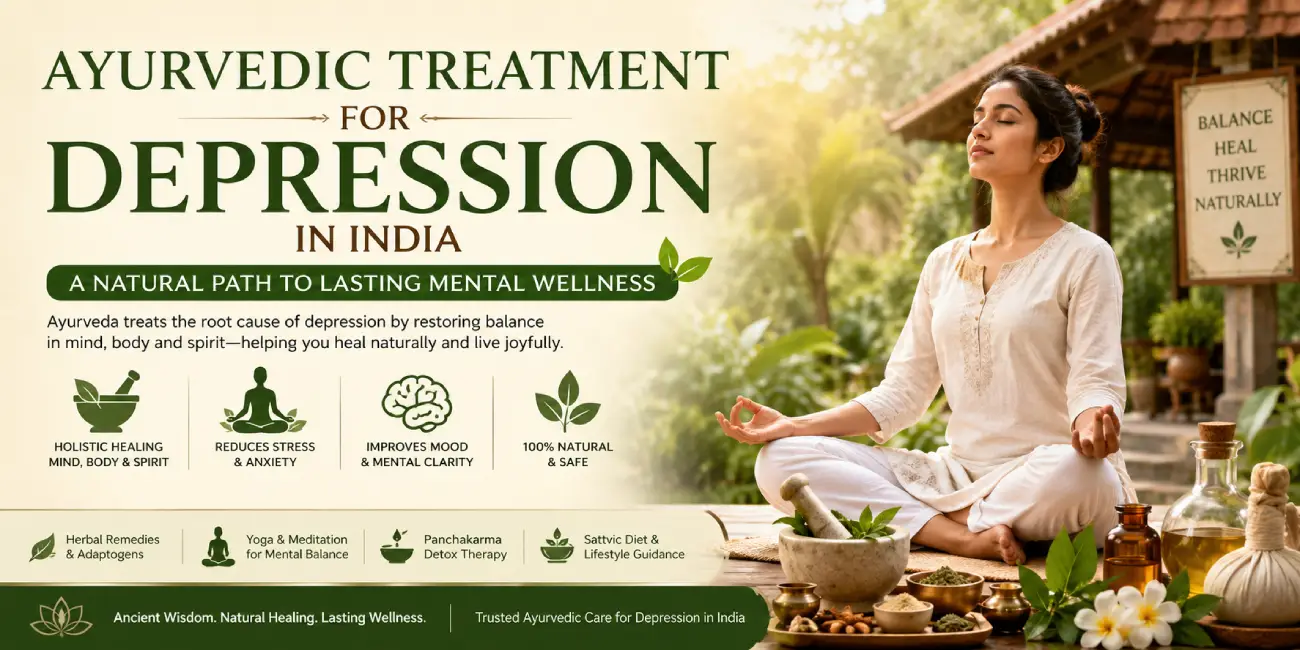
India is silently facing one of its most pressing health crises. According to WHO data, over 56 million Indians suffer from depression, and millions more live with undiagnosed symptoms that quietly erode their quality of life. Whether it is a young professional in Bengaluru battling burnout, a homemaker in Jaipur struggling with persistent sadness, or a student in Delhi feeling increasingly disconnected from life — depression does not discriminate. It touches families across every city, town, and village in this country. While modern medicine offers antidepressants and psychological counselling, many Indians are now turning to a more holistic approach — one rooted in thousands of years of healing wisdom. Ayurvedic treatment for depression is not just an alternative therapy; it is a comprehensive system that addresses the root cause of mental illness, rather than simply managing its symptoms. At Ketav's Ayush Health Paradise in Palampur, Himachal Pradesh, this ancient science is being practised with modern precision — and the results are transforming lives. India's fast-changing socioeconomic environment has brought with it unprecedented levels of stress. Competitive academic pressure, job insecurity, broken family structures, social media comparison, and the lingering trauma of the COVID-19 pandemic have collectively pushed mental health to the breaking point for millions. Depression in India is now one of the leading causes of disability, affecting people's ability to work, maintain relationships, and find joy in daily life. Conventional antidepressants, while necessary in some cases, come with a well-documented range of side effects — weight gain, sexual dysfunction, emotional numbness, dependency, and in some cases, worsening anxiety. Many patients find that after years of medication, they are managing symptoms but not actually healing. This is where Ayurveda treatment for depression offers something fundamentally different: it aims to correct the underlying imbalance in the mind-body system so that the individual can return to a state of natural, sustained wellbeing — often without lifetime dependency on medication. In Ayurveda, depression is understood through the concept of Vishada (also called Avasada), which translates to a state of profound mental, emotional, and physical collapse. Unlike the modern view that frames depression primarily as a chemical imbalance (specifically a deficiency of serotonin or dopamine), Ayurveda sees it as a holistic disruption of the body's entire ecosystem. Depending on the individual's constitution (Prakriti) and current imbalance (Vikriti), depression can manifest through different Dosha disturbances: Kapha-dominant depression: the most common pattern in India — presents as heaviness, lethargy, emotional numbness, oversleeping, weight gain, and a general withdrawal from life. Vata-dominant depression: manifests as anxiety, racing thoughts, insomnia, restlessness, and a feeling of being disconnected or ungrounded. Pitta-dominant depression: often appears as intense self-criticism, irritability, frustration, and an inability to let go of failure or perceived injustice. Additionally, Ayurveda identifies two critical contributing factors: the accumulation of Ama (toxic residue from poor digestion — both physical and emotional) and the weakening of Agni (digestive fire). When your gut cannot properly process food and emotions, the entire nervous system suffers. This deep connection between gut health and mental health — now confirmed by modern research as the 'gut-brain axis' — has been central to Ayurveda for over 5,000 years. At the heart of Panchakarma treatment for depression lies a powerful principle: you cannot truly heal the mind without first cleansing the body. Panchakarma — Ayurveda's five-fold detoxification system — is specifically designed to remove deeply lodged Ama from the body's tissues and channels, restore Dosha balance, and reset the nervous system. The key Panchakarma therapies used at Ayush Panchkarma for depression treatment include: Shirodhara: A continuous, rhythmic stream of warm medicated oil is poured over the forehead (the 'third eye' region) for an extended period. This profoundly calms the nervous system, reduces cortisol levels, and is particularly effective for anxiety-driven depression, insomnia, and overactive thinking. Shirodhara is often described by patients as the single most relaxing experience of their lives. Abhyanga (Medicated Oil Massage): A full-body warm oil massage using dosha-specific herbal oils that penetrates deep into the tissues, nourishes the nervous system, improves circulation, and releases stored emotional tension from the body. Nasya (Nasal Therapy): Administration of medicated oils or herbal preparations through the nasal passages directly stimulates the limbic system — the emotional brain — making it uniquely effective for treating depression, anxiety, and stress-related disorders. Virechana (Therapeutic Purgation): Particularly beneficial for Pitta-type depression, this cleansing therapy eliminates accumulated toxins from the liver and gastrointestinal tract, directly improving mood regulation. Basti (Medicated Enema): The most powerful of all Panchakarma therapies, Basti uses herbal oils and decoctions to detoxify and nourish the colon — which is the seat of Vata. This is especially transformative for anxiety-driven, restless forms of depression. One of the most remarkable yet underappreciated aspects of Ayurvedic mental health care is Satvavajaya Chikitsa — Ayurveda's ancient system of psychotherapy. The term literally means 'conquest of the mind through Sattva (pure, clear mental quality).' This approach combines guided meditation, specific pranayama (breathing exercises), mantra therapy, yoga nidra, and counselling to rebuild the mind's natural resilience and clarity. At Ketav's Ayush Health Paradise, Satvavajaya Chikitsa is integrated into every depression treatment programme. Physicians work closely with each patient to identify their core mental patterns — whether it is excessive self-criticism, rumination, fear of the future, or unresolved grief — and then prescribe specific mental practices that systematically dismantle these patterns. Combined with the physical detoxification of Panchakarma, this dual approach produces results that neither modern psychiatry nor yoga therapy alone can consistently achieve. A personalised herbal protocol is an essential part of Ayurvedic treatment for depression and anxiety. Unlike pharmaceutical antidepressants that work by forcing changes in neurotransmitter levels, Ayurvedic herbs work by gently restoring the nervous system's own regulatory capacity. Some of the most powerful herbs used in clinical Ayurvedic practice include: Ashwagandha (Withania somnifera): Often called 'Indian Ginseng', this adaptogenic herb reduces cortisol, combats chronic stress, improves energy levels, and has shown clinically significant antidepressant properties in multiple studies. Brahmi (Bacopa monnieri): The premier Ayurvedic nervine tonic, Brahmi enhances cognitive function, reduces anxiety, and promotes the growth of new neural connections — making it invaluable for depression-related brain fog. Jatamansi (Nardostachys jatamansi): A powerful sedative and antidepressant herb from the Himalayas that calms the nervous system, improves sleep quality, and reduces anxiety without causing drowsiness. Shankhapushpi (Convolvulus pluricaulis): Known for its ability to enhance Sattva (mental clarity), this herb directly improves mood, memory, and mental stamina. Guduchi (Tinospora cordifolia): A potent immuno-modulator that also has significant neuroprotective properties, Guduchi supports the body's ability to adapt to stress. And many more herbs, which are considered as rasayana for brain and nervous system are used to address the issue in various forms, like paste, decoctions, pills, juices, jams etc. Location matters deeply when it comes to mental health healing. Ketav's Ayush Health Paradise is situated in Gopalpur, Palampur, Himachal Pradesh — perched in the pristine foothills of the Himalayas, surrounded by lush tea gardens, clean mountain air, and the soul-restoring silence of nature. This environment is not incidental to the healing process; it is a fundamental part of it. Here is what sets Ayush Panchkarma apart as one of the best Ayurvedic centres for depression treatment in India: Expert Classical Physicians: Our doctors are trained in classical Ayurvedic texts and understand depression not just as a condition but as a unique expression of each person's constitution. Treatment is never generic — it is always precisely individualised. Authentic Panchakarma: We use genuine, pharmacy-grade herbal oils and formulations prepared according to classical methods — not commercial shortcuts. The difference in therapeutic efficacy is profound. Himalayan Healing Environment: The natural beauty, clean air, and peaceful surroundings of Palampur are themselves powerful medicines for an exhausted, depressed mind. Integrated Approach: We combine Panchakarma, herbal medicine, Satvavajaya psychotherapy, yoga, pranayama, and dietary guidance into a single, seamlessly coordinated programme. No Unnecessary Medication: Our goal is to help patients achieve lasting mental wellness — ideally reducing or eliminating dependency on antidepressant medication over time, always in coordination with their treating psychiatrist. Ayurveda can support virtually anyone suffering from depression, but it is particularly well-suited for: Individuals with mild to moderate depression who want to avoid or reduce pharmaceutical medication People who have been on antidepressants for years but are still not experiencing true recovery Those suffering from depression accompanied by anxiety, insomnia, or chronic stress Patients with treatment-resistant depression who have not responded adequately to conventional approaches Individuals who have experienced trauma, grief, or burnout and need deep nervous system restoration Anyone seeking a holistic, natural approach to mental health that addresses the body and mind together Important note: Ayurvedic treatment is not a replacement for psychiatric care in severe depression, psychosis, or active suicidal ideation. At Ayush Panchkarma, we work collaboratively with our patients' mental health teams to ensure safe, integrated care. Every patient's journey begins with a comprehensive Ayurvedic consultation. Our physician will assess your Prakriti (constitutional type), current Dosha imbalance, mental-emotional state, lifestyle, dietary habits, sleep patterns, and medical history. Based on this thorough evaluation, a completely individualised treatment protocol is designed — typically ranging from 14 to 28 days for meaningful, lasting results. During your stay, you will experience daily Panchakarma therapies, personalised herbal medications, therapeutic yoga and pranayama sessions, guided meditation, dietary adjustments using fresh, locally sourced Sattvic food, and one-on-one counselling sessions. The Himalayan setting of Palampur provides a natural backdrop that accelerates the healing process — many patients report that simply being in this environment begins to lift their mood within the first few days. Depression is not a life sentence. It is a signal from your mind and body that something has gone deeply out of balance — and balance can be restored. Thousands of years of Ayurvedic wisdom, combined with the healing power of the Himalayas and the expertise of experienced Ayurvedic physicians, create conditions in which genuine, lasting recovery becomes possible. If you or someone you love is struggling with depression and is ready to explore a deeper, more natural path to healing, we invite you to reach out to Ketav's Ayush Health Paradise. Our team is here to answer your questions, help you understand your options, and design a programme that meets your unique needs. Book Your Consultation Today Website: ayushpanchkarma.com Email: doctor@ayushpanchkarma.com WhatsApp: +91-8894356919 Location: V.P.O. Gopalpur, Tehsil Palampur, District Kangra, Himachal Pradesh 176061 Ketav's Ayush Health Paradise | Authentic Himalayan Ayurveda | Healing Depression Naturally Since InceptionWhy Depression Is Rising in India — And Why Antidepressants Are Not Always the Answer
Understanding Depression Through an Ayurvedic Lens: Vishada and the Dosha Imbalance
Panchakarma for Depression: The Gold Standard of Ayurvedic Detoxification
Satvavajaya Chikitsa: Ayurveda's Original Psychotherapy
Ayurvedic Herbs for Depression: Nature's Own Mood Regulators
Why Choose Ayush Panchkarma in Palampur for Depression Treatment?
Who Should Consider Ayurvedic Treatment for Depression?
What to Expect: Your Healing Journey at Ayush Panchkarma
Take the First Step Towards Genuine Mental Wellness