
Book Your Consultation Ready to experience authentic Himalayan Ayurveda? Contact Ayush Panchkarma to begin your personalized treatment journey. Located in Gopalpur, Palampur, Himachal Pradesh — in the pristine foothills of the Himalayas. Website: ayushpanchkarma.com | Email: doctor@ayushpanchkarma.com | WhatsApp: +91-8894356919
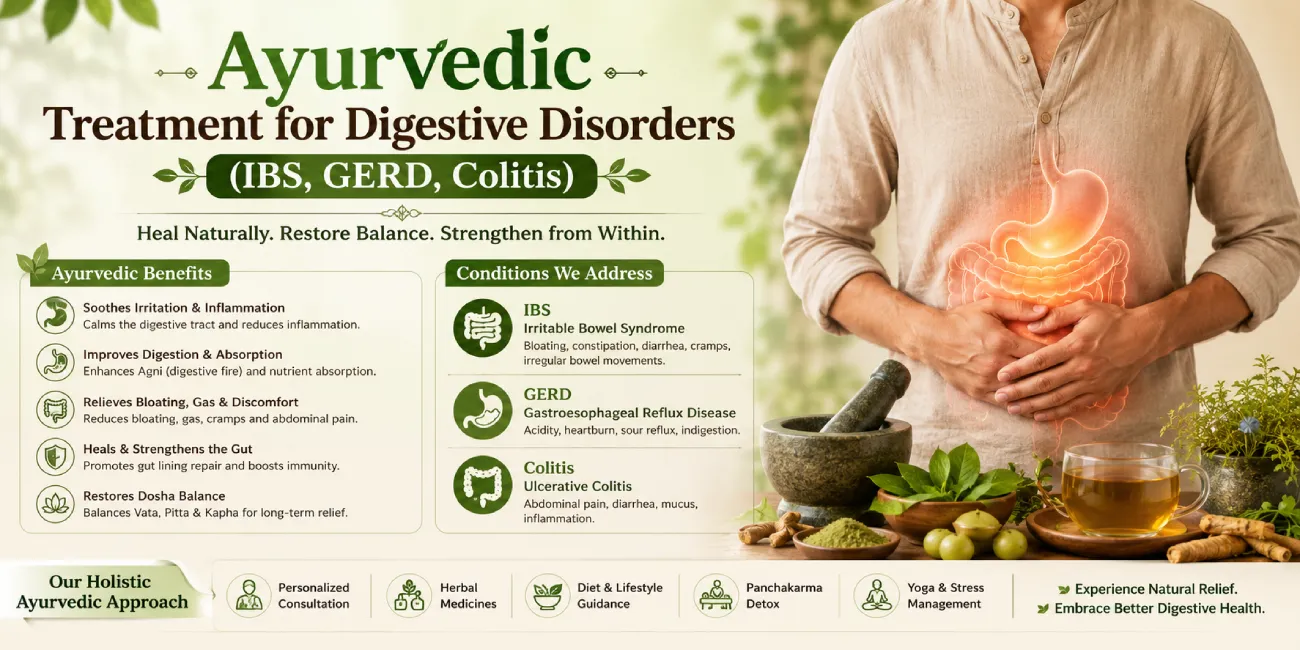
Digestive disorders are among the most prevalent health complaints globally, affecting quality of life for hundreds of millions. Irritable Bowel Syndrome (IBS) affects 10-15% of the global population; Gastroesophageal Reflux Disease (GERD) affects 20-40% of Western adults; ulcerative colitis and Crohn's disease (inflammatory bowel diseases) affect millions more. Despite advanced diagnostic and pharmaceutical tools, conventional medicine struggles to provide lasting relief for many of these conditions. Ayurvedic treatment for digestive disorders — with its sophisticated understanding of Agni (digestive fire), gut ecology, and mind-gut connections — offers highly effective, individualized care for the full spectrum of digestive conditions.
The Primacy of Agni in Ayurvedic Digestive Medicine
Agni — the concept of digestive and metabolic fire — is perhaps the most central concept in all of Ayurvedic medicine. Charaka states: 'Arogya is Agni' — health is Agni. Virtually all disease, according to Ayurveda, has its root in disturbed Agni. Four types of Agni are recognized: Sama Agni (balanced, optimal digestion — the goal of treatment); Vishama Agni (irregular, Vata-type — corresponding to IBS-alternating type); Tikshna Agni (sharp, Pitta-type — corresponding to GERD, hyperacidity, and inflammatory bowel disease); Manda Agni (sluggish, Kapha-type — corresponding to bloating, heaviness, and motility disorders). Understanding a patient's Agni type determines the entire treatment approach.
Panchkarma Therapies for Digestive Disorders
Virechana (purgation) is the primary Panchkarma therapy for Pitta-type digestive disorders — GERD, gastric ulcers, Pitta-type IBS, and inflammatory bowel disease. By thoroughly cleansing the small intestine and liver of excess Pitta, Virechana provides profound and lasting relief from hyperacidity and intestinal inflammation. Basti (enema) is the primary treatment for Vata-type digestive disorders — IBS-constipation, IBS-alternating, and Vata-type abdominal pain and bloating. Yoga Basti (series of alternating Kashaya and Matra Basti) normalizes colonic function, gut microbiome composition, and intestinal motility. Vamana is used for Kapha-type digestive disorders — nausea, chronic indigestion with heaviness, and Kapha accumulation in the stomach. Abhyanga and Swedana reduce the gut-directed stress response and improve digestive nerve function through the parasympathetic nervous system.
Herbal Medicines for Digestive Health
Triphala: Ayurveda's most important digestive formula — three fruits (Amalaki, Bibhitaki, Haritaki) providing comprehensive digestive support including gentle bowel regulation, gut flora balance, mucosal healing, and hepatoprotection. Triphala Churna taken nightly is a first-line prescription for nearly all chronic digestive disorders. Shatavari: Specifically demulcent, anti-inflammatory, and healing for the gastric and intestinal mucosa. Ideal for GERD and ulcerative colitis. Kutaja (Holarrhena pubescens): The classical anti-amoebic and anti-dysentery herb. Also effective for ulcerative colitis, IBS-D, and chronic diarrhea. Guduchi: Immunomodulator and anti-inflammatory, particularly effective in inflammatory bowel disease. Pippali and Trikatu: Deepana (digestive stimulant) herbs that kindle Agni, reduce Ama, and relieve bloating and gas. Amlapitta Mishran: A classical formulation specifically for GERD and hyperacidity.
The Gut-Brain Connection: An Ayurvedic Perspective
Ayurveda recognized the gut-brain connection thousands of years before modern neurogastroenterology described the enteric nervous system as the 'second brain'. The concept of Manas (mind) being deeply influenced by Anna Shakti (digestive energy) is a foundational Ayurvedic principle. Conversely, psychological distress (Manasika Vikara) directly affects Agni and gut function. This understanding is why Ayurvedic treatment for IBS — a classic brain-gut disorder — must address both the gut and the mind. Our treatment combines gut-targeted therapies with Shirodhara, meditation, and stress management.
Dietary Guidelines for Digestive Disorders
For IBS: Identify and avoid personal trigger foods; eat regular, moderate-sized meals; avoid raw vegetables, beans, cruciferous vegetables in excess; warm, cooked, easily digestible foods; ghee as a digestive lubricant; warm water with cumin, fennel, and ginger. For GERD: Avoid acidic, spicy, and fermented foods; eat smaller, more frequent meals; no eating within 3 hours of bedtime; cold milk in small quantities provides immediate relief; avoid coffee and alcohol. For Ulcerative Colitis (active): Well-cooked, soft foods; rice water and moong soup during flares; avoid raw salads, spicy foods, and dairy during active inflammation.