
Book Your Consultation Ready to experience authentic Himalayan Ayurveda? Contact Ayush Panchkarma to begin your personalized treatment journey. Located in Gopalpur, Palampur, Himachal Pradesh — in the pristine foothills of the Himalayas. Website: ayushpanchkarma.com | Email: doctor@ayushpanchkarma.com | WhatsApp: +91-8894356919
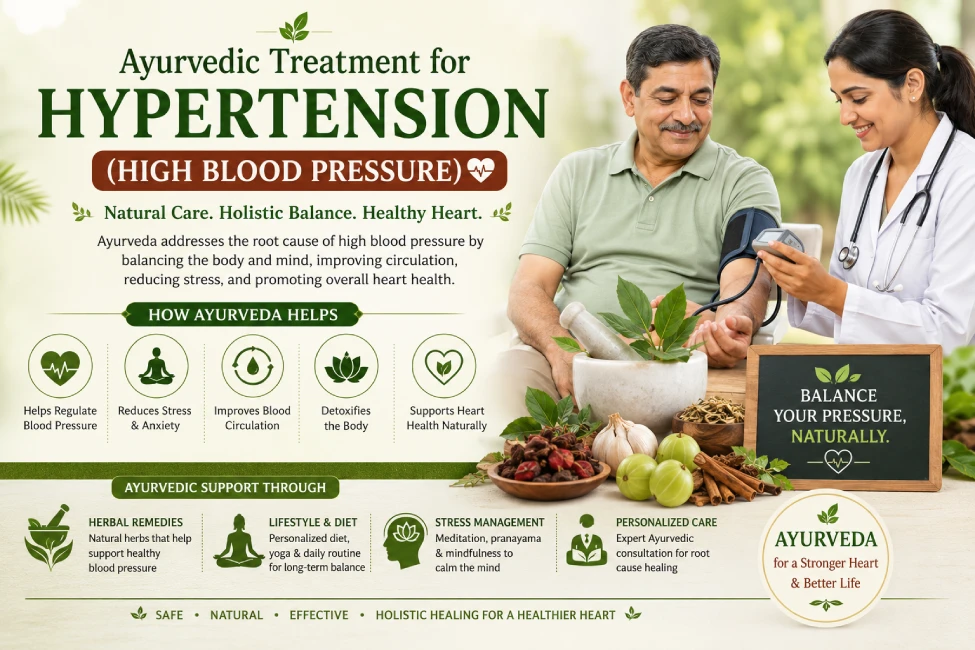
Hypertension — persistently elevated blood pressure (≥130/80 mmHg) — is one of the most prevalent chronic conditions globally, affecting approximately 1.28 billion adults. Often called 'the silent killer', hypertension typically presents without symptoms while progressively damaging blood vessels, the heart, kidneys, and brain. Conventional treatment relies primarily on antihypertensive medications that must be taken lifelong, often with troublesome side effects. Ayurvedic treatment for hypertension offers a complementary approach that can help reduce blood pressure through multiple physiological pathways while addressing the lifestyle and stress factors that are at the root of most hypertension cases.
Hypertension in Ayurveda: Raktachapa and Vyana Vata
While hypertension as a specific clinical entity was not defined in classical Ayurvedic texts, the underlying pathophysiology maps closely to Vyana Vata vitiation (the subdosha governing cardiac function and blood circulation) combined with Pitta-mediated vascular inflammation and Kapha-driven blood viscosity. Raktachapa Vridhi (increased blood pressure) is understood as abnormal pressure of Rakta (blood) in Raktavaha Srotas (blood vessels). Contributing factors include: Pranavaha Srotas vitiation (cardiovascular system); Pitta in Hridaya (cardiac inflammation); Vata disorder causing arterial stiffness; and Kapha causing blood hyperviscosity and atherosclerosis.
Panchkarma for Hypertension
Shirodhara is the most important Panchkarma treatment for hypertension, particularly stress-related (essential) hypertension. Its ability to activate the parasympathetic nervous system, reduce cortisol, and normalize the hypothalamic-pituitary-adrenal axis produces measurable and lasting blood pressure reductions. Multiple clinical studies have documented systolic BP reductions of 10-20 mmHg following Shirodhara courses. Takradhara (buttermilk Shirodhara) is specifically cooling and Pitta-reducing, particularly effective for hypertension with anxiety, hot flashes, and anger. Abhyanga (medicated oil massage) activates the parasympathetic nervous system and reduces sympathetic (stress) nervous system activity that drives hypertension. Virechana (purgation) reduces Pitta from hepatic and cardiovascular circulation. Nasya improves hypothalamic regulatory function.
Herbal Medicines for Blood Pressure
Sarpagandha (Rauwolfia serpentina): Ayurveda's most potent antihypertensive herb — reserpine (isolated from Sarpagandha in 1952) was one of the first antihypertensive drugs in modern medicine. Sarpagandha formulations used under physician supervision can significantly reduce blood pressure. Arjuna (Terminalia arjuna): Ayurveda's premier cardiac herb. Arjuna bark extract improves cardiac output, reduces LV hypertrophy (heart enlargement from hypertension), and reduces total peripheral resistance. Brahmi and Jatamansi: Address the psychological stress-blood pressure connection. Punarnava (Boerhavia diffusa): A natural diuretic and heart tonic that reduces blood volume without electrolyte imbalance. Ashwagandha: Reduces cortisol-mediated sympathetic activation that drives stress hypertension.
Diet for Hypertension (DASH meets Ayurveda)
The Ayurvedic diet for hypertension shares significant overlap with the DASH diet while adding additional principles: reduce sodium (lavana) intake; avoid stimulants (coffee, alcohol, tobacco); emphasize potassium-rich vegetables and fruits; reduce heavy, fatty foods that increase blood viscosity; include garlic (Lasuna) which has demonstrated ACE-inhibitor-like properties; regular intake of Arjuna tea (bark decoction); reduce Pitta-aggravating spicy, sour, and fermented foods.
Yoga and Pranayama for Blood Pressure
Yoga has Level-1 evidence from multiple randomized trials for blood pressure reduction. Specific practices particularly effective for hypertension include: Savasana (profound parasympathetic activation); Anuloma-Viloma pranayama (normalized autonomic tone); Bhramari pranayama (vagal stimulation through humming); and slow-flow yoga sequences. Daily yoga practice for 30 minutes produces blood pressure reductions comparable to first-line antihypertensive medications in mild hypertension.