
Book Your Consultation Ready to experience authentic Himalayan Ayurveda? Contact Ayush Panchkarma to begin your personalized treatment journey. Located in Gopalpur, Palampur, Himachal Pradesh — in the pristine foothills of the Himalayas. Website: ayushpanchkarma.com | Email: doctor@ayushpanchkarma.com | WhatsApp: +91-8894356919
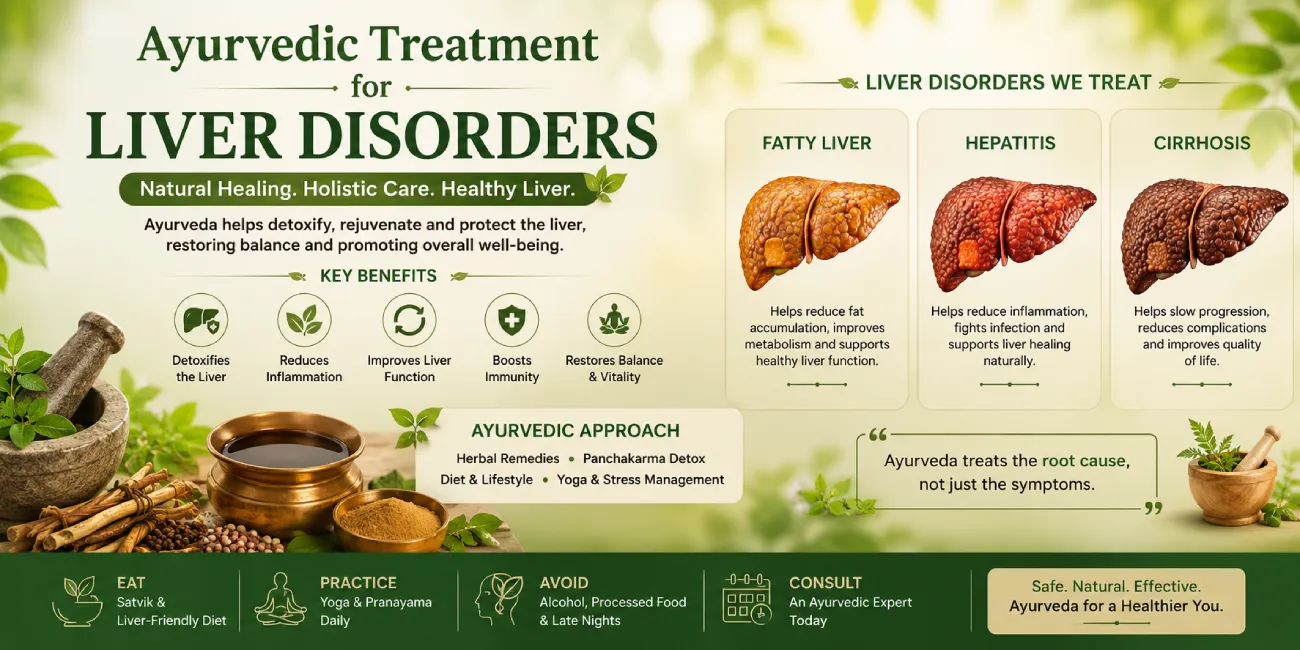
Liver disease represents one of the fastest-growing global health burdens. Non-alcoholic fatty liver disease (NAFLD) now affects 25% of the global adult population — 2 billion people — making it the most common liver disorder worldwide. Viral hepatitis (B and C) affects 325 million globally, while cirrhosis and hepatocellular carcinoma claim over 1 million lives annually. The liver is central to virtually every metabolic process — protein synthesis, glucose regulation, fat metabolism, hormone clearance, drug detoxification, and immune function. When liver function deteriorates, the consequences cascade throughout the entire body. Ayurvedic treatment for liver disorders — through its Pitta-balancing, hepatoprotective, and detoxifying approaches — offers both disease management and meaningful support for recovery.
The Liver in Ayurveda: Yakrit and the Agni Connection
The liver (Yakrit) holds a central position in Ayurvedic physiology. It is the primary seat of Ranjaka Pitta — the subdosha responsible for blood formation, hemoglobin synthesis, and detoxification of waste products from blood. The liver is also the primary site of Pachaka Pitta's metabolic action on absorbed nutrients. Liver disorders in Ayurveda primarily involve: Ranjaka Pitta vitiation (inflammation, infection, toxic damage); Kapha accumulation in hepatic tissue (fatty liver, cholestasis); and progressive Agni impairment leading to Ama accumulation. Classical descriptions of Kamala (jaundice/hepatitis) and Udara (ascites/liver failure) in texts like Sushruta Samhita demonstrate sophisticated hepatological understanding.
Panchkarma for Liver Disorders
Virechana (therapeutic purgation) is the primary Panchkarma treatment for all liver disorders — it is specifically designed to purify the small intestine and liver of accumulated Pitta and toxins. After proper preparation, Virechana stimulates hepatic bile production and clearance, reduces hepatic inflammation, improves liver enzyme levels, and enhances hepatocellular regeneration. Clinical studies document significant reductions in SGOT, SGPT, and bilirubin following Virechana therapy. Basti with liver-supportive formulations (particularly Tikta Ksheer Basti using bitter herb-infused milk) addresses the gut-liver axis and reduces systemic inflammatory burden on the liver. Abhyanga with specific hepatoprotective oil preparations and Sweda helps mobilize lipid deposits from fatty liver. Raktamokshana (leech therapy) is used in specific conditions involving blood toxicity and hepatic congestion.
Hepatoprotective Herbal Medicines
Bhumi Amla (Phyllanthus niruri): Among the most researched Ayurvedic herbs for liver disease. Multiple clinical trials demonstrate its ability to clear HBsAg (hepatitis B surface antigen) from chronic hepatitis B carriers, reduce liver enzymes, and inhibit hepatitis B viral replication. Katuki (Picrorhiza kurroa): Contains picrosides with potent hepatoprotective and anti-inflammatory properties. Katuki significantly reduces liver enzymes in hepatitis and fatty liver, and promotes hepatocellular regeneration. Bhumyamalaki and Katuki together form the basis of Liv-52, the world's most prescribed hepatoprotective formulation. Punarnava (Boerhavia diffusa): Reduces hepatic inflammation and ascites. Punarnavadi Mandura is a classical formulation for liver disease with anemia. Guduchi (Tinospora cordifolia): Hepatoprotective, immunomodulatory, and anti-inflammatory — particularly important in autoimmune hepatitis. Arogyavardhini Vati: A classical compound formulation specifically for liver disorders — contains Kutki, Guggulu, and multiple liver-protective ingredients.
Diet for Liver Health
The Ayurvedic dietary approach for liver disorders emphasizes: absolute elimination of alcohol; avoidance of fried, fatty, and processed foods; reduced total fat intake in fatty liver; emphasis on bitter vegetables (bitter gourd, drumstick, dandelion) that stimulate hepatic bile production and reduce fat accumulation; fresh fruits and vegetables for antioxidant support; reduced simple sugar intake; adequate protein from easily digestible sources; warm water with lemon and Triphala for daily hepatic stimulation.
Yoga for Liver Health
Specific yoga poses stimulate hepatic circulation and bile flow: twisting poses (Ardha Matsyendrasana, Parivrtta Trikonasana) compress and release the liver and gallbladder; Dhanurasana and Ustrasana stretch the hepatic region improving blood flow; Kapalbhati pranayama creates rhythmic diaphragmatic movement that improves portal venous circulation and liver lymphatic drainage. Regular yoga practice reduces obesity and metabolic syndrome — the primary drivers of NAFLD.