
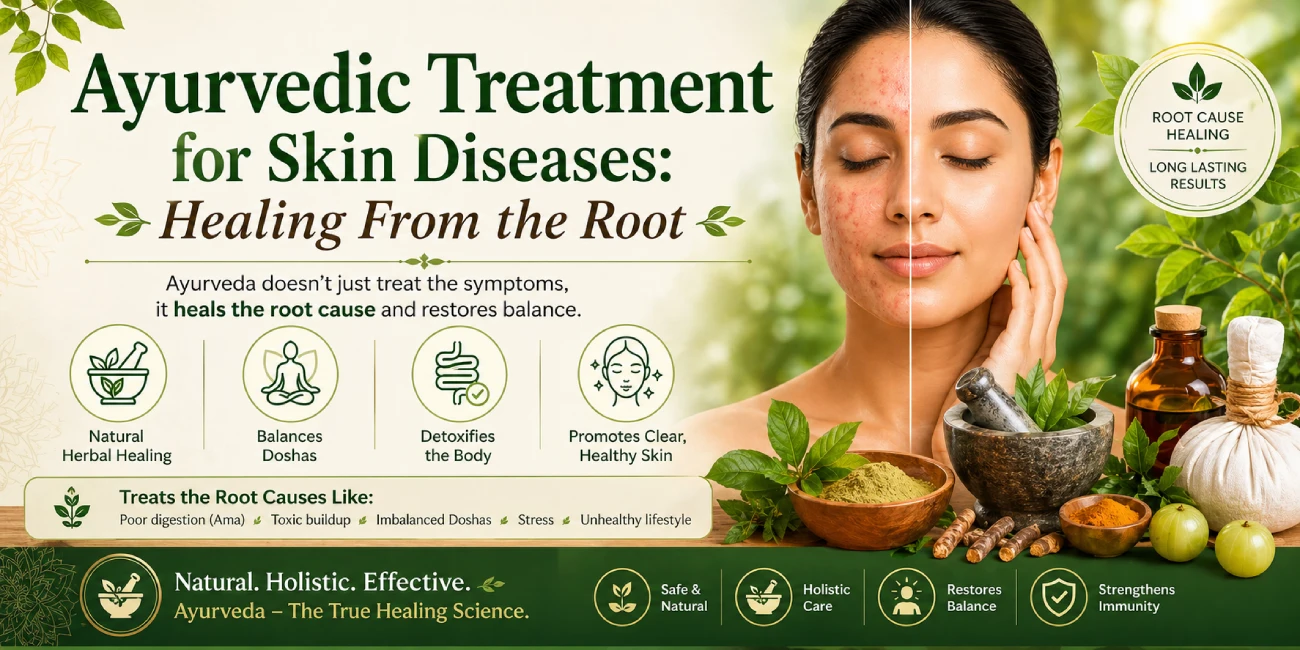
Ayurveda, India's 5000-year-old system of natural medicine, understands skin diseases through a sophisticated framework that addresses not just the skin surface but the internal metabolic and immunological environment that gives rise to these conditions.
Skin diseases affect hundreds of millions of people worldwide, with conditions like psoriasis, eczema, vitiligo, acne, urticaria, and dermatitis causing not just physical discomfort but significant psychological distress and social isolation. While conventional dermatology offers symptomatic relief through topical steroids, immunosuppressants, and phototherapy, many patients find these approaches inadequate or fraught with side effects — leading them to explore Ayurvedic treatment for skin diseases as a safer, more holistic alternative.
The Ayurvedic Framework for Understanding Skin Diseases
Ayurveda classifies skin diseases under 'Kushtha' — an umbrella term covering 18 major types of skin disorders described in classical texts. These are further divided into Mahakushtha (seven major types involving all three doshas) and Kshudra Kushtha (eleven minor types involving one or two doshas).
The Three Dosha Theory of Skin Disease
According to Ayurveda, all skin diseases arise from imbalances in the three doshas — Vata, Pitta, and Kapha — combined with compromised function of the blood (Rakta dhatu) and skin tissue (Twak). The nature of the skin condition depends on which dosha predominates:
- Vata-predominant skin diseases: Dryness, scaling, cracking, roughness, and itching. Associated with conditions like psoriasis (dry type), ichthyosis, and dry eczema.
- Pitta-predominant skin diseases: Burning, redness, inflammation, weeping eruptions, and fever. Associated with conditions like rosacea, urticaria, contact dermatitis, and inflammatory acne.
- Kapha-predominant skin diseases: Thick, oily, sticky, slow-healing eruptions. Associated with conditions like cystic acne, fungal infections, and keloid formation.
The Role of Ama and Rakta Dushti
A central concept in Ayurvedic dermatology is Ama — undigested metabolic waste generated by poor digestive fire. Ama circulates in the bloodstream and deposits in the skin, triggering inflammatory reactions. This is why Ayurvedic treatment invariably begins with blood purification (Raktashodhana) and digestive strengthening (Deepana-Pachana) before any local treatment.
Common Skin Diseases Treated with Ayurveda
1. Psoriasis (Ekakushtha/Kitibha Kushtha)
Psoriasis is one of the most challenging skin conditions — an autoimmune disorder that causes rapid skin cell turnover, resulting in thick, silvery scales and red, inflamed patches. Ayurvedic treatment for psoriasis focuses on blood purification, Vata-Pitta balancing, and gut healing. Panchkarma therapies including Virechana (therapeutic purgation) and Raktamokshana (bloodletting/leech therapy) are particularly effective. Many of our patients with plaque psoriasis achieve significant clearance — often 70-90% — after a structured 21-28 day Panchkarma program.
2. Eczema / Atopic Dermatitis (Vicharchika)
Eczema or atopic dermatitis — characterized by intensely itchy, weeping, and crusting patches — corresponds to Vicharchika in Ayurveda. It involves vitiated Kapha and Pitta doshas along with blood impurity. Ayurvedic management combines internal medicines for blood purification, external medicated ghee applications (Ghrita application), and dietary regulation to eliminate trigger foods.
3. Vitiligo (Shvitra/Kilasa)
Vitiligo — the progressive loss of skin pigmentation — is known as Shvitra or Kilasa in Ayurveda. It is considered a Pitta-Kapha imbalance affecting Bhrajaka Pitta (the subdosha governing skin complexion). Ayurvedic treatment includes Bakuchi (Psoralea corylifolia) preparations, Khadira (Acacia catechu) decoctions, and regular exposure of medicated skin to natural sunlight. Our center has documented encouraging repigmentation outcomes in vitiligo patients following consistent treatment.
4. Acne (Yuvanpidika)
Acne — especially the cystic, hormonal variety resistant to standard treatment — responds excellently to Ayurvedic management. Internal blood-purifying herbs (Neem, Manjistha, Sariva), digestive corrections, and Virechana (purgation therapy) address the root hormonal and metabolic imbalances driving acne.
5. Urticaria (Sheetapitta)
Urticaria or hives — characterized by intensely itchy wheals — corresponds to Sheetapitta in Ayurveda, caused by cold-aggravated Kapha combined with vitiated Vata and Pitta. Ayurvedic treatment is particularly effective for chronic idiopathic urticaria where conventional antihistamines provide only temporary relief.
Panchkarma Therapies for Skin Diseases
- Virechana (Therapeutic Purgation): The most important Panchkarma therapy for skin diseases. After preparatory oleation and sweating therapy over 3-7 days, a precisely calculated dose of herbal purgatives cleanses the liver, small intestine, and blood of Pitta toxins. Virechana is indicated as the primary treatment for nearly all Pitta-vitiated skin disorders.
- Raktamokshana (Bloodletting): Medicinal leech therapy or controlled venous bloodletting directly purifies vitiated blood. Research confirms that medicinal leeches (Hirudo medicinalis) secrete hirudin and other bioactive compounds that have anti-inflammatory, anticoagulant, and antimicrobial effects.
- Vamana (Therapeutic Emesis): Indicated for Kapha-predominant skin disorders, Vamana eliminates excess Kapha from the upper respiratory and digestive tract, purifying the lymphatic system.
- Takradhara: Continuous pouring of medicated buttermilk infused with Kapha-reducing herbs over the forehead. Highly effective for scalp psoriasis and seborrheic dermatitis.
- Lepana (Medicated Paste Applications): Freshly prepared herbal pastes using Neem, Turmeric, Manjistha, and Bakuchi are applied to affected skin areas. These have direct antimicrobial, anti-inflammatory, and skin-regenerating properties.
- Parisheka (Medicated Liquid Pouring): Warm medicated decoctions or herbal water preparations are poured over the body, especially effective for widespread inflammatory skin conditions.
Key Herbal Medicines for Skin Diseases
- Neem (Azadirachta indica): The most potent Ayurvedic herb for skin diseases — antibacterial, antifungal, anti-inflammatory, and blood-purifying. Used internally and externally.
- Manjistha (Rubia cordifolia): The premier Rakta-shodhaka (blood purifier) in Ayurveda. Manjistha clears deep-seated blood toxins driving chronic skin conditions.
- Khadira (Acacia catechu): Specifically indicated for dark, thick, chronic skin diseases. Has strong antimicrobial and lymphatic-purifying actions.
- Haridra (Curcuma longa): Turmeric's curcumin has been extensively researched for its anti-inflammatory, antioxidant, and wound-healing properties in skin conditions.
- Sariva (Hemidesmus indicus): A mild but effective blood purifier particularly useful in children and sensitive individuals with eczema and allergic skin conditions.
- Bakuchi (Psoralea corylifolia): Ayurveda's most important herb for vitiligo. Contains psoralens that stimulate melanin production when skin is exposed to sunlight.
Dietary Recommendations for Skin Health (Pathya)
Diet profoundly influences skin health in Ayurveda. Our dietitians provide personalized dietary plans that identify and eliminate trigger foods while emphasizing skin-nourishing nutrition:
- Avoid: fermented foods, excessively spicy and salty foods, incompatible food combinations (milk + fish, fruit + milk), nightshades in psoriasis, and heavy-to-digest foods that create Ama
- Include: Bitter vegetables (bitter gourd, drumstick), light grains (old rice, barley), green moong dal, cooling herbs (coriander, mint), and warm water throughout the day
- Prioritize gut health: A healthy gut microbiome is foundational for skin health. Ayurvedic dietary principles naturally support this by emphasizing freshly cooked, seasonal, and easily digestible foods
Lifestyle Modifications for Skin Disease Management
Beyond diet and medicines, Ayurveda emphasizes Dinacharya (daily routine) and Ritucharya (seasonal routine) as crucial tools for skin disease management. Regular sleep schedules, stress management through meditation and pranayama, avoidance of excessive sun exposure (in Pitta skin conditions), and proper hygiene practices all contribute significantly to treatment outcomes.
Why Ayush Panchkarma for Skin Disease Treatment?
Our Himalayan location provides incomparable advantages for skin healing. The pure mountain air, clean water from Himalayan springs, natural forest environment, and low pollution levels create optimal healing conditions. Our expert physicians diagnose each patient's unique dosha constitution and skin disease type before designing a fully personalized protocol. We do not offer generic, one-size-fits-all treatments — every patient receives individual attention from qualified MD Ayurveda dermatology specialists.
Conclusion: Clear Skin Begins Within
Ayurvedic treatment for skin diseases offers a profound paradigm shift — from managing symptoms on the surface to healing the root causes from within. By purifying the blood, restoring digestive health, balancing the doshas, and nourishing the skin with nature's most potent medicines, Ayurveda creates lasting, deep healing that conventional dermatology rarely achieves. If you have been struggling with chronic skin disease and conventional treatments have fallen short, we invite you to explore the Ayurvedic path to radiant, healthy skin at Ayush Panchkarma.