
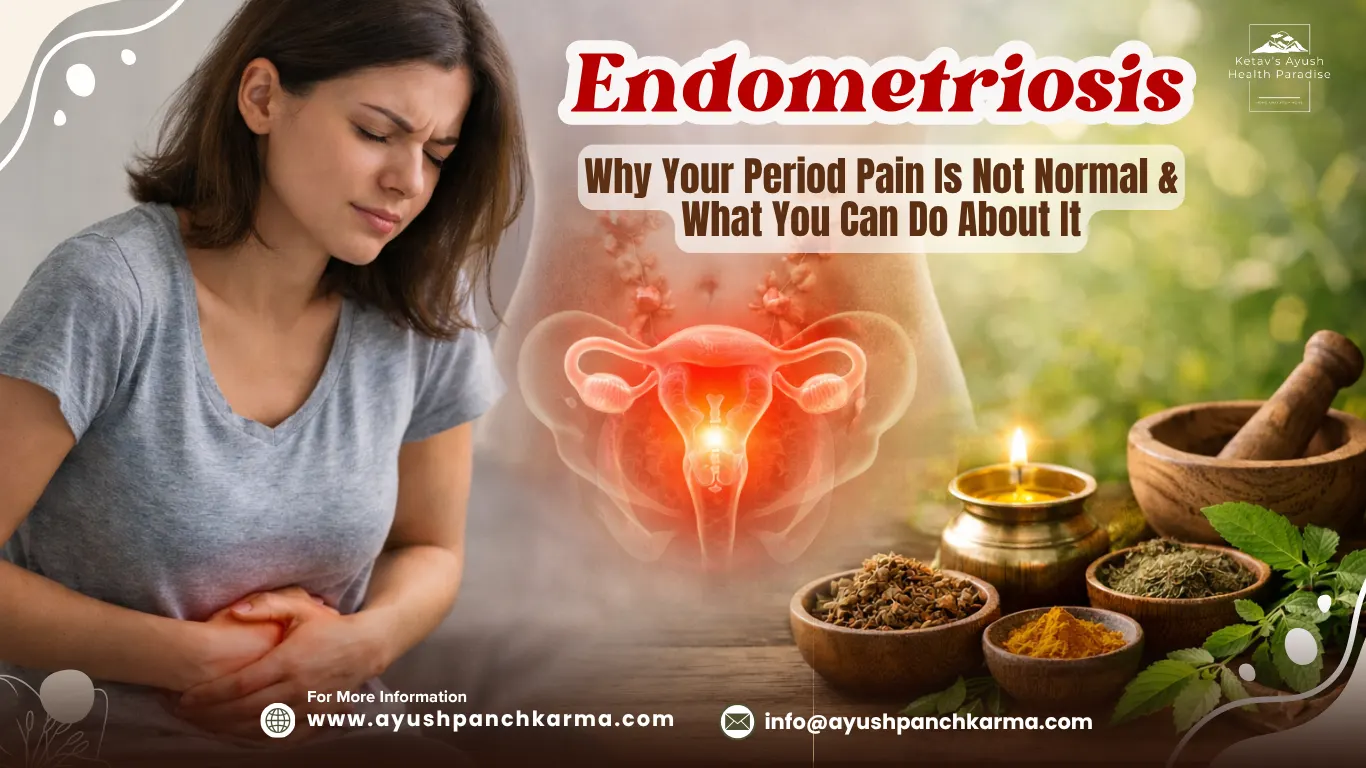
Endometriosis is a chronic condition in which tissue similar to the lining of the uterus grows outside the uterus. These misplaced "endometrial implants" most commonly attach to the ovaries, Fallopian tubes, and the lining of the pelvic cavity — but they can appear elsewhere in the body too.
Endometriosis: Why Your Period Pain Is Not Normal & What You Can Do About It
Millions of women around the world are told that their excruciating period pain is "just part of being a woman." It is not. Endometriosis is a real, diagnosable chronic condition — and it deserves real attention, real answers, and real relief.
This article brings together what modern science knows about endometriosis and what Ayurveda, one of the world's oldest healing systems, offers as a path toward deeper recovery.
What Is Endometriosis?
Endometriosis is a chronic condition in which tissue similar to the lining of the uterus grows outside the uterus. These misplaced "endometrial implants" most commonly attach to the ovaries, Fallopian tubes, and the lining of the pelvic cavity — but they can appear elsewhere in the body too.
Unlike normal uterine tissue that sheds during menstruation, this tissue has nowhere to go. The result: inflammation, scar tissue, and often, severe pain.
Recognising the Signs: Your Body Is Trying to Tell You Something
Endometriosis does not look the same for everyone. For some women, symptoms worsen progressively; for others, they fluctuate. The common thread is pain — pain that is real, and pain that should not be dismissed.
Key signs to watch for:
• Chronic Pelvic Pain: Intense cramping, lower back pain, and discomfort during pelvic exams — often far beyond typical period cramps.
• Menstrual Irregularities: Heavy periods (menorrhagia) or unexpected bleeding between cycles.
• Functional Pain: Pain during intercourse, urination, or bowel movements — especially around menstruation.
• Systemic Symptoms: Persistent fatigue, the notorious "endo belly" (bloating), diarrhea, or constipation.
Left unmanaged, endometriosis can lead to fertility challenges and, in some cases, a slightly elevated risk of specific ovarian cancers. Early recognition matters.
The Ayurvedic View: Understanding the Root Imbalance
Ayurveda does not see disease as something that simply "happens" to us. Instead, it traces illness back to underlying imbalances in the body's fundamental energies — the three doshas: Vata, Pitta, and Kapha.
In Ayurveda, endometriosis does not carry a single name but falls under Yoni Vyapat, the category of gynaecological disorders. It is considered a Sannipatika condition — meaning all three doshas are simultaneously disturbed:
• Kapha: Governs growth and structure. When imbalanced, it drives the abnormal accumulation of cells and tumour-like tissue growths.
• Pitta: Governs heat, blood, and hormones. When aggravated, it fuels inflammation, hormonal fluctuations, and the involvement of the blood tissues.
• Vata (specifically Apana Vayu): The primary force responsible for the downward flow of menstruation. When vitiated, it displaces endometrial cells to locations outside the uterus — and is the source of the characteristic sharp, piercing pain.
The Role of Ama (Toxins)
At the heart of Ayurveda's understanding of endometriosis is the concept of Ama — metabolic toxins that accumulate when Agni (digestive fire) is weakened. This build-up obstructs circulation and elimination pathways, preventing nutrients from reaching cells and blocking the body's natural cleansing mechanisms. Over time, this disrupts biological rhythms and compromises immune function.
How Is Endometriosis Diagnosed?
Modern medicine uses a step-by-step approach to diagnosis:
1. Pelvic Exam: A physical examination to feel for large cysts, nodules, or scar tissue.
2. Imaging — Ultrasound & MRI: To identify the size and location of implants or so-called "chocolate cysts" (endometriomas filled with old blood).
3. Laparoscopy: The only definitive diagnostic tool — a minor surgical procedure that allows a direct visual inspection of the pelvic cavity.
While conventional medicine primarily focuses on managing symptoms rather than achieving a complete cure, an integrative approach combining Panchakarma (Ayurvedic detoxification) and Rasayana (rejuvenation) therapies shows very encouraging outcomes — particularly when treatment begins early.
Healing Through Diet & Lifestyle
Managing endometriosis requires a two-pronged approach: reducing inflammation and rebalancing hormones. What you eat plays a powerful role in both.
Foods to Limit or Avoid
These are known to promote inflammation or contribute to estrogen dominance:
• Alcohol
• Caffeine
• Gluten (for those with sensitivity)
• Red meat and processed meats
• Saturated fats and trans fats
Foods to Embrace
• Fibre-Rich Foods: Fruits, vegetables, and whole grains help the body eliminate excess oestrogen naturally.
• Iron-Rich Foods: Spinach, broccoli, and seeds — essential for combating fatigue caused by heavy bleeding.
• Healthy Fats (Omega-3s): Salmon, walnuts, and flaxseeds to actively fight inflammation at the cellular level.
• Antioxidant-Rich Foods: Berries, beetroot, and citrus fruits to support cellular repair and reduce oxidative stress.
The Path Forward: More Than Just Symptom Management
True recovery from endometriosis is not simply about suppressing symptoms — it is about correcting the underlying imbalance. By combining internal Ayurvedic medications to clear Ama, with Yoga, mindfulness meditation, and specialised therapeutic protocols, patients can work toward healing at a deeper level, not just temporary relief.
To every woman who has been dismissed, told to "just take a painkiller," or made to feel like her suffering is an exaggeration — this is for you. Endometriosis is real. Your pain is valid. And there is a path forward.
Take the First Step Toward Healing 🌿
If you are struggling with endometriosis symptoms and looking for a natural and effective Ayurvedic treatment, expert guidance can make a big difference.
👉 Book your consultation today:
https://ayushpanchkarma.com/book-appointment
Start your journey toward pain-free periods and better hormonal health — naturally.
DISCLAIMER: The contents of this article reflect the author's Ayurvedic knowledge and clinical experience. This material is intended for educational and awareness purposes only — not for diagnosis or treatment. Please consult a qualified Ayurvedic physician before making changes to your diet, lifestyle, or supplement regimen.