
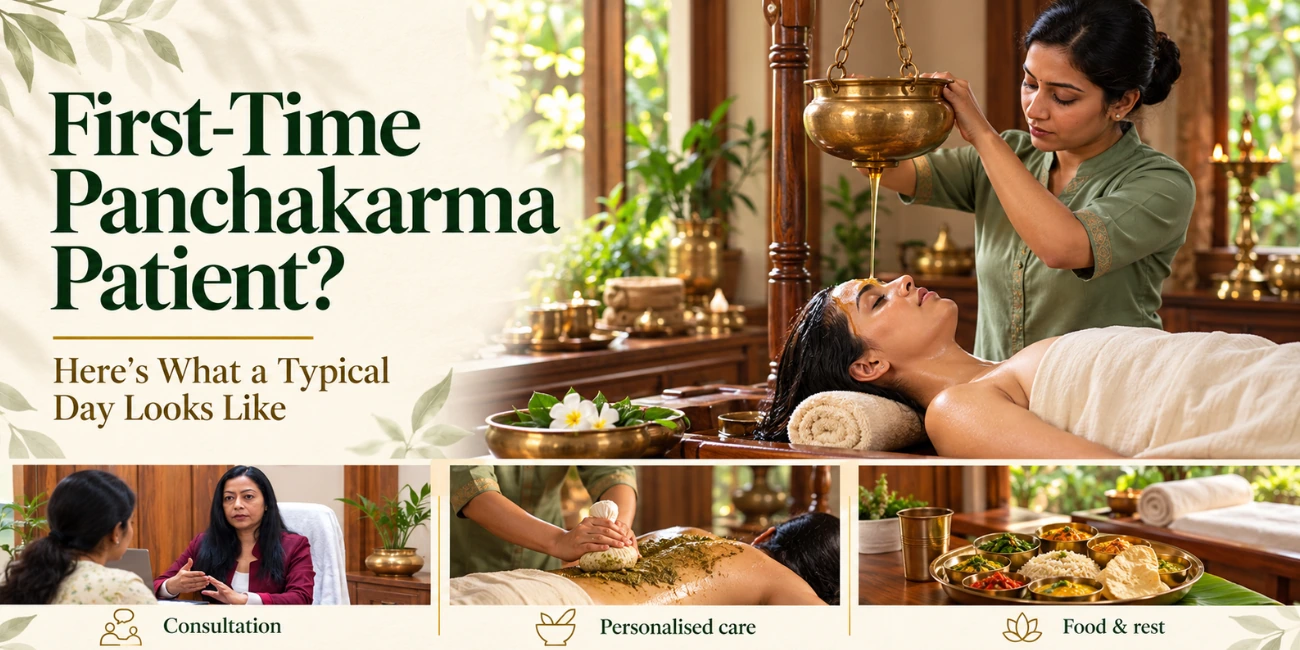
A typical Panchakarma day at a centre in Palampur begins around 6:30 am with warm water and gentle movement. Mid-morning is for the main treatments: an herbal oil massage, then a herbal steam bath. Lunch is a simple, warm, home-style meal such as khichdi. The afternoon is for rest and a short check-in with your Vaidya (Ayurvedic physician). Supper is light and early, and you are usually in bed by 9:30 pm. It is slow on purpose, and the slowness is part of the therapy.
That is the headline. The rest of this guide fills in the detail so nothing on day one surprises you.
Key takeaways for first-timers
Panchakarma is a programme, not a single treatment. Most first-time programmes run 7, 14 or 21 days.
Every programme has three phases: preparation, the main cleansing therapy, and a recovery diet.
Your daily schedule is personalised. The sample below is a template your Vaidya will adjust after examining you.
Expect a quiet routine, simple food and very little screen time.
Feeling tired, a bit emotional or slightly unwell around days 3 to 5 is common and usually passes.
Some people should not do Panchakarma, or should wait. Tell your doctor about every medicine and condition before you book.
What is Panchakarma, in plain words?
Panchakarma means 'five actions' in Sanskrit. It is the Ayurvedic system of cleansing and rebalancing the body, built around the idea that stored-up waste (called ama) and imbalanced doshas contribute to disease. The classical five actions are:
Vamana – therapeutic vomiting, used for certain kapha-type conditions
Virechana – a medicated purgation that clears the intestines and liver-related channels
Basti – medicated enemas, often described as the most important of the five
Nasya – herbal oils or powders administered through the nose
Raktamokshana – bloodletting, used rarely and only in specific cases
In real practice, most patients do not receive all five. Your Vaidya picks the ones that suit your body and your health concern. A lot of programmes are made up of gentler therapies such as massage, steam, oil dripping on the forehead and a carefully planned diet. If that sounds like a spa, it is not. Each step has a clinical reason.
The three phases you will go through
Every well-run programme follows the same arc. Understanding it makes the daily routine make sense.
Phase 1: Poorvakarma (preparation)
This is where your body is made ready to let go of what it is holding. It usually takes 3 to 7 days, longer if your digestion is sluggish.
Deepana-pachana: herbs and light food to wake up digestion and burn off ama.
Snehana: oil therapy. You drink medicated ghee in rising doses (called snehapana) and receive daily oil massage on the outside.
Swedana: herbal steam or sweating, which loosens what the oil has softened.
Phase 2: Pradhanakarma (the main cleansing)
This is the core of the programme. Depending on your constitution and condition, you may receive virechana, basti, nasya or a combination. It is usually 3 to 8 days and is the phase when you will feel the most change.
Phase 3: Paschatkarma (recovery)
After cleansing, your digestion is delicate. You are brought back to normal food in stages, a process called samsarjana krama. You start with thin rice water and gradually move to soups, then soft grains, then regular meals. This phase matters more than most people expect. Skipping it undoes much of the work.
How long does a first Panchakarma programme take?
There is no prize for choosing the longest option. Seven days suits a healthy person wanting a reset. Chronic problems generally need 14 days or more, plus follow-up at home. Your consultation will settle it.
Your first 24 hours: arrival and consultation
You do not start treatment the moment your bag hits the floor. The first day is about assessment.
Arrival and settling in. Most guests arrive by noon after the drive from Pathankot, Kangra or Chandigarh. You get a room, a herbal drink and time to rest.
The consultation. Expect 30 to 60 minutes with the Vaidya. They will ask about your health history, sleep, appetite, bowel habits, energy, mood, and what medicines you take. They will check your pulse (nadi pariksha), look at your tongue, and press on your abdomen. Many people are surprised by how many questions are about digestion and stool. That is because Ayurveda reads a lot from the gut.
If you have blood reports, scans or a medication list, bring them. They help the physician keep the programme safe.
Your plan. By the evening you will be told your programme length, your diet, and your treatment schedule for the next few days.
A typical Panchakarma day, hour by hour
Here is a sample from the preparation phase, which is what most first-timers experience for the first several days. Timings shift between centres and patients.
On main cleansing days the shape changes. There is less food, more rest, and more medical supervision.
The morning, in more detail
The morning is when your body is quietest, so the more demanding parts of the day happen early.
Warm water. You will probably be asked to drink warm or hot water as soon as you wake. It supports digestion and helps the bowels move.
Gentle movement. This is not a workout. Think slow stretches, a few sun salutations if you are comfortable, or a walk among the deodar and oak trees. Your Vaidya may skip it altogether if you are weak or unwell.
Snehapana (drinking ghee). If you are on the oil-preparation stage, you will take a measured dose of medicated ghee. Starting amounts are small, about 30 ml, and rise day by day for 3 to 7 days, under supervision. It is the part most beginners worry about, and it is usually less dramatic than they expect. Some people feel heavy or slightly nauseated. Tell the staff right away if you do.
The treatment block
Between roughly 9:30 and 11:30 am, treatments take over. Here are the ones you are most likely to meet.
Abhyanga: the oil massage
Two therapists work on you at the same time, in rhythm, with warm herbal oil chosen for your dosha. It lasts 45 to 60 minutes. The strokes follow the direction of the body's hair and joints. It is firm but not painful. You should tell the therapist if the pressure is too much.
Swedana: the herbal steam
After the massage you sit or lie in a steam cabinet with your head outside. The steam is infused with herbs. Sessions last 10 to 20 minutes. Your Vaidya sets the temperature and watches for dizziness. If you have heart conditions, very high blood pressure or are pregnant, you will be assessed carefully first.
Shirodhara: oil on the forehead
A thin stream of warm oil is poured over your forehead for 30 to 45 minutes. Many people fall asleep. It is common for sleep and anxiety complaints, and we cover it in more detail in our guide on calming the mind through Panchakarma.
Pizhichil, Kati Basti and other local therapies
Depending on your complaint, you may get warm oil poured over a joint (such as kati basti for the lower back) or a rhythmic oil bath for the whole body (pizhichil). Those with joint concerns will find more in this explanation of how Panchakarma is adapted for joint pain.
Virechana and basti days
These are the main cleansing days. They look different from the preparation routine:
Virechana day: you take a herbal laxative in the early morning. You will visit the bathroom several times over the next few hours. The staff track the number and nature of motions, because that tells the physician whether the cleansing was complete. You rest and drink warm water. The evening meal is thin rice gruel.
Basti days: medicated oil or decoction is introduced rectally in a quick, supervised procedure. A course often runs 8, 15 or 30 days and can be done over a longer period. It is considered a key therapy for vata-type problems such as joint and nerve complaints. If your concern is a stiff or painful spine, read what a spine-focused course involves.
If you are anxious about either, say so at the consultation. A good Vaidya will explain every step and never rush you into one.
What will I eat during Panchakarma?
Food is treated as medicine, and it is simple.
Likely foods
Kitchari (rice and moong dal cooked soft with ghee and mild spices)
Thin vegetable soups
Steamed or lightly cooked seasonal vegetables
Stewed apple or pear
Rice gruel (peya) and thicker rice porridge (vilepi)
Warm water, cumin–coriander–fennel tea
Foods you will not get
Raw salads and cold drinks
Fried or packaged food
Coffee, alcohol, tobacco
Heavy dairy such as paneer and cold milk
Wheat-heavy and very spicy dishes
If you are used to three cups of coffee a day, begin cutting down a week before you arrive. Caffeine headaches are one of the most common complaints in the first two days.
People trying to manage their weight sometimes ask whether this food is enough. For the answer, see our guide to a medically paced weight-management programme.
Rest, phones and silence
Most centres ask guests to keep their phones away for most of the day. You will be asked to avoid late nights, daytime stress and heavy conversation. For many people this is the hardest part. It also tends to be the most helpful.
Sleep is part of the treatment. Aim to be in bed by 9:30 pm. Your body does a lot of its repair at night, and the oil therapies make you sleepier anyway.
What will I feel during Panchakarma?
This is the question people most want answered honestly. Here is what patients commonly describe.
Days 1–2: Curious, a little restless. Possible caffeine withdrawal headache. Appetite may drop.
Days 3–5: This is the stretch when many people feel worst. Tiredness, heaviness, mild nausea, low mood or sudden tearfulness are all reported. They usually pass within a day or two. Tell your Vaidya what you are feeling; adjustments are common.
Days 5–10: Energy gradually rises. Many report deeper sleep, lighter digestion, clearer skin and calmer thinking.
Last days: Hunger returns in a clean way. You may notice that tastes seem sharper and that you feel unusually rested.
After you leave: The results hold best if you keep to the recovery diet, sleep early and avoid snapping back to old habits. Many centres give a take-home plan for 2 to 4 weeks.
A word of honesty: Panchakarma is not a quick fix and it does not work equally for everyone. Individual response varies, and published clinical evidence is still developing. Ask your Vaidya what outcomes are realistic for your particular condition.
Why do people choose Palampur for Panchakarma?
Palampur sits at about 1,200 metres in Himachal Pradesh's Kangra Valley, at the foot of the Dhauladhar range. The air is clean, the climate is mild for much of the year, and the town is known for tea gardens and pine and deodar forests. It is quiet, which suits a programme built on rest.
There are practical advantages as well. Palampur is a few hours from Pathankot railway station and the Gaggal airport at Kangra, and it is easy to reach from Chandigarh and Mohali by road. You are away from the city's noise but not stranded.
The best months for Panchakarma are traditionally spring and autumn, when the weather is neither harshly cold nor hot. Many centres run all year. Winters can be cold, so ask about heated rooms.
What should I pack?
Loose, comfortable cotton clothes you do not mind getting oily
A shawl or light jacket; evenings are cool
Slippers and a pair of walking shoes
Your medical reports, prescriptions and a list of medicines
A notebook and a book (no heavy workload)
Your own toiletries; most centres provide herbal soap and oil
A reusable water bottle
Leave behind: work laptops, strong perfumes, and the plan to 'just check email quickly'.
Who should talk to a doctor before booking?
Panchakarma is not right for everyone at every moment. Please speak to your regular doctor and your Vaidya first if you:
Are pregnant or breastfeeding
Have heart disease, uncontrolled high blood pressure or uncontrolled diabetes
Have had recent surgery or have a severe infection
Are very weak, underweight or recovering from illness
Take blood thinners, steroids, insulin or other critical medicines
Have a history of eating disorders
Are under 12 or over 75 (programmes are modified)
Never stop prescription medicines on your own to 'make room' for Panchakarma. A responsible centre will work alongside your doctor.
Common questions first-timers ask
What is a typical day in a Panchakarma programme?
A typical day includes waking early, drinking warm water, gentle movement, a morning dose of medicated ghee or herbs (in the preparation phase), an oil massage and herbal steam, a light lunch, afternoon rest, a short check-in with the Vaidya, a light early supper and sleep by 9:30 pm.
Is Panchakarma painful?
No. Most treatments are relaxing. The parts people find uncomfortable are mostly dietary: drinking ghee, going without coffee, and the digestive effects of virechana. Your team should explain each step before you do it.
How long does a Panchakarma session last?
A daily treatment session lasts around 1.5 to 2.5 hours. A full programme lasts 7, 14 or 21 days. Some long-term conditions need repeat programmes.
Can I work or use my phone during Panchakarma?
You can, but it reduces the benefit. Most people do best with phones off for most of the day and any urgent work kept to a short window.
Will I lose weight during Panchakarma?
Some people lose 1 to 4 kg in a 14-day programme, mostly water and gut contents. This is not the same as fat loss. If weight is your main goal, ask for a programme designed for it.
What are the side effects of Panchakarma?
Common short-term effects include tiredness, headache, nausea, loose stools, low mood and body aches. Serious side effects are rare when therapies are done under qualified supervision and with proper screening. Report anything unusual to your doctor at once.
Can I do Panchakarma at home?
Some parts, such as self-massage, warm water and an early dinner, are easy to carry into daily life. The main therapies like virechana and basti should be supervised by a qualified Ayurvedic physician.
How should I prepare in the week before I arrive?
Cut back on coffee, alcohol, fried and processed food. Sleep earlier, drink warm water, eat lighter dinners and walk daily. Try to clear your schedule so you are not working until the night before.
What happens after Panchakarma ends?
You follow the staged diet for several days, return slowly to normal activity and avoid strenuous exercise, cold food and late nights for 1 to 2 weeks. Your Vaidya will usually schedule a follow-up call.
Is Panchakarma safe?
For most healthy adults, it is considered safe when done under a qualified practitioner after proper screening. Quality varies between centres, so check the qualifications of the physician and ask how emergencies are handled.
Does insurance cover Panchakarma in India?
Coverage varies. Some health policies cover AYUSH treatments when taken as inpatient care at a recognised hospital. Check your policy document and ask the centre whether it is eligible.
Questions to ask before you book
A good centre welcomes these.
Who is the supervising physician and what are their qualifications (BAMS, MD Ayurveda)?
Will I be examined before the programme is fixed?
Are treatments personalised or the same for everyone?
Is a doctor available around the clock during cleansing days?
What does the recovery diet look like, and is it included?
What is the total cost, and what is not included?
Do you give a home-care plan after I leave?
Where to go from here
If you are comparing programmes, a few of our other guides may help you decide what to ask for:
Troubled by eczema or psoriasis? Read about skin-focused detox plans.
Dealing with stiff, painful joints? See how Panchakarma is adapted for joint pain.
Feeling frayed or sleepless? Start with calming the mind through Panchakarma.
Planning your first Panchakarma stay in Palampur
If you are comparing options, start by looking for the best Panchakarma centre in Palampur for your needs. Check qualifications, ask how the plan is personalised, and compare Panchakarma treatment packages in Himachal on what is included, not just the headline price.
If you already know your main concern, these guides go deeper:
Joint stiffness or swelling: Panchakarma for arthritis in Palampur
Burnout, poor sleep or worry: Panchakarma for stress and anxiety retreat
Weight and metabolism: Ayurvedic weight management programme
Long-standing back or neck pain: Panchakarma for chronic back pain relief
Psoriasis, eczema or other skin trouble: Ayurvedic skin disorder treatment in Palampur
Ready to talk to someone? Book a consultation with Ketav's Ayush Health Paradise in Palampur at [phone number], [email] or through ayushpanchkarma.com. A short call is enough to understand which programme fits you, and there is no obligation.
Medical disclaimer: This article is for general education and is not a substitute for professional medical advice, diagnosis or treatment. Panchakarma is a complementary approach. Always consult your doctor before starting any new therapy, especially if you have a medical condition or take regular medication.