
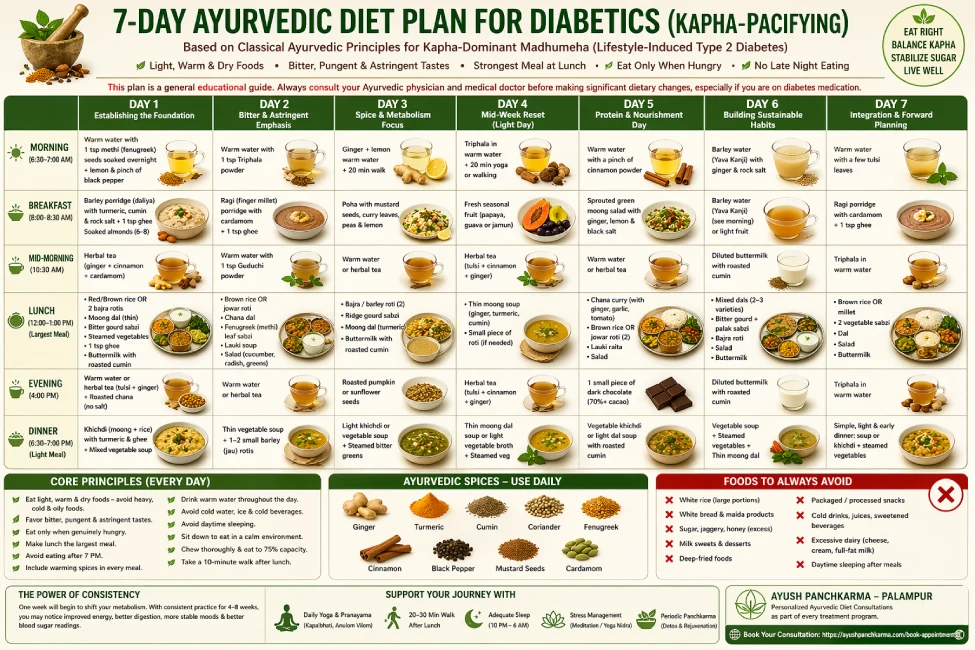
Food is medicine in Ayurveda — and for diabetic patients, the right diet is not just supportive therapy, it is treatment itself. The Ayurvedic approach to diet for Madhumeha (diabetes) is rooted in a fundamental principle: eat in a way that pacifies Kapha dosha, kindles Agni (digestive fire), and prevents the accumulation of Ama (metabolic toxins).
This 7-day meal plan is designed based on classical Ayurvedic dietary guidelines for Kapha-dominant Madhumeha — the most common type, corresponding to lifestyle-induced Type 2 diabetes. It is not a calorie-counting plan; it is a food quality and food intelligence plan.
Please note: This plan is a general educational guide. Always consult your Ayurvedic physician and medical doctor before making significant dietary changes, especially if you are on diabetes medication.
Core Principles of the Kapha-Pacifying Diabetic Diet
Before the 7-day plan, understand these foundational rules that apply every day:
- Eat light, warm, and dry foods: Heavy, cold, and oily foods aggravate Kapha and slow metabolism.
- Favor bitter, pungent, and astringent tastes: These three tastes pacify Kapha and support blood sugar regulation. Avoid excessive sweet, salty, and sour tastes.
- Eat only when genuinely hungry: Overeating is one of the primary causes of Kapha aggravation.
- Make lunch the largest meal: Agni is strongest between 10 AM and 2 PM — this is when the body can best metabolize complex foods.
- Avoid eating after 7 PM: Late-night eating suppresses Agni and promotes Ama accumulation.
- Include warming spices with every meal: Ginger, black pepper, turmeric, cumin, coriander, and fenugreek support metabolism.
- Drink warm water throughout the day: Avoid cold water, ice, and cold beverages — they suppress Agni.
- Avoid daytime sleeping: Sleeping during the day aggravates Kapha significantly.
Day 1 — Establishing the Foundation
Morning (6:30–7:00 AM):
- Wake early (before sunrise ideally)
- Drink 1 glass of warm water with 1 tsp methi (fenugreek) seeds soaked overnight
- Optional: Add a squeeze of lemon and a pinch of black pepper
Breakfast (8:00–8:30 AM):
- Warm barley porridge (daliya) cooked with a pinch of turmeric, cumin, and rock salt
- 1 tsp ghee stirred in
- Handful of soaked and peeled almonds (6–8)
Mid-morning (10:30 AM):
- 1 small cup of warm herbal tea: ginger + cinnamon + cardamom
Lunch (12:00–1:00 PM) — largest meal:
- 1 cup red/brown rice or 2 small rotis of bajra (pearl millet) flour
- 1 cup moong dal (yellow split mung) cooked thin
- 1 cup bitter gourd (karela) sabzi cooked with turmeric and mustard seeds
- 1 small bowl of steamed vegetables (broccoli, green beans, bottle gourd)
- 1 tsp cow's ghee
- Buttermilk (thin, unsweetened, with a pinch of roasted cumin)
Evening (4:00 PM):
- Warm water or herbal tea (tulsi + ginger)
- 1 small bowl of roasted chana (chickpeas) — no salt
Dinner (6:30–7:00 PM) — light:
- Khichdi (1:1 rice and moong dal cooked soft) with a pinch of turmeric and ghee
- 1 cup mixed vegetable soup
- Avoid heavy proteins or grains at dinner
Day 2 — Bitter and Astringent Emphasis
Morning: Warm water + 1 tsp Triphala powder in warm water (taken first thing, this supports digestion and mild detox)
Breakfast: Ragi (finger millet) porridge — slightly sweet, naturally low GI. Cook with water, a pinch of cardamom, and 1 tsp of ghee. Ragi has a very low glycemic index and is rich in calcium and fiber.
Lunch: Small serving of brown rice or jowar (sorghum) roti + chana dal (chickpea lentil) — mildly spiced with ginger, cumin, and coriander + Fenugreek (methi) leaf sabzi — bitter taste, excellent for blood sugar regulation + Lauki (bottle gourd) soup + Small bowl of fresh salad: cucumber, radish, and bitter leaf greens
Evening: Warm water with 1 tsp of Guduchi (Tinospora cordifolia) powder — a key Ayurvedic herb for metabolic support
Dinner: Thin vegetable soup with seasonal vegetables + 1–2 small rotis of barley (jau) flour — barley is specifically recommended in classical Ayurvedic texts for Prameha
Day 3 — Spice and Metabolism Focus
Morning: Ginger + lemon + warm water. Follow with a 20-minute walk before breakfast.
Breakfast: Poha (flattened rice) lightly cooked with mustard seeds, curry leaves, green chili, and peas. Squeeze lemon over and serve warm. (Flattened rice has a moderate GI — portion size is key.)
Lunch: Bajra or barley roti (2 small) + Ridge gourd (turai) sabzi + Turmeric-rich moong dal + Buttermilk with roasted cumin and rock salt
Key spices to use generously this week:
- Turmeric: Anti-inflammatory, supports liver detox
- Fenugreek: Slows glucose absorption, contains mucilage that coats the intestine
- Cinnamon: Supports insulin receptor sensitivity
- Cumin: Improves digestion and reduces blood sugar
- Ginger: Kindles Agni and reduces inflammation
- Black pepper: Enhances absorption of all other herbs
Evening: Handful of roasted pumpkin or sunflower seeds — good fats, low GI snack
Dinner: Light khichdi or vegetable soup + Steamed bitter greens (neem leaves in small amounts, methi leaves, or karela)
Day 4 — Mid-Week Reset: Fasting or Light Day
Day 4 in many Ayurvedic protocols is a gentle detox or lighter eating day — to give the digestive system a rest and allow Agni to rebuild.
Morning: Triphala in warm water + 20-minute yoga or walking
Breakfast: Fresh seasonal fruit (papaya, guava, or jamun/Indian blackberry — jamun is particularly beneficial for diabetes). Avoid bananas, mangoes, and high-sugar fruits.
Lunch: Moong soup (thin green moong cooked with ginger, turmeric, and cumin) — this is the classic Ayurvedic "Laghu Ahara" (light food). You may add a small piece of roti if needed.
Evening: Warm herbal tea (tulsi + cinnamon + ginger)
Dinner: Thin moong dal soup or light vegetable broth with a small portion of steamed vegetables
Note on jamun (Indian blackberry): Classical Ayurvedic texts specifically recommend jamun seeds for Madhumeha. Jamun seed powder is often included in anti-diabetic herbal formulations. Fresh jamun fruit, when in season, is a superb Kapha-pacifying food for diabetics.
Day 5 — Protein and Nourishment Day
By day 5, we increase slightly more protein and nourishing foods while maintaining the Kapha-pacifying framework.
Breakfast: Sprouted green moong salad with grated ginger, lemon, and black rock salt — served at room temperature or gently warmed. Sprouts are probiotic-rich and low GI.
Lunch: Chana (whole Bengal gram) curry cooked with onion, ginger, garlic, and tomato with minimal oil + Brown rice or 2 jowar rotis + Lauki (bottle gourd) raita made with low-fat yogurt, cumin, and fresh coriander
Key protein sources appropriate for Kapha-diabetic patients:
- Moong dal (easiest to digest, low GI)
- Chana dal (high in resistant starch, excellent for blood sugar)
- Rajma (kidney beans — moderate portion)
- Sprouts of various lentils
- Paneer (in small amounts, ideally low-fat)
- Eggs or lean chicken (if non-vegetarian) — lightly prepared with digestive spices
Evening: 1 small piece of dark chocolate (70%+ cacao, no milk chocolate) — a permissible indulgence in moderation
Dinner: Vegetable khichdi or light dal soup with roasted cumin
Day 6 — Building Sustainable Habits
Day 6 is about eating mindfully and reflecting on which foods and eating patterns have made you feel most energized and light throughout the week.
Mindful eating rules for diabetics in Ayurveda:
- Sit down to eat — never eat while walking, standing, or using screens
- Eat in a calm environment — stress hormones spike blood sugar during meals
- Chew thoroughly — digestion begins in the mouth
- Eat to 75% capacity — leave some space in your stomach
- Take a gentle 10-minute walk after lunch — this significantly helps post-meal blood sugar
Breakfast: Barley water (Yava Kanji) — barley cooked in 6 times the water, strained, with a pinch of rock salt and ginger. This is a classical Ayurvedic morning drink for Prameha.
Lunch: Mixed dals (combine 2–3 varieties) + Bitter gourd + palak (spinach) sabzi + Bajra roti
Evening: Warm glass of diluted buttermilk with roasted cumin — excellent for gut health and digestion
Dinner: Light vegetable soup + Steamed seasonal vegetables + Small bowl of thin moong dal
Day 7 — Integration and Forward Planning
On the final day, we integrate everything learned and plan for the weeks ahead.
Breakfast: Ragi porridge (as on Day 1) — completing the week with a grounding, nourishing start
Lunch: Your best meal of the week — apply everything you've learned about spices, portions, and food combinations. Enjoy a full Ayurvedic thali with brown rice or millets, two vegetable preparations, a dal, buttermilk, and a small salad.
Evening: Triphala in warm water — this has become your daily companion for digestive health
Dinner: Simple, light, and early — the discipline of early dinner is one of the most impactful habits for blood sugar control
Foods to ALWAYS AVOID with Madhumeha:
- White rice in large portions
- White bread, maida (refined flour) products
- Sugar, jaggery, and honey in excess
- Milk sweets and desserts
- Deep-fried foods
- Packaged/processed snacks
- Cold drinks, juices, sweetened beverages
- Excessive dairy (especially cheese, cream, full-fat milk)
- Daytime sleeping after meals
The Power of Consistency
One week of Ayurvedic eating will not reverse years of metabolic imbalance. But it will begin to shift things. You may notice improved energy, better digestion, more stable moods, and gradually improving blood sugar readings over 4–8 weeks of consistent practice.
For best results, combine this dietary approach with:
- Daily morning yoga and pranayama (Kapalbhati and Anulom Vilom are particularly beneficial)
- A 20–30 minute walk after lunch
- Adequate sleep (10 PM to 6 AM is the ideal Ayurvedic sleep window)
- Stress management through meditation or Yoga Nidra
- Periodic Panchkarma at a qualified Ayurvedic center
At Ayush Panchkarma in Palampur, we provide personalized dietary consultations as part of every treatment program — because the right food for you depends on your unique Prakriti and current imbalance.
Learn more and book your consultation: https://ayushpanchkarma.com/book-appointment