
Book Your Consultation Ready to experience authentic Himalayan Ayurveda? Contact Ayush Panchkarma to begin your personalized treatment journey. Located in Gopalpur, Palampur, Himachal Pradesh — in the pristine foothills of the Himalayas. Website: ayushpanchkarma.com | Email: doctor@ayushpanchkarma.com | WhatsApp: +91-8894356919
What Is Alcoholic Liver Cirrhosis?
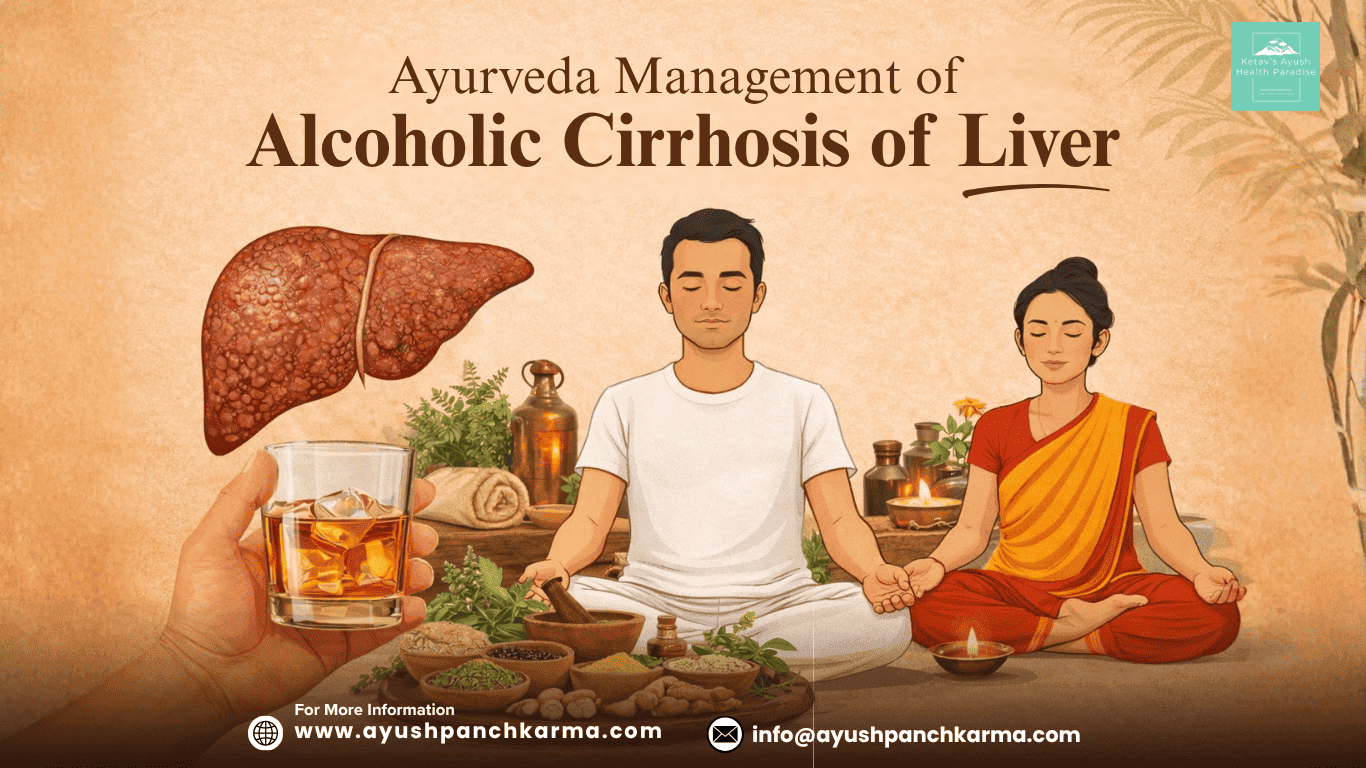
Alcoholic liver cirrhosis is the final, advanced stage of alcohol-related liver disease. Prolonged alcohol consumption gradually replaces healthy liver tissue with irreversible scar tissue (fibrosis), severely impairing the liver's ability to filter toxins, produce proteins, and support digestion.
Left untreated, it progresses to life-threatening complications including liver failure, jaundice, ascites, and hepatic encephalopathy. Early intervention — combining modern medicine with time-tested Ayurvedic therapies — offers the best chance of slowing disease progression and restoring quality of life.
Signs and Symptoms of Liver Cirrhosis
Recognising symptoms early is critical. Watch for:
- Persistent fatigue and unexplained weakness
- Loss of appetite and rapid, unintended weight loss
- Abdominal pain — especially in the upper right quadrant
- Jaundice — yellowing of the skin and whites of the eyes
- Swelling in the legs and abdomen (ascites — fluid build-up)
- Easy bruising, prolonged bleeding, and itchy skin
- Spider angiomas (spider-like blood vessels) and redness of palms
- Mental confusion, poor concentration, and memory difficulties
- Vomiting blood or passing black tarry stools (in severe, advanced cases)
⚠️ If you notice multiple symptoms together, seek medical evaluation immediately.
Causes and Risk Factors
The primary cause is chronic, heavy alcohol consumption over many years. Additional risk factors include:
- Drinking more than 2–3 units of alcohol daily for over a decade
- Poor nutrition and vitamin deficiencies alongside alcohol use
- Co-existing viral hepatitis (B or C)
- Genetic predisposition and family history of liver disease
- Obesity and metabolic syndrome
For a deeper understanding of causes and Ayurvedic perspectives, explore our Ayurvedic treatment resources.
Complications of Alcoholic Liver Disease
Without timely treatment, alcoholic liver cirrhosis can lead to:
- Portal hypertension — increased blood pressure in the liver's portal vein
- Hepatic encephalopathy — toxic build-up causing brain dysfunction
- Hepatocellular carcinoma (liver cancer)
- Spontaneous bacterial peritonitis and other severe infections
- Varices — enlarged veins in the oesophagus prone to life-threatening bleeding
Modern Medical Treatment
Conventional treatment focuses on halting further damage and managing complications:
- Complete and permanent alcohol abstinence — the single most critical step
- Medical-grade nutritional therapy to address deficiencies
- Diuretic medications and paracentesis to relieve ascites
- Beta-blockers to reduce portal hypertension and variceal bleeding risk
- Antibiotics to prevent and treat infections
- Liver transplant evaluation in end-stage cirrhosis
Ayurvedic treatment works best as a complementary approach alongside — not instead of — your doctor's recommended care plan.
Ayurvedic Treatment for Liver Cirrhosis
Ayurveda views alcoholic liver cirrhosis primarily as a Pitta and Rakta imbalance, combined with Ama (metabolic toxin) accumulation in the Yakrit (liver). Treatment focuses on three pillars: detoxification (Shodhana), rejuvenation (Rasayana), and lifestyle correction (Nidana Parivarjana).
1. Shodhana (Detoxification Therapy)
Shodhana therapies are designed to clear accumulated Ama from the liver and gut, reduce Pitta excess, and restore normal metabolic pathways. The detoxification process begins with preparatory treatments (Purvakarma) — including Snehana (oleation) and Swedana (sudation) — before main therapies commence.
2. Panchakarma for Liver Detoxification
Panchakarma is the centrepiece of Ayurvedic detoxification. A structured 15–21 day programme at a qualified centre typically includes:
- Virechana (therapeutic purgation) — the primary Panchakarma for Pitta disorders; uses medicated oils and herbal formulations to flush hepatic toxins
- Basti (medicated enema) — oleating and cleansing enemas that support colon health and indirectly reduce liver load
- Raktamokshana (bloodletting) — in select cases, to reduce Rakta-Pitta vitiation
Explore our full range of Panchakarma treatments at Ayush Panchkarma Centre.
3. Rasayana (Rejuvenation Therapy)
Following Shodhana, Rasayana therapies are introduced to rebuild damaged liver cells (hepatocytes), restore immunity (Ojas), and improve overall vitality. Classical Rasayana formulations help:
- Support healthy hepatocyte regeneration
- Strengthen immunity compromised by chronic alcohol use
- Improve energy levels, digestive strength (Agni), and mental clarity
Our Vaidyas personalise Rasayana protocols during Ayurvedic consultation based on individual Prakriti (constitution) and disease stage.
Best Ayurvedic Herbs for Liver Cirrhosis
These herbs are classically described in Ayurvedic texts for their Yakrit-protective (hepatoprotective) and Pitta-pacifying properties:
- Kutki (Picrorhiza kurroa) — one of the most potent hepatoprotective herbs; supports bile flow and liver enzyme normalisation
- Bhumyamalaki (Phyllanthus niruri) — widely studied for liver support; pacifies Pitta and supports healthy bilirubin metabolism
- Kalmegh (Andrographis paniculata) — bitter herb that clears hepatic Ama and supports detoxification pathways
- Giloy / Guduchi (Tinospora cordifolia) — powerful Rasayana and immunomodulator; reduces liver inflammation
- Amla (Phyllanthus emblica) — richest natural source of Vitamin C; antioxidant that protects liver cells from oxidative damage
Note: Herbal formulations should always be prescribed by a qualified Ayurvedic physician. Self-medication can worsen liver function.
Ayurvedic Diet Plan for Liver Cirrhosis
Diet (Pathya-Apathya) is integral to recovery. A Pitta-pacifying, easy-to-digest diet reduces the liver's workload and supports healing.
✅ Recommended Foods (Pathya)
- Moong dal soup (green gram) — light, easily digestible protein
- Buttermilk (Takra) — probiotic-rich, supports gut-liver axis
- Old rice (Purana Shali) — easier on digestion than fresh rice
- Steamed or lightly sautéed vegetables — bottle gourd, ridge gourd, pointed gourd
- Fresh seasonal fruits — papaya, pomegranate, coconut water
- Warm water with fresh amla juice — excellent liver tonic
❌ Foods to Avoid (Apathya)
- Alcohol in any form — strictly prohibited
- Deep-fried, oily, and spicy foods — aggravate Pitta and Ama
- Red meat and processed meats
- Packaged, processed, and junk foods
- Sour and fermented foods (pickles, vinegar) in excess
- Excess salt — worsens fluid retention and ascites
Can Ayurveda Cure Liver Cirrhosis?
Advanced cirrhosis involves permanent structural scarring of the liver, which any system of medicine cannot completely reverse — Ayurvedic or modern — once established. However, Ayurveda can play a meaningful supportive role:
- Slowing or arresting further disease progression
- Reducing symptoms such as fatigue, abdominal discomfort, and jaundice
- Improving digestive capacity and nutritional absorption
- Strengthening immunity to prevent secondary infections
- Enhancing overall quality of life
Early-stage liver fibrosis and mild cirrhosis have a significantly better prognosis with combined Ayurvedic and medical care. Book a consultation with our experienced Ayurvedic physicians to develop a personalised care plan.
Frequently Asked Questions (FAQs)
Q1. What is the best Ayurvedic treatment for liver cirrhosis?
A comprehensive approach including Panchakarma detoxification (especially Virechana), classical herbal formulations (Kutki, Bhumyamalaki, Giloy), a Pitta-balancing diet, and Rasayana therapies — all under expert supervision — offers the best outcomes.
Q2. Can liver cirrhosis be reversed naturally?
Complete reversal of advanced cirrhosis is not possible with any treatment. However, in early-stage liver fibrosis, consistent Ayurvedic care alongside lifestyle changes and alcohol abstinence can halt progression and support liver function recovery.
Q3. Which Ayurvedic medicine is best for liver detox?
Kutki (Picrorhiza kurroa), Bhumyamalaki, and Kalmegh are among the most effective classical herbs for liver detoxification. They are typically prescribed in compound formulations such as Arogyavardhini Vati or Liv-Ayush preparations by qualified Vaidyas.
Q4. Is Panchakarma effective for liver disease?
Yes — Panchakarma, particularly Virechana (purgation), is a classical Ayurvedic therapy specifically indicated for Pitta and liver disorders. A 15–21 day supervised programme can reduce Ama, improve liver enzyme profiles, and enhance overall well-being.
Q5. How long does Ayurvedic treatment for liver cirrhosis take?
Treatment duration depends on disease stage, individual constitution, and compliance. An initial Panchakarma programme typically spans 15–21 days, followed by 3–6 months of herbal medication and dietary therapy. Regular follow-up is essential.
Q6. Is Ayurvedic treatment safe alongside conventional liver medications?
When prescribed by a qualified Ayurvedic physician who is aware of your conventional medications, Ayurvedic treatment is generally safe. Always inform both your Ayurvedic Vaidya and your hepatologist about all treatments you are receiving.
🏥 Start Your Liver Healing Journey Today Our experienced Ayurvedic physicians at Ayush Panchkarma Centre offer personalised consultations, evidence-informed Panchakarma programmes, and holistic liver care. Early intervention leads to better outcomes. |
👉 Visit Ayush Panchkarma Centre | 👉 Explore Panchakarma Treatments | 👉 Book a Consultation
⚠️ Medical Disclaimer
This content is intended for general informational purposes only and does not constitute medical advice, diagnosis, or treatment. Always consult a qualified healthcare professional — including a registered hepatologist and licensed Ayurvedic physician — before commencing any treatment protocol. Do not disregard professional medical advice based on information provided here.