
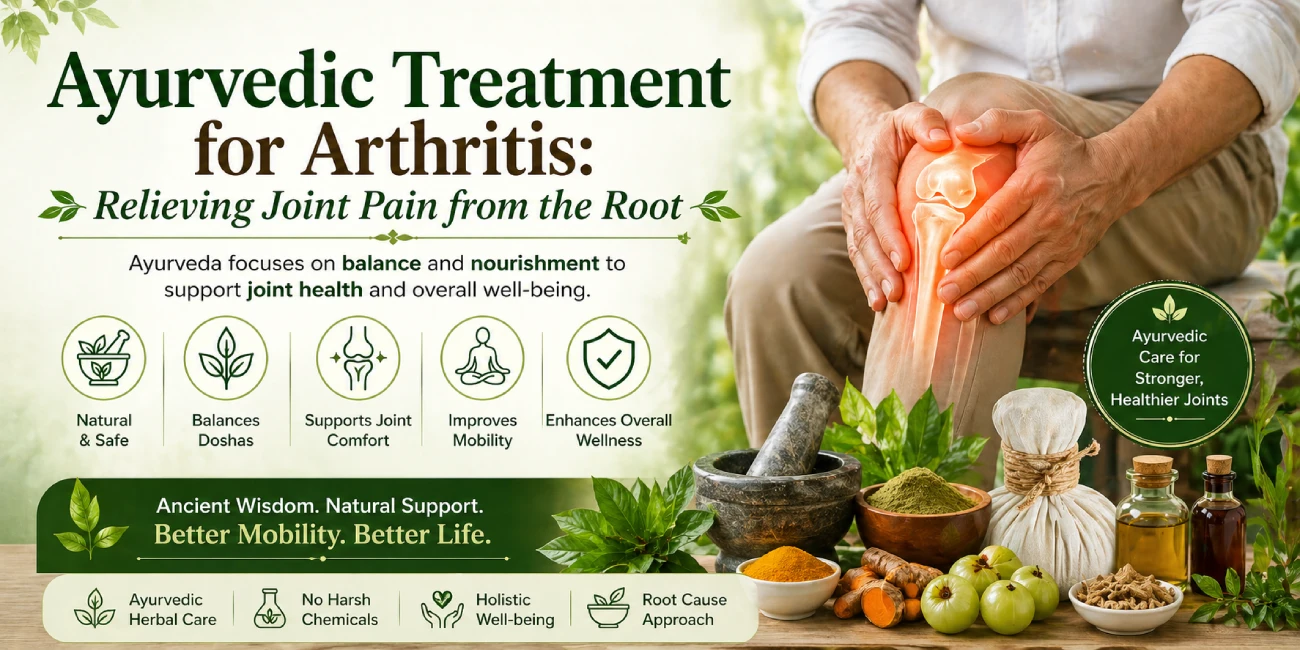
Arthritis — meaning inflammation of the joints — is one of the most common and debilitating health conditions worldwide, affecting over 350 million people globally. Whether it is osteoarthritis (OA), rheumatoid arthritis (RA), gout, psoriatic arthritis, or ankylosing spondylitis, joint disease causes immense suffering through pain, stiffness, swelling, and progressive loss of mobility. Conventional medicine relies primarily on NSAIDs, DMARDs, biologics, and eventually joint replacement surgeries — approaches that manage symptoms but come with significant side effects and do not halt disease progression.
Ayurvedic treatment for arthritis offers a fundamentally different approach — identifying and treating the root dosha imbalances and metabolic disruptions that drive joint inflammation and degeneration. At Ayush Panchkarma, our specialized arthritis treatment programs have helped hundreds of patients significantly reduce pain, inflammation, and medication dependence while improving joint function and quality of life.
Arthritis in Ayurveda: Sandhi Vata and Amavata
Ayurveda describes two primary forms of arthritis, each with distinct pathophysiology and treatment:
Sandhi Vata (Osteoarthritis)
Sandhi Vata — literally 'Vata in the joints' — corresponds closely to osteoarthritis. It arises from degenerative changes caused by aggravated Vata dosha, which dries out the synovial fluid (Shleshaka Kapha) that lubricates and cushions joints. The result is friction, grinding, crepitus, and progressive cartilage erosion. Sandhi Vata predominantly affects older individuals and those with Vata-dominant constitution (Prakriti).
Amavata (Rheumatoid Arthritis)
Amavata — the combination of Ama (undigested metabolic toxin) and Vata dosha — corresponds remarkably closely to rheumatoid arthritis, an autoimmune condition. In Amavata, poor digestion creates Ama that circulates through the body and deposits specifically in joints, triggering severe inflammation, swelling, and pain. The joints become tender, warm, swollen, and symmetrically affected — exactly mirroring RA's clinical presentation. The Ayurvedic classical text Madhava Nidanam provides a detailed description of Amavata that was written over 1200 years ago.
Causes of Arthritis According to Ayurveda
- Poor digestive health and Ama accumulation from incompatible foods and irregular eating habits
- Excessive consumption of cold, dry, heavy, and processed foods that aggravate Vata
- Sedentary lifestyle leading to reduced joint circulation and lubrication
- Emotional stress and anxiety, which directly aggravate Vata dosha
- Excessive physical overuse or trauma to joints
- Hormonal imbalances (particularly relevant in post-menopausal OA and RA)
- Genetic predisposition (Beeja Dosha) in RA and other autoimmune arthritis types
Panchkarma Therapies for Arthritis Treatment
For Osteoarthritis (Sandhi Vata):
- Abhyanga (Oil Massage): Warm medicated oils like Mahanarayan Taila, Vishagarbha Taila, and Pinda Taila are massaged into affected joints, lubricating the joint space, reducing friction, and calming Vata.
- Janu Basti (Knee Oil Bath): A dough ring is built around the knee joint and filled with warm medicated oil for 30-45 minutes. This localized oil retention therapy directly nourishes knee cartilage, reduces pain, and improves synovial fluid quality. Similar protocols exist for Greeva Basti (neck), Kati Basti (lower back), and Griva Basti (spine).
- Pinda Sweda (Bolus Fomentation): Hot herbal boluses are applied to arthritic joints, providing deep heat penetration that reduces stiffness, relieves pain, and improves mobility.
- Navarakizhi (Shashtika Shali Pinda Sweda): Rice bolus therapy nourishes the cartilage and rebuilds joint tissue in degenerative arthritis.
- Matra Basti: Small oil enemas powerfully calm systemic Vata and provide systemic joint support.
For Rheumatoid Arthritis (Amavata):
- Deepana-Pachana (Ama Digestion): Before any oleation or Panchkarma, Ama must be digested using hot, light, Ama-clearing herbs like Trikatu (three pungent spices), Chitrak, and Haritaki.
- Virechana (Purgation): After Ama clearance, therapeutic purgation cleanses the liver and small intestine of accumulated Pitta-Ama.
- Basti (Enema Therapy): Alternating Kashaya Basti and Matra Basti — the most effective treatment for Vata-predominant conditions — is the cornerstone of RA treatment.
- Upanaha Sweda: Medicated paste poultices applied to swollen, inflamed joints reduce inflammation and provide local pain relief.
- Raktamokshana: Leech therapy for joints with severe inflammatory congestion and redness.
Herbal Medicines for Arthritis
- Shallaki (Boswellia serrata): Clinically proven to reduce joint inflammation and pain in both OA and RA. Boswellic acids inhibit leukotrienes, the inflammatory mediators responsible for joint destruction in RA.
- Ashwagandha (Withania somnifera): Has documented anti-inflammatory and immune-modulating effects. Particularly useful in RA for reducing inflammation and fatigue.
- Guggulu (Commiphora wightii): The classical Ayurvedic anti-inflammatory resin. Formulations like Yogaraj Guggulu and Maharasnadi Kwath are among the most researched herbal medicines for arthritis.
- Nirgundi (Vitex negundo): A potent anti-inflammatory and analgesic herb used both internally and as external poultice for arthritic joints.
- Eranda (Castor oil plant): Castor oil is specifically indicated in Ayurveda for Vata disorders and arthritis. Its ricinoleic acid has documented anti-inflammatory properties comparable to NSAIDs.
- Rasna (Pluchea lanceolata): A classical herb for joint pain and Vata disorders, included in many compound formulations for arthritis.
Diet for Arthritis Management
Dietary modification is non-negotiable in Ayurvedic arthritis management, especially for RA (Amavata) where Ama formation must be prevented:
- Avoid: Cold, refrigerated foods; heavy pulses (especially black gram in RA); curd/yogurt (increases Ama); excessive sweet, salty and sour foods; incompatible food combinations
- Include: Warm, freshly cooked, light meals; old rice, barley; buttermilk (Takra) — especially indicated in Amavata; bitter gourd, drumstick, garlic; anti-inflammatory spices: turmeric, ginger, black pepper, cinnamon
- Fasting: Periodic supervised light fasting or liquid fasting on herbal decoctions and warm water helps clear Ama and provides joint rest
Yoga for Arthritis
A carefully tailored yoga program is an integral part of our arthritis treatment. Therapeutic yoga poses maintain joint mobility, strengthen supporting muscles, improve proprioception, and reduce pain through endorphin release. Our yoga therapists design protocols appropriate to each patient's condition — from chair-based exercises for severe OA to more active sequences for mild cases.
Patient Outcomes at Ayush Panchkarma
Our patients with OA consistently report 60-80% reduction in joint pain scores, improved range of motion, reduced NSAID use, and better sleep and quality of life following a 14-21 day Panchkarma program. RA patients, while requiring longer treatment courses, demonstrate significant improvements in DAS28 scores (disease activity), morning stiffness duration, and CRP/ESR inflammation markers. Many patients are able to reduce or eliminate steroid use under medical supervision following Ayurvedic treatment.
Conclusion
Ayurvedic treatment for arthritis represents one of the most evidence-based, time-tested, and holistically coherent approaches to joint disease available today. By addressing the metabolic roots of joint inflammation, lubricating and nourishing joint tissues, clearing autoimmune triggers (Ama), and strengthening the body's natural healing capacity, Ayurveda offers hope and healing to the millions suffering from arthritis worldwide. At Ayush Panchkarma, we invite you to experience the transformative power of authentic Himalayan Ayurveda.