
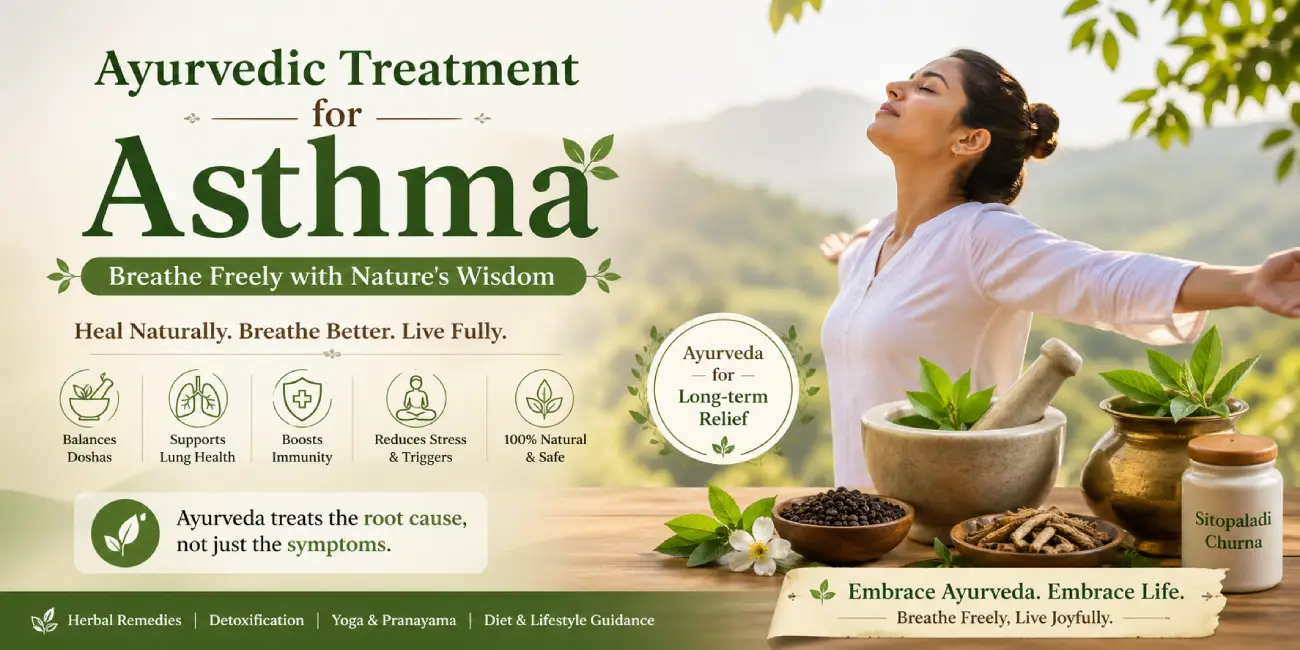
Asthma is a chronic inflammatory condition of the airways characterized by recurrent episodes of wheezing, breathlessness, chest tightness, and coughing — often worse at night or early morning. According to the World Health Organization, asthma affects approximately 235 million people worldwide and is the most common non-communicable disease among children. Despite effective bronchodilators and inhaled corticosteroids, many asthma patients continue to experience frequent exacerbations and seek safer long-term management options.
Ayurvedic treatment for asthma addresses the condition at its root — chronic airway inflammation, hypersensitivity, and impaired respiratory mucociliary function — rather than simply providing bronchodilation during attacks. At Ayush Panchkarma, our Himalayan treatment center, patients with mild to moderate asthma and allergic bronchitis have experienced dramatic improvements in attack frequency, severity, and medication requirements through structured Panchkarma programs.
Asthma as Tamaka Shwasa in Ayurveda
Ayurveda describes five types of Shwasa (respiratory distress), of which Tamaka Shwasa corresponds most closely to bronchial asthma. Charaka Samhita describes Tamaka Shwasa with remarkable clinical precision: paroxysmal attacks of breathlessness, aggravation at night and in cold/damp environments, relief on sitting upright, rattling (wheezing) sounds in the chest, expectoration of thick mucus providing relief, and attacks triggered by dust, smoke, cold air, and emotional disturbance — all hallmarks of modern-day asthma.
Dosha Pathophysiology of Asthma
Tamaka Shwasa primarily involves aggravated Vata and Kapha doshas, with involvement of the Pranavaha Srotas (respiratory channels). Vata governs breathing movement and dries the airways, while Kapha produces excessive, thick mucus that obstructs airflow. The condition is further aggravated by Ama (metabolic toxins) that block respiratory channels and hypersensitize the airways — corresponding to the allergic inflammation underlying most asthma cases.
Root Causes of Asthma According to Ayurveda
- Repeated respiratory infections in childhood that damage respiratory channel integrity (Pranavaha Sroto Dushti)
- Exposure to cold, damp, dusty environments and air pollutants
- Allergenic foods: cold beverages, curd, excessive sweets, heavy and fried foods that produce Ama and aggravate Kapha
- Emotional factors: grief, anxiety, and chronic stress aggravate Vata and trigger asthma attacks (the mind-lung connection is well recognized in modern psychoneuroimmunology)
- Suppression of natural urges (especially coughing and sneezing) that cause Vata to move in the wrong direction (Pratiloma Vata)
- Genetic predisposition (atopy) combined with environmental triggers
Panchkarma Therapies for Asthma Treatment
- Vamana (Therapeutic Emesis): The primary Panchkarma treatment for Kapha disorders including asthma. After preparatory oleation and steam therapy, a carefully controlled vomiting is induced using emetic medicines (typically Madanaphala and Yashtimadhu preparations). Vamana effectively clears Kapha from the lungs and upper digestive tract, providing profound relief from chronic congestion, mucus overproduction, and airway hypersensitivity. Many patients experience dramatic improvement in asthma symptoms immediately following Vamana.
- Nasya (Nasal Administration): Medicated oils (Anu Taila, Shadbindu Taila) instilled through the nostrils cleanse and nourish the upper respiratory passages, sinuses, and brain. Nasya reduces allergic rhinitis (a common comorbidity and trigger for asthma attacks), shrinks nasal polyps, and strengthens the mucociliary defense barrier.
- Dhoomapana (Medicated Smoke Inhalation): Traditional Ayurvedic medicated smoking using specific herbs (Haridra, Agaru, Guggulu) through specially prepared cigarettes. Completely different from tobacco, this therapy directly delivers bronchodilator and expectorant compounds to the airways.
- Swedana (Steam Therapy): Herbal steam using Vata-Kapha reducing herbs (Tulsi, Eucalyptus, Ginger) opens airways, liquefies mucus, and promotes expectoration before Vamana or as standalone bronchodilator therapy.
- Shiroabhyanga and Pada Abhyanga: Head and foot oil massage calms the nervous system, reduces anxiety-triggered airway spasm, and promotes sleep — particularly important in nocturnal asthma.
- Basti (Enema): Addresses the systemic Vata imbalance underlying asthma's neurogenic component and prevents downward Vata movement that aggravates upward Prana Vata in the chest.
Herbal Medicines for Asthma
- Vasa (Adhatoda vasica / Malabar Nut): Vasicine from Vasa is the basis for the bronchodilator drug bromhexine. Vasa is one of Ayurveda's most potent respiratory herbs — bronchodilator, anti-inflammatory, expectorant, and antispasmodic.
- Kantakari (Solanum xanthocarpum): A classical Shwasa-Kasa (asthma-cough) herb with documented bronchodilatory and immunomodulatory properties. Dasamoola formulations containing Kantakari are widely used for chronic asthma.
- Yashtimadhu (Glycyrrhiza glabra / Licorice): Glycyrrhizin and its metabolites have potent anti-inflammatory and expectorant effects. Yashtimadhu is the primary herb for soothing inflamed airways and promoting healing of the bronchial mucosa.
- Tulsi (Ocimum tenuiflorum / Holy Basil): Eugenol in Tulsi is a natural COX-2 inhibitor. Regular Tulsi tea consumption significantly reduces asthma attack frequency and severity.
- Haridra (Turmeric): Curcumin inhibits leukotriene synthesis and mast cell degranulation — two central pathways in allergic asthma. Turmeric milk (golden milk) is an accessible and effective daily bronchial health practice.
- Pippali (Piper longum): A powerful respiratory stimulant and expectorant. Pippali Rasayana — a classical Ayurvedic rejuvenative — is specifically indicated for chronic respiratory conditions and is used in our protocol to rebuild respiratory immunity.
- Sitopaladi Churna: A classical compound powder specifically formulated for respiratory disorders — combines Vamshalochana, Pippali, Elaichi, and Twak (cinnamon) for comprehensive bronchial support.
Pranayama and Yoga for Asthma
Breathwork and yoga are inseparable from Ayurvedic asthma treatment. Our yoga therapists teach: Anuloma-Viloma (alternate nostril breathing) to balance Vata and calm nervous system; Bhramari Pranayama (humming bee breath) to reduce airway hyperreactivity; Kati Chakrasana and gentle backbends to expand chest capacity; Shavasana for stress reduction and parasympathetic activation. Clinical studies have shown that regular pranayama practice significantly reduces asthma medication use, improves peak flow rates, and reduces quality-of-life impairment in asthma patients.
Dietary and Lifestyle Guidelines for Asthma
- Avoid: Cold beverages and refrigerated foods (immediate Kapha aggravation); curd/yogurt (especially at night); bananas, excessive sweets; exposure to triggers (dust, smoke, strong smells, cold air)
- Include: Warm water throughout the day; honey (small quantities — expectorant and antimicrobial); ginger tea; turmeric milk; light, freshly cooked meals
- Lifestyle: Regular sleep schedule; early morning exposure to fresh air (avoid pollution hours); prompt treatment of respiratory infections; weight management (obesity is a major asthma risk factor)
The Himalayan Advantage for Asthma
Ayush Panchkarma's location in the clean mountain air of Palampur, Himachal Pradesh — far from urban pollution — offers a therapeutic environment that itself benefits asthma patients. The clean, cool, pine-scented Himalayan air is naturally anti-inflammatory for the airways. Many patients notice significant improvement in respiratory comfort within the first few days of arriving at our center — even before formal treatment begins.
Conclusion
Ayurvedic treatment for asthma provides a comprehensive, sustainable approach to managing this chronic condition that goes far beyond the symptomatic relief of conventional bronchodilators. By clearing Kapha obstruction from airways, balancing Vata's nervous system-lung connection, reducing allergic Ama, and building respiratory immunity through Rasayana and yoga, Ayurveda creates the conditions for genuine asthma control. At Ayush Panchkarma, we invite you to breathe freely again through the wisdom of authentic Himalayan Ayurveda.