
From a modern medical standpoint, several factors converge at night. Cortisol — a natural anti-inflammatory hormone — drops to its lowest levels between midnight and 4 AM, leaving the airways more vulnerable to inflammation. Meanwhile, histamine levels peak, which increases airway sensitivity. The reclining posture causes mucus to pool in the throat and bronchi rather than drain downward. Body temperature also drops, and cool air is a well-known bronchial irritant.
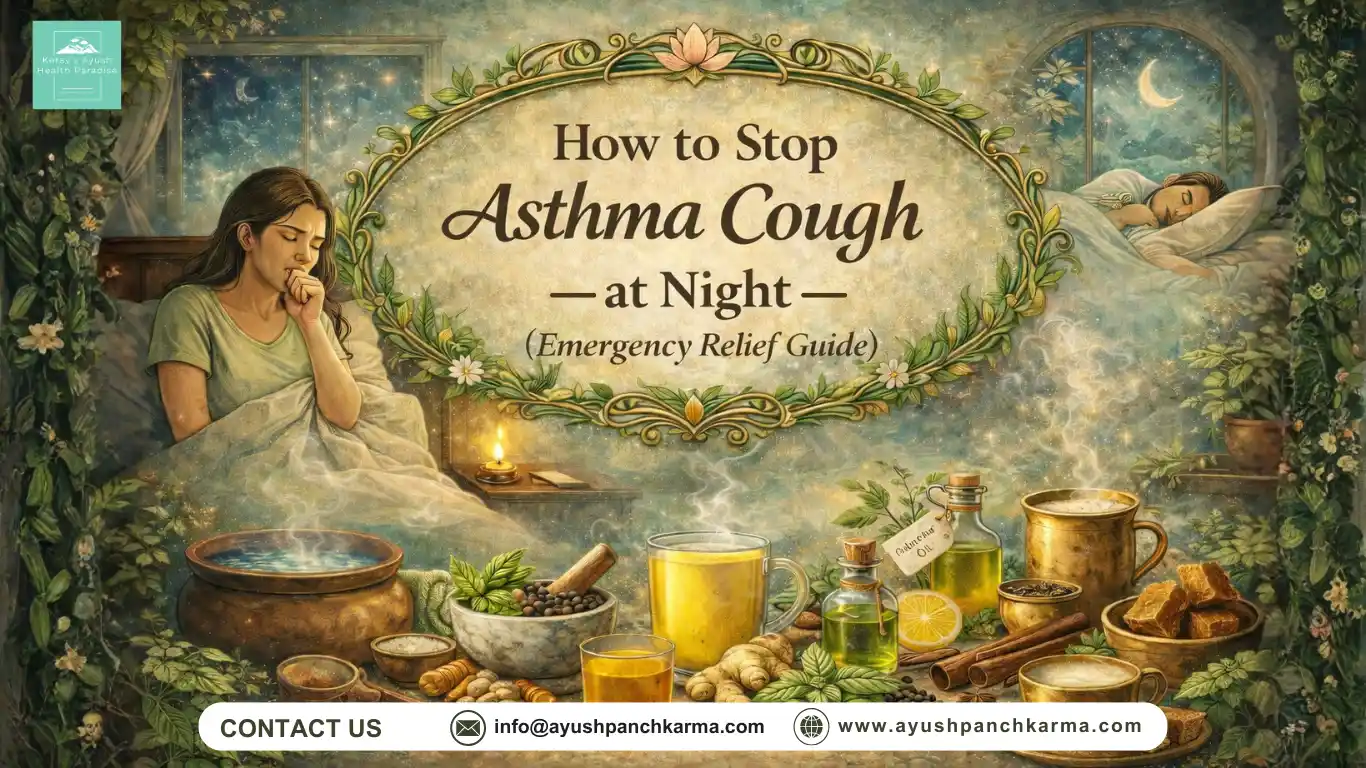
How to Stop Asthma Cough at Night (Emergency Relief Guide)
⚠️ If you are having a severe asthma attack right now — use your rescue inhaler immediately and call emergency services. This guide is for managing and preventing nocturnal asthma cough, not replacing emergency medical care.
· Why Asthma Gets Worse at Night
· Emergency Steps to Stop a Cough Attack Right Now
· Ayurvedic Remedies for Night-Time Asthma
· Herbs That Open Airways Naturally
· Bedroom Triggers You May Not Know About
· Breathing Exercises That Help at Night
· Long-Term Relief Through Panchakarma
· Frequently Asked Questions
It is 2 AM. You wake up choking, your chest feels like it has been wrapped in a tight rope, and a deep, relentless cough refuses to stop. If this sounds familiar, you are not alone. Millions of asthma sufferers experience their worst symptoms not during the day, but in the dark hours of the night. Nocturnal asthma cough is one of the most distressing and sleep-destroying manifestations of this chronic condition.
The good news: There are both immediate strategies that may help ease discomfort during a nighttime asthma cough episode and long-term lifestyle approaches that may support overall respiratory wellness.
The good news: there are both immediate relief strategies and lasting, root-cause solutions. This guide walks you through exactly what to do in the moment of a nighttime asthma cough attack, and how Ayurvedic treatment for asthma can dramatically reduce — and in many cases eliminate — these terrifying nightly episodes.
Why Does Asthma Get Worse at Night?
Before fixing a problem, you need to understand it. Nocturnal asthma is not random — there are very specific physiological and environmental reasons why the airways rebel after sunset.
From a modern medical standpoint, several factors converge at night. Cortisol — a natural anti-inflammatory hormone — drops to its lowest levels between midnight and 4 AM, leaving the airways more vulnerable to inflammation. Meanwhile, histamine levels peak, which increases airway sensitivity. The reclining posture causes mucus to pool in the throat and bronchi rather than drain downward. Body temperature also drops, and cool air is a well-known bronchial irritant.
From the Ayurvedic perspective on asthma, nighttime is governed by Vata and Kapha doshas. Vata increases between 2–6 AM, causing dryness, constriction, and spasm in the airways (Pranavaha Srotas). Kapha, which accumulates throughout the day as mucus and phlegm, becomes stagnant at night when the body's digestive fire (Agni) is at its lowest. This combination — Vata constriction + Kapha congestion — is precisely the storm that creates nocturnal asthma attacks.
Ayurvedic Insight: The ancient texts describe nocturnal asthma as Tamaka Shwasa — literally "darkness-breathing" — because attacks intensify in darkness and cold. The treatment principle is to simultaneously pacify Vata (calm and warm) and clear Kapha (expel and open).
Emergency Steps to Stop a Cough Attack Right Now
When you are mid-attack and need relief in minutes, follow this sequence:
Do These Steps in Order
· Sit upright immediately— do not lie flat. Sitting at 45° or higher opens the airways and prevents mucus pooling.
· Use your prescribed rescue inhaler(salbutamol/Ventolin) if you have one. This is your first line of defence in a genuine attack.
· Warm ginger water— if you can safely swallow, sip hot water with ½ tsp fresh ginger juice and a pinch of black pepper. This dilates the bronchi and cuts Kapha.
· Pursed-lip breathing— inhale slowly through the nose for 2 counts, exhale through pursed lips for 4 counts. Repeat. This slows respiration and reduces CO₂ panic.
· Apply warm sesame oil to your chest, throat, and the soles of your feet. This grounds Vata and quickly relaxes the chest muscles.
· Steam inhalation— add 2–3 drops of eucalyptus or carom seed (ajwain) to a bowl of hot water and inhale. Clears mucus blockage within minutes.
· If symptoms do not ease within 15 minutes— call emergency services. Do not wait.
Ayurvedic Remedies for Night-Time Asthma Relief
Beyond emergency measures, Ayurveda offers a powerful toolkit of time-tested home remedies that, used consistently before bedtime, can prevent attacks from occurring in the first place.
Turmeric Milk (Haldi Doodh) Before Bed
Warm one cup of full-fat milk, add ½ tsp turmeric, a pinch of black pepper, and ¼ tsp ghee. Drink 30 minutes before sleeping. Turmeric's curcumin reduces airway inflammation overnight, while ghee lubricates the throat and prevents dry-cough triggers. This is one of the simplest and most effective nightly rituals for asthma management.
Nasya — Nasal Oil Therapy
Warm 2–3 drops of Anu Taila (or plain sesame oil) and instil into each nostril while lying back with your neck extended. This ancient classic Ayurvedic therapy lubricates and clears the nasal passages, reduces the cold-air sensitivity that triggers nighttime coughs, and calms the nervous system. Do this every evening as a preventive measure.
Tulsi-Ginger-Honey Tea
Boil 8–10 fresh Tulsi (Holy Basil) leaves with a 1-inch piece of ginger in 2 cups of water for 10 minutes. Strain, cool slightly, and add 1 tsp raw honey. Drink one cup at sunset and one before bed. This combination acts as a natural bronchodilator, expectorant, and immune modulator — hitting three root causes of asthma simultaneously.
Ajwain (Carom Seed) Steam
Boil a handful of carom seeds in water and inhale the steam under a towel for 5–10 minutes before bed. Thymol — the active compound in ajwain — is a powerful natural bronchodilator and antimicrobial agent. It clears Kapha from the respiratory channels and warms the airways, directly countering the Vata-Kapha imbalance responsible for nocturnal attacks.
Sitopaladi Churna with Honey
Mix ½ tsp Sitopaladi Churna (a classical Ayurvedic formulation of rock candy, bamboo manna, pippali, cardamom, and cinnamon) with raw honey and take it before bed. This classical Ayurvedic compound relieves cough, reduces mucus, and strengthens the lungs. It is available at most Ayurvedic pharmacies. Consult an Ayurvedic doctor for the correct dosage for your constitution.
Herbs That Open Airways Naturally
Certain Ayurvedic herbs have been used for thousands of years to manage bronchial conditions — and modern research is increasingly validating their effectiveness. These are the most powerful for nighttime asthma.
Vasa (Adhatoda vasica)
The most potent Ayurvedic bronchodilator. Its alkaloid vasicine opens constricted airways, reduces spasm, and expels thick Kapha mucus. Used as a syrup (Vasarishta) or decoction.
Yashtimadhu (Licorice)
Soothes inflamed airway mucosa, acts as an expectorant, and reduces dryness-induced cough. Its anti-inflammatory properties work overnight when cortisol is lowest.
Pushkarmool (Inula racemosa)
Specifically recommended in Ayurvedic texts for Tamaka Shwasa. Reduces bronchospasm and has cardioprotective benefits — important since cardiac asthma also causes nighttime cough.
Pippali (Long Pepper)
Bioavailability enhancer and powerful lung tonic. Regular use of Pippali Rasayana (long pepper with honey and ghee) rebuilds lung capacity over weeks. It is the premier Rasayana for the respiratory system.
These herbs are best taken under the guidance of a qualified Ayurvedic physician, who can tailor dosages and combinations to your specific dosha constitution. Book a doctor consultation at Ayush Panchkarma to get your personalised herbal protocol.
Bedroom Triggers You May Not Know About
Stopping nighttime asthma cough is not only about what you take — it is about what you remove from your sleep environment. Many sufferers address their airways with medicines while sleeping in a room full of invisible triggers.
Breathing Exercises That Help at Night
Pranayama — the Ayurvedic science of breath regulation — is one of the most powerful long-term tools for asthma management. When practiced daily, these exercises strengthen the lung muscles, calm the Vata-driven airway spasms, and improve oxygen exchange efficiency.
Anuloma Viloma (Alternate Nostril Breathing)
Close the right nostril with the right thumb and inhale slowly through the left nostril for a count of 4. Close both nostrils and hold for a count of 4. Release the right nostril and exhale for a count of 8. Repeat on the other side. Do 10 rounds before bed. This balances Vata and Pitta in the nervous system, reducing the autonomic hyperreactivity that worsens nighttime asthma.
Bhramari (Humming Bee Breath)
Plug both ears with your thumbs and place fingers gently over the eyes. Inhale deeply, then exhale through the nose while making a steady humming sound (like a bee). The vibration of the "hmmm" sound produces nitric oxide in the sinuses — a natural bronchodilator. Do 5–7 rounds before sleep. Many asthma patients report that this single exercise dramatically reduces nighttime cough frequency within 2–3 weeks of consistent practice.
Pursed-Lip Breathing for Acute Relief
Already described in the emergency section, this technique is also valuable as a 5-minute practice before lying down. It slows the breathing rate, reduces hyperventilation, and gently expels trapped air from the lower lungs — a major factor in asthma-related breathlessness.
Long-Term Relief Through Panchakarma
Home remedies and breathing exercises address symptoms and reduce attack frequency. But if you are waking up coughing multiple nights per week, something deeper is needed: a true detoxification and rejuvenation of the respiratory system at the cellular level.
This is where Panchakarma therapy becomes transformative. Unlike symptomatic management, Panchakarma removes the accumulated Ama (toxins) from the respiratory channels, resets the immune system's hypersensitivity, and rebuilds the structural integrity of the bronchioles. The results for asthma can be profound and lasting.
The primary Panchakarma treatment for asthma is Vamana— a controlled therapeutic emesis that directly eliminates excess Kapha from the stomach and lungs. Most patients report that after a single course of Vamana administered by an experienced physician, the frequency and intensity of asthma attacks — including nighttime episodes — drops dramatically. This is complemented by:
Nasya Therapy
Medicated herbal oils administered through the nasal passages to clear the upper respiratory tract. Particularly effective for clearing the sinus-related Kapha that drips into the throat at night and triggers coughing. Learn more about classic Ayurvedic therapies, including Nasya.
Swedana (Herbal Steam Therapy)
Full-body herbal steam opens the respiratory channels, liquefies stuck Kapha, and improves circulation to the bronchial walls. Conducted in the clinic as part of the preparatory phase before deeper cleansing therapies.
Rasayana Rejuvenation
After detoxification, Rasayana herbs (Chyawanprash, Pippali Rasayana, Ashwagandha) are used to rebuild lung strength and immune resilience. This phase is what prevents the condition from returning — addressing the root, not just the branch.
At Ayush Panchkarma, our asthma treatment programmes are conducted in the clean mountain air of the Kangra Valley, Himachal Pradesh — an environment that is itself therapeutic for respiratory conditions. The combination of high altitude, forest air, reduced pollution, and personalised Panchakarma creates conditions for healing that urban clinics simply cannot replicate.
If you or someone you love is suffering from chronic respiratory diseases, including asthma, COPD, or bronchitis, a dedicated stay of 14–21 days can create meaningful, measurable, and lasting change.
Ready to Sleep Through the Night Again?
Our Ayurvedic doctors specialise in respiratory conditions. Book a free consultation and start your personalised asthma treatment plan today.
Frequently Asked Questions
Q1. Can Ayurveda cure diabetes permanently?
Ayurveda focuses on long-term management and reversal of underlying imbalances rather than an instant cure. Many patients achieve significant improvement in sugar control and quality of life. It works best as a complementary approach along with regular medical monitoring.
Q2. Is Panchkarma safe for people with diabetes?
Yes, when performed under experienced Ayurvedic doctors with proper customization and monitoring. We take all necessary precautions, especially regular blood sugar checks during treatment.
Q3. Do you treat diabetes complications like neuropathy?
Yes, our holistic approach supports management of complications such as diabetic neuropathy through specific therapies, herbs, and lifestyle correction.
Q4. What makes Ayush Panchkarma different from other centers?
Our combination of authentic classical Panchkarma, personalized care, and the rejuvenating Himalayan location of Palampur provides a complete healing experience that supports both body and mind.
Conclusion
Nocturnal asthma cough is not something you simply have to live with. Whether you need an immediate rescue strategy for tonight or a lasting solution that ends these nightly ordeals for good, both are within reach. In the short term: sit upright, breathe slowly, use warm ginger water and steam, and apply sesame oil to your chest. In the medium term, build a consistent evening routine with Tulsi tea, Nasya, and pranayama. For the long term, consider the deep, root-level healing that a structured Ayurvedic asthma treatment program through Panchakarma can provide.
You deserve full, uninterrupted nights of deep sleep. Ayurveda — when practiced correctly and supported by experienced physicians — makes that possible. Take the first step and speak with our Ayurvedic doctors today.