
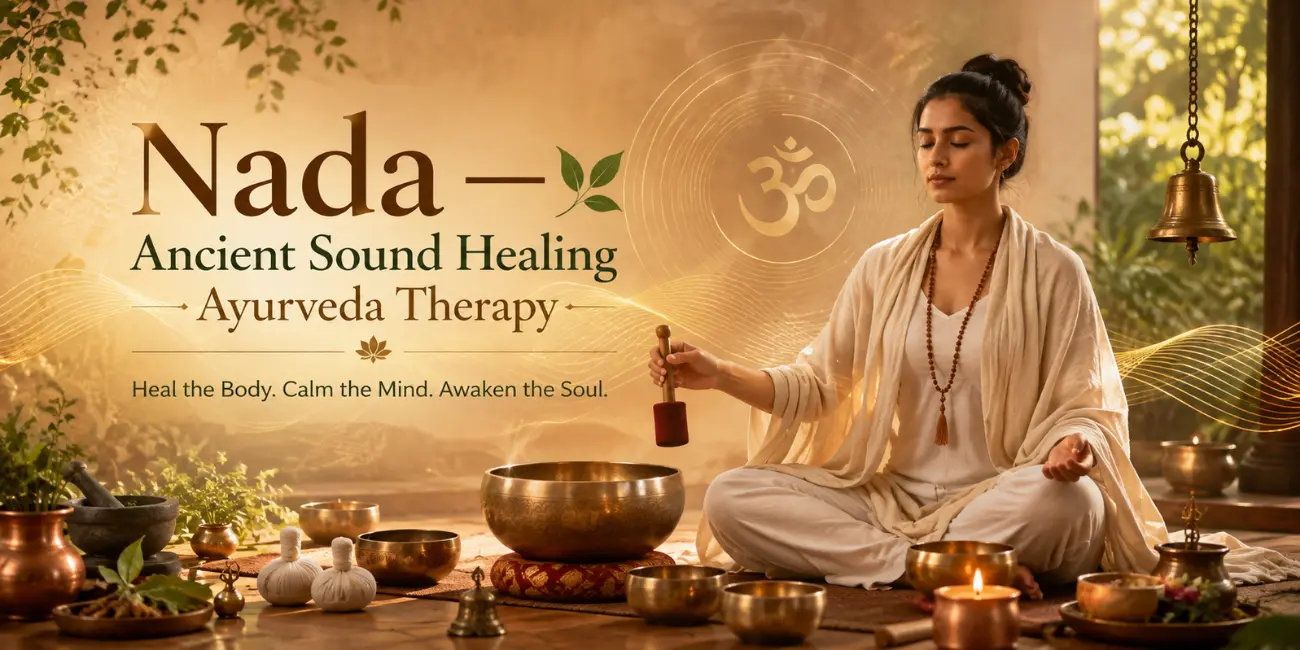
In Ayurveda, unaddressed negative emotions leave toxic residues in the manovaha srotas (mind channels). Sound therapy flushes these channels out to relieve brain fog and mood swings, leads to healing. It shifts active brain waves into deeply relaxed theta and delta wave patterns, triggering the body's natural cellular healing mechanisms.
Nada sound healing, also known as Nada Yoga, is a specialized vibrational therapy rooted in ancient Indian traditions that uses sound frequencies to balance the body's doshas and restore health. In Ayurvedic medicine, health is a state of balance between three biological energies (doshas): Vata, Pitta, and Kapha. Nada sound healing restores this balance by matching specific sound qualities to the unique needs of each dosha.
Benefits
Calms Stress & Anxiety: Triggers a nervous system reset by stimulating the vagus nerve to promote deep relaxation.
Restores Sleep Cycles: Regulates natural sleep patterns to effectively alleviate insomnia.
Releases Energy Blockages: Dislodges stagnant emotions and clears physical tension to improve overall vitality.
Addiction Support: It assists with recovery from alcohol, tobacco, and opioid dependencies by easing cravings and withdrawal symptoms.
Core Principles of Ayurveda Sound Therapy
Vibrational Medicine: The universe comprises five elements. Ether (akash) serves as the medium for sound. Cells vibrate constantly. Disease indicates vibrational disharmony.
The Four Stages: Practice progresses sequentially. It starts with audible sound. It shifts to mental sound. It reaches the subconscious. It ends in transcendent sound (Paranada).
Dosha Balancing: Specific frequencies target constitutional imbalances. Tones correct individual unique profiles. They balance Vata, Pitta, or Kapha.
Procedure Nada sound healing (Naada Chikitsa) in Ayurveda follows a structured, multi-step meditative and vibrational procedure designed to calm the mind, balance the doshas, and restore inner harmony.
Opening Prayer : An invocation or opening chant creates a sacred space, fosters reverence, and aligns your intention.
Preparatory Breathing / Kapalbhati : Gentle, energizing breathwork (such as 3 rounds of 30–50 rapid exhalations) clears sluggish energy and activates mental alertness.
Breath Awareness : Mindful observation of natural breathing calms the nervous system and shifts focus inward.
Emotional Contemplation or Bhava :Cultivating positive states like gratitude, compassion, or surrender prepares the emotional body for sound immersion.
Concentration on Sound / AUM Chanting :The core practice involves vocalizing and listening closely to the external primordial sound of AUM (Ahata Nada) or any sound to stabilize scattered thoughts.
Silence and Internal Listening / Ajapa Japa :Transitioning into absolute silence (Anahata Nada), where you mentally attend to subtle internal vibrations or unstated mantras.
Closing Shanti Mantra : A final peace invocation grounds your awareness and smoothly transitions you back to normal daily consciousness.
Importance In Ayurveda, unaddressed negative emotions leave toxic residues in the manovaha srotas (mind channels). Sound therapy flushes these channels out to relieve brain fog and mood swings, leads to healing. It shifts active brain waves into deeply relaxed theta and delta wave patterns, triggering the body's natural cellular healing mechanisms.