
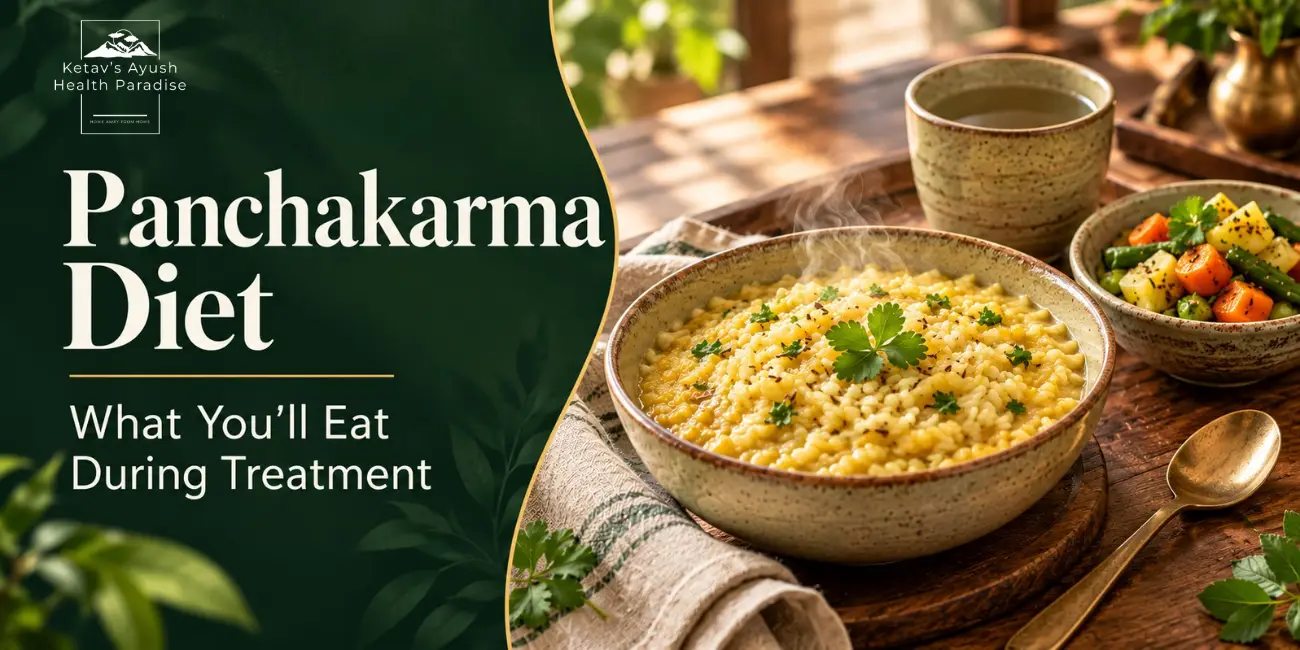
Quick answer: During Panchakarma you eat simple, warm, freshly cooked, easy-to-digest food, whole grains, kitchari (rice and dal), thin soups, and cooked vegetables with ghee. You avoid raw, cold, fried, processed, and heavy foods, plus alcohol, caffeine and late-night meals. The diet changes across the three phases of treatment.
Food is the part of Panchakarma that surprises people most. They expect elaborate therapies and then find that what's on their plate matters just as much.
That's by design. Panchakarma asks your digestion to rest so the body can release stored toxins. Heavy or complicated food works against that. This guide walks you through exactly what you'll eat, what you'll skip, and how to ease back into normal eating afterward.
Why Diet Matters So Much in Panchakarma
In Ayurveda, digestion (agni) is the engine of health, And it is said by the acharyas "Rogāḥ sarve'pi mande'gnau" (रोगाः सर्वेऽपि मन्देऽग्नौ), which means all the disease are due to weak or dull digestive fire. When agni is weak, food isn't fully processed and leaves behind a sticky residue called ama. Panchakarma aims to clear that residue and strengthen agni.
If you flood a body in cleansing mode with pizza, cold drinks or fried snacks, you're undoing the work. The diet isn't a punishment. It's how you give the treatment a fair chance.
The Three Phases and How Your Diet Changes
Panchakarma isn't one steady diet. It moves through three stages, and your food shifts with them.
Phase 1: Preparation (Purvakarma)
The preparation phase, known as Purvakarma, usually lasts 3 to 7 days. The goal is to loosen toxins and kindle digestion.
What you eat:
- Light, warm, soft foods with digestive spices
- Rice with moong dal, khicharies, gruels
- Thin vegetable soups with a balanced amount of protein.
- Small quantities of ghee as prescribed
- Warm water or herbal teas (cumin, coriander, fennel)
What you avoid:
- Cold and raw food
- Dairy other than ghee, unless advised
- Meat, eggs and heavy proteins, Satvik diet preferred
- Deep-fried or spicy food
During this phase, many patients also take medicated ghee in rising doses. This internal moistening step, called Snehapana, has its own dietary rules, and your doctor will tell you how much and when.
Phase 2: The Main Cleansing (Pradhana Karma)
This is the active treatment. The diet is at its simplest here.
What you eat:
- Kitchari, often for most meals
- Thin rice gruel (peya)
- Clear moong dal soups (yusha)
- Warm, lightly spiced vegetable broth
The exact menu depends on the therapies. For instance, after a purgation or emesis procedure your meals are especially light and small, because digestion is temporarily weak. You can read about the classic Ayurvedic therapies we offer to see how each one works.
Don't be alarmed if your appetite is low. That's normal, and your physician adjusts portions daily.
Phase 3: Recovery (Paschat Karma)
Many people skip this part and regret it. After cleansing, your digestion is delicate, like a stomach recovering from illness. A structured step-by-step reintroduction, called Samsarjana Krama, brings back normal food gradually over several days.
A typical progression looks like this:
- Thin gruel
- Thicker rice porridge
- Soft rice with dal
- Cooked vegetables with rice
- Regular meals, still warm and moderate
Rushing this step is one of the most common reasons people feel unwell right after a course.
The Star of the Panchakarma Diet: Kitchari
If Panchakarma had a mascot food, it would be kitchari. It's a porridge-like dish of split yellow moong dal and rice, cooked soft with mild spices.
It's popular because it's:
- Easy on digestion
- Nourishing without being heavy
- Balancing for all three doshas
- Naturally gentle on the gut lining
Simple Kitchari Recipe
Ingredients (serves 2):
- ½ cup split yellow moong dal
- ½ cup basmati rice
- 1 teaspoon ghee
- ½ teaspoon cumin seeds
- ¼ teaspoon turmeric
- Pinch of asafoetida (hing)
- Rock salt to taste
- 4 to 5 cups water
- A little grated ginger
Method:
- Wash dal and rice until the water runs mostly clear.
- Heat ghee, add cumin seeds and hing, then ginger and turmeric.
- Add dal and rice, stir briefly, then add water and salt.
- Cook on low heat for 25 to 30 minutes until very soft.
- Eat warm. Add a little extra water if it thickens too much.
Your treatment center may use a modified version based on your constitution.
What You Can Eat During Panchakarma
Exact lists depend on your individual plan, but these are commonly allowed.
- Grains: White rice, brown rice, red gruel, and sometimes well-cooked millet and whole grain, if your doctor approves.
- Lentils: Split yellow moong dal, and other daals, a few may be restricted.
- Vegetables (cooked, never raw): Bottle gourd, ridge gourd, pumpkin, carrot, zucchini, spinach in small amounts, beets and other seasonal vegetables with a few restrictions.
- Fats: Cow's ghee, in the amount prescribed.
- Fruits: Usually limited during active therapy. Stewed apples or pomegranate may be allowed in some plans.
- Drinks: Warm or room-temperature water, cumin-coriander-fennel tea, and ginger water.
- Spices: Cumin, coriander, turmeric, fennel, hing, and a little ginger. Mild only.
What to Avoid During Panchakarma
- Cold drinks, ice cream and refrigerated leftovers
- Raw salads and sprouts
- Fried and oily snacks like samosas and pakoras
- Packaged and processed foods
- Sugar-heavy sweets and bakery items
- Tea, coffee and energy drinks
- Alcohol and smoking
- Non-vegetarian food
- Curd, cheese and paneer, unless advised
- Heavy flours like maida
- Eating late at night or between meals
Think of it this way: if it's cold, raw, fried, packaged or hard to digest, it waits until later.
Sample One-Day Menu (Cleansing Phase)
Your doctor's plan comes first, but this will give you an idea of the rhythm.
- On waking: Warm water, or the prescribed herbal drink
- Breakfast (8 to 9 a.m.): very light digestible food, mostly boiled things.
- Mid-morning: Warm drinks, recommended herbal tea, decoction or nourishing Satu drink
- Lunch (1 to 2 p.m.): Millet roti with a teaspoon of ghee and a small portion of cooked bottle gourd.
- Afternoon/ early evening: Warm water or ginger tea or herbal decoction or Juice.
- Dinner (7 to 8 p.m.): moong dal soup with veggies and Khichari
- Bedtime: Warm water, early lights-out
Meals are small and unhurried, with no phones or TV.
How Your Dosha Shapes Your Plate
Ayurveda doesn't believe one diet fits everyone. After your assessment, your plate may be adjusted to your constitution. If you're curious beforehand, your Prakriti analysis explains your natural body type.
- Vata-dominant: Needs more warmth, moisture and ghee. Meals should be regular and grounding.
- Pitta-dominant: Needs cooling, non-spicy food. Avoid sour, salty and very hot dishes.
- Kapha-dominant: Needs lighter, drier, warming food with less oil and sweetness.
These are broad patterns. Your physician fine-tunes them.
Eating Habits That Matter as Much as the Food
What you eat is half the story. How you eat is the other half.
- Eat only when hungry. Wait until the previous meal has digested.
- Chew slowly and sit down to eat.
- Avoid distractions. Put the phone away.
- Don't overeat. Fill about two-thirds of your stomach.
- Drink warm water in sips, not cold water in gulps.
- Keep fixed meal times. Your digestion loves routine.
- Don't sleep right after eating. A short walk helps.
Common Challenges and How to Handle Them
"I'm bored of kitchari." Very common. Ask your center about spice and vegetable variations. Boredom usually fades by day four or five.
"I have no appetite." Normal during cleansing. Don't force food. Your doctor adjusts quantities.
"I feel weak or dizzy." Tell your physician right away. Portions or ghee may need adjustment.
"I crave coffee." Caffeine withdrawal headaches can occur in the first days. They usually pass. Warm herbal tea helps.
"I'm diabetic. Can I follow this?" Possibly, with modification. Never change diabetes medication without medical advice, and make sure your doctor knows your full history.
"I'm vegetarian/Jain/vegan." Panchakarma diets are plant-based by nature. Jain and vegan adaptations are possible, though ghee-free plans need physician guidance.
Life After Panchakarma: Keeping the Benefits
The weeks after a course are when many people slip back. A few habits help protect your results:
- Continue warm, freshly cooked meals for at least 2 to 4 weeks.
- Reintroduce trigger foods one at a time, so you can notice what upsets you.
- Keep dinner light and early.
- Limit alcohol, fried food and sugar.
- Follow your doctor's herbal advice, and don't self-prescribe. A qualified Ayurvedic physician can guide you on which Ayurvedic herbs suit you.
- Maintain a daily routine, including sleep, movement and meal times.
Can You Do a Panchakarma Diet at Home?
You can adopt a gentle version of the diet at home, with simple warm meals, kitchari, no processed food and early dinners. Many people find this helpful for digestion.
But the diet alone isn't Panchakarma. The core cleansing procedures should be done only under trained, doctor-led supervision. If you want the complete experience, look at our structured Panchakarma packages or our Ayurvedic retreats and choose one that matches your needs.
Who Should Be Careful With a Panchakarma Diet
Check with a doctor first if you:
- Are pregnant or breastfeeding
- Have diabetes, kidney disease or heart disease
- Are underweight or recovering from illness
- Take regular prescription medicines
- Have a history of eating disorders
A restrictive eating pattern isn't right for everyone, and the plan should always fit the person.
Frequently Asked Questions About the Panchakarma Diet
What do you eat during Panchakarma?
Mainly kitchari, rice gruel, moong dal soup, cooked vegetables and ghee, all warm and lightly spiced.
Can I drink tea or coffee during Panchakarma?
It's best to avoid them. Herbal teas like cumin-coriander-fennel are good substitutes.
Can I eat fruits during Panchakarma?
Usually limited. Some plans allow small amounts of stewed or soft fruit. Follow your doctor's instruction.
Is the Panchakarma diet vegetarian?
Yes, it's typically vegetarian, and meat, fish and eggs are avoided.
Can I eat curd or milk?
Generally not during the main cleansing. Your doctor may allow small amounts later depending on your constitution.
Will I lose weight on the Panchakarma diet?
Some people lose a few kilos from lighter eating and reduced water retention. Weight loss isn't the main goal, and it shouldn't be pursued aggressively.
How long do I follow the diet?
Through the preparation, cleansing and recovery phases, which often adds up to two to three weeks in total, plus a gentler transition afterward.
What happens if I cheat on the diet?
One small slip usually isn't dangerous, but it can cause bloating or reduce the benefit. Be honest with your doctor so they can adjust.
Can I do the Panchakarma diet for weight loss alone?
It isn't designed as a weight-loss plan. Talk to a physician about a goal-specific approach.
How much does it cost to follow a Panchakarma program with meals?
Pricing depends on duration and inclusions. Our Panchakarma packages page explains what's typically included, including food, and you can contact us for a personalized quote.
Who prepares the meals?
At a proper center, a kitchen follows prescribed menus for each patient. If you'd like to see how we work, meet our Ayurvedic doctors and see our homestay, where Ayurvedic meals are part of the stay.
Where can I get more answers?
Our FAQ page covers common questions about stay, timing and preparation.
Final Thoughts
The Panchakarma diet looks plain on paper. Warm rice, lentils, ghee, soup. But after a few days, many people say it's the first time in years they've actually noticed how food makes them feel.
Treat the food as part of the treatment, follow the recovery phase patiently, and keep a few of the habits afterward. That's where the lasting benefit comes from. Ready to begin? Book your consultation at Ayush Panchkarma.
Disclaimer: This article is for general information only and isn't medical advice. Diet plans must be personalized by a qualified Ayurvedic physician.