
By the clinical team at Ketav's Ayush Health Paradise, Palampur · Reviewed by Dr Seema Santoshi, · Updated October 2026
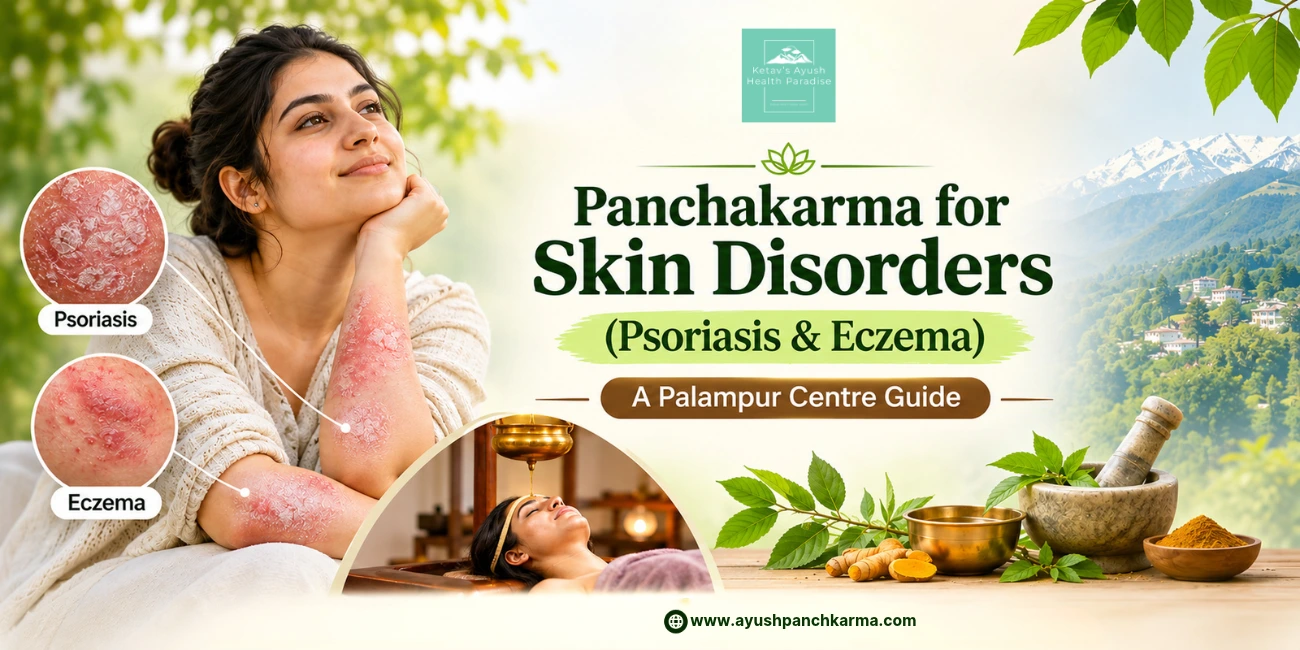
Panchakarma for skin disorders such as psoriasis and eczema is a supervised programme, usually 21 to 28 days, that combines medicated ghee, controlled purgation (virechana), cooling therapies, herbal applications and a strict diet. It is used by some people to calm flares and lengthen the gaps between them. It is not a cure, and it should not replace dermatology care. Both psoriasis and eczema are long-term conditions that tend to come and go. A realistic goal is better control, less itching and fewer flares, ideally with your dermatologist aware of the plan.
Key takeaways
Ayurveda groups most chronic skin disease under kushtha, and treats it by correcting digestion, blood quality and the doshas, rather than just treating the skin.
Key therapies are snehapana (medicated ghee), virechana, raktamokshana (in selected cases), takradhara and herbal pastes.
Evidence is limited to small studies and case reports. Large controlled trials are lacking.
Never stop steroid creams, tablets or injections suddenly. Sudden withdrawal can cause severe rebound flares.
Some Ayurvedic products have been found contaminated with heavy metals or hidden steroids. Ask where medicines are sourced and tested.
Red, peeling skin over most of the body, pus-filled blisters, fever or spreading infection are emergencies.
Psoriasis and eczema: what are they?
Both cause itchy, inflamed skin, but they are different conditions.
Other conditions are sometimes mixed up with these, including fungal infections, contact dermatitis, seborrhoeic dermatitis, lichen planus and vitiligo. A dermatologist's diagnosis matters, and a skin biopsy is occasionally needed.
How does Ayurveda understand skin disease?
In Ayurveda, chronic skin conditions fall mainly under kushtha, divided into major (maha kushtha) and minor (kshudra kushtha) types. Two traditional correlations are often cited:
Ekakushtha and kitibha are commonly compared with psoriasis.
Vicharchika and vipadika are commonly compared with eczema.
The traditional view is that skin disease arises when the doshas are disturbed together with the blood (rakta), the skin layers and body fluids, often after long-term wrong food combinations, suppressed natural urges, poor digestion and stress. These are traditional models, and your Vaidya should still use a dermatological diagnosis and your tests.
Which Panchakarma therapies are used for skin disease?
Skin protocols are usually longer and more structured than programmes for stress or stiffness.
Deepana-pachana (digestive preparation)
A few days of light food and digestive herbs to prepare the body.
Snehapana (internal oil therapy)
Medicated ghee, often a bitter preparation like tiktasneha, is taken as achha peya ( instant snehapana ) or in multiple doses. The aim is to saturate the tissues before cleansing. It is the most demanding part of the programme for many people because of the taste and the heaviness it can cause. It is not suitable for people with high cholesterol, fatty liver, gallbladder disease or severe digestive problems unless the physician has judged it safe, so share your reports.
Abhyanga and swedana
Oil massage and steam are used on the days after snehapana. In skin disease, the physician may modify or skip steam if the skin is very inflamed or oozing.
Virechana (medicated purgation)
This is the core therapy for many skin conditions in classical texts. After oil preparation, you take a herbal laxative in the early morning and have several bowel movements over the day. The aim is to clear the intestines and, in Ayurvedic thinking, reduce excess pitta and the load carried by the blood. It is done under supervision with a light recovery diet. Some centres repeat the oil-and-purgation cycle two or three times over a longer course. It is not for pregnant women, those who are very weak, or people with severe bowel disease.
Raktamokshana
Selective bloodletting, such as leech therapy or controlled venepuncture, is used in localised, stubborn lesions. It requires sterile technique and an experienced practitioner. It is not for people on blood thinners or with bleeding disorders or anaemia.
Takradhara and shirodhara
Medicated buttermilk or oil is poured over the forehead. Takradhara is cooling and is often used when scalp psoriasis, burning or stress features. For scalp involvement and mental stress, it is a common add-on.
Lepa, parisheka and external care
Herbal pastes (lepa) and decoction washes (parisheka) are applied to lesions. Common ingredients include neem, turmeric, manjistha, khadira and durva. Coconut or specially processed oils such as Nalpamaradi or Kumkumadi are used as emollients. Patch-test any new product first, because herbal pastes can cause contact dermatitis.
Basti (medicated enema)
Used selectively, especially when vata features such as dryness, cracking and severe itching dominate, or when there is joint involvement.
What does a skin programme look like?
A sample 21-day plan might look like this. It will be adjusted for your skin and health.
What do the days feel like in practice? The hour-by-hour beginner's itinerary walks through a typical day and what to pack.
What about diet?
Diet is a big part of Ayurvedic skin care.
Often encouraged
Warm, fresh, simple food: moong dal, rice, cooked vegetables
Bitter and astringent vegetables such as bitter gourd, drumstick and leafy greens (if digestion tolerates them)
Barley, old rice and light grains
Ghee in measured amounts, as advised
Plenty of warm water
Often reduced or avoided
Sour, fermented and very salty food (pickles, curd at night, vinegar)
Fried, oily and processed snacks
Sweets and refined sugar
Alcohol and tobacco
Incompatible combinations (viruddha ahara) such as milk with fish or fruit with milk
Daytime sleep and suppressing natural urges
A word of honesty on food: modern evidence shows that diet triggers differ widely between individuals, and strict elimination is not necessary for everyone. Alcohol, smoking and obesity are the better-documented triggers in psoriasis. For eczema, food allergy is a trigger mostly in children and in specific cases confirmed by testing. Do not cut out whole food groups, especially in children, without medical guidance.
Do weight and metabolism affect skin disease?
Yes. In psoriasis, obesity is linked with worse disease and weaker response to treatment, and losing weight can improve it in some people. Psoriasis is also linked with diabetes, high blood pressure and fatty liver. If this applies to you, see our overview of weight, metabolism and skin for the supportive lifestyle side.
Does stress trigger flares?
For many people, yes. Stress, poor sleep and emotional strain are widely reported triggers for both psoriasis and eczema flares, and the itch-scratch cycle makes it worse. Practices such as breathing, meditation and regular sleep are part of any good programme. You can read more on stress as a skin trigger and the therapies used for the mind.
Psoriasis and the joints
Up to a third of people with psoriasis may develop joint involvement over time. If you have morning stiffness, swollen fingers or toes, heel pain or nail pitting, see a rheumatologist, since untreated psoriatic arthritis can damage joints. For the joint side, read about psoriatic arthritis and joint care.
What does the evidence say?
Honest summary:
Conventional treatments have strong evidence: emollients, topical steroids, vitamin D analogues, calcineurin inhibitors, phototherapy, and for moderate to severe disease, medicines such as methotrexate, ciclosporin, apremilast and biologics.
Ayurvedic and Panchakarma approaches have small studies, case series and reports of improvement in lesion scores, itch and quality of life. Many lack control groups or long follow-up.
Stress reduction, sleep, weight control and avoiding smoking and heavy alcohol help skin disease and are part of a good programme.
What it means for you: it may be reasonable to add Panchakarma as a supportive approach, with your dermatologist aware. It is not reasonable to stop your prescribed treatment or expect permanent clearance.
Safety: what you must know
Do not stop steroids suddenly
If you take oral steroids, or have used strong topical steroids for a long time, stopping abruptly can cause a severe rebound or adrenal problems. Your dermatologist should guide any reduction.
Ask about product quality
As a class, herbal and mineral Ayurvedic preparations have occasionally been found to contain heavy metals (like lead, mercury or arsenic) or undeclared steroids. Ask your centre:
Which manufacturers they use
Whether products are tested for heavy metals and contaminants
Whether any product contains bhasma or other metal-based ingredients, and why
Skin can flare during treatment
Some people notice temporary worsening, more itching or new patches early in a programme. Occasionally it is a true flare and sometimes it is a reaction to a herbal application. Report changes at once so the plan can be adjusted. The old idea that 'worse means detox' should not be accepted automatically. Infection, allergic reaction and true flare need proper assessment.
Emergencies
Seek urgent medical help if you have:
Widespread red, hot, peeling skin (possible erythrodermic psoriasis)
Pus-filled blisters across large areas (possible pustular psoriasis)
Fever, chills or feeling very unwell
Honey-coloured crusting, rapidly spreading redness, or painful clusters of blisters (possible infection, including herpes)
Swelling of the face or breathing difficulty after a new product
Who may be a good candidate?
People who often consider Panchakarma for skin conditions include those with:
Chronic plaque psoriasis that is stable or mild to moderate, with dermatologist awareness
Chronic eczema with dry, itchy skin, in stable phase
Recurrent flares linked with stress, sleep loss or digestion
A wish to complement medical treatment with lifestyle change
People who need caution or another route include those with:
Erythrodermic or pustular psoriasis, or severe active flares
Infected eczema
Pregnancy or breastfeeding
Children (modified programmes only, with paediatric input)
Weak digestion, anaemia, severe weight loss
Liver, gallbladder, kidney or heart disease
Immunosuppressive treatment, which needs coordination with the prescribing doctor
Why consider Palampur?
Clean, cool air. Many people with skin conditions feel comfortable in a mild mountain climate, though cold, dry winters can aggravate dry skin, so ask about humidifying and warm rooms.
Rest and routine. Sleep and stress are central to skin disease.
Time away from triggers. Pollution, dust, workplace stress and irregular meals are easier to avoid at a retreat.
Sunlight in moderation. Gentle daylight can help psoriasis, but avoid sunburn.
Access: by road from Chandigarh and Mohali; by train via Pathankot; by air via Gaggal (Kangra).
How to prepare
Bring reports, a medication list and, if you have them, recent photographs of your skin.
Do not stop your skin medicines before you arrive.
Avoid new skincare, scrubs and herbal pastes in the week before.
Reduce alcohol and fried food.
Pack soft cotton clothing and fragrance-free toiletries.
Looking after your skin after the programme
Follow the recovery diet carefully for the advised period.
Moisturise daily, ideally straight after bathing, with a plain emollient or the oil your Vaidya recommends.
Use lukewarm, not hot, water and mild, fragrance-free soap.
Wear cotton and avoid rough fabrics.
Do not pick or scratch. Keep nails short.
Protect sleep. Aim for a fixed bedtime.
Avoid personal triggers, such as alcohol, smoking or known allergens.
Review at 4 to 6 weeks with your Vaidya and dermatologist.
Plan repeat cycles if advised, since chronic conditions often need seasonal reviews.
How to choose a centre
A qualified Ayurvedic physician (BAMS or MD Ayurveda) who examines your skin personally
Willingness to work with your dermatologist
A written plan with clear stages
Transparent information on medicines and testing
Honest outcomes, no promises of 'permanent cure' or 'steroid-free in 7 days'
Clear policy on emergencies
Frequently asked questions
Can Panchakarma cure psoriasis?
No. Psoriasis is a chronic condition. Panchakarma may help some people with symptom control and longer gaps between flares, but it does not offer a guaranteed permanent cure.
Is Panchakarma good for eczema?
Some people with chronic eczema report less itching and drier, calmer skin after a programme combined with diet, stress control and moisturising. Evidence is limited, so it works best alongside medical care.
How long does Panchakarma take for skin disease?
Most programmes run 21 to 28 days, with follow-up visits or repeat cycles. Some centres offer shorter versions.
What is virechana and why is it used for skin disease?
Virechana is a controlled herbal purgation used after oil preparation. In Ayurveda it is considered a primary therapy for skin disease because it is said to clear excess pitta and impurities from the blood.
Is leech therapy safe?
When done by a trained practitioner using sterile technique and medicinal leeches used once, risks are small, but infection and bleeding can occur. It is not for people on blood thinners or with bleeding disorders.
Can I stop my steroid cream during Panchakarma?
Do not stop on your own. Discuss any reduction with your dermatologist. Sudden withdrawal can cause rebound flares.
Why did my skin get worse at the start?
It may be a temporary reaction, a true flare, an allergy to an application or an infection. Report it right away so the plan can be changed.
Can children do Panchakarma for eczema?
Only with modified, gentle approaches and with paediatric input. Strong cleansing is generally avoided in young children.
Are Ayurvedic skin medicines safe?
Most are used without problems, but contamination with heavy metals or undeclared steroids has been reported for some products. Buy from reputable, tested sources and tell your doctor what you take.
Does diet really matter for psoriasis?
Alcohol, smoking and excess weight have the best evidence as triggers. Other dietary triggers vary by person, so keep a food and flare diary rather than cutting out everything.
Will the skin condition come back?
It can. Chronic skin disease often relapses. Stress management, sleep, diet, moisturising and early treatment help keep flares short and less frequent.
Finding skin care for psoriasis and eczema in Palampur
People searching for Ayurvedic treatment for psoriasis in Himachal or Panchakarma for eczema in Palampur should look for a physician who examines the skin, asks for dermatology records and explains the safety of every medicine used. If you want a specialist opinion, ask whether you can see an Ayurvedic skin specialist in Palampur before committing to a full programme.
Related guides:
Joint stiffness with psoriasis: Ayurvedic psoriatic arthritis treatment
Stress-related flares: Panchakarma retreat for anxiety and sleep
Weight and metabolic health: Ayurvedic obesity treatment in Palampur
Book a consultation for skin care in Palampur
If you are living with psoriasis or eczema and want to explore Panchakarma as a supportive option, start with an honest conversation. At Ketav's Ayush Health Paradise, your consultation includes a skin examination, a review of your diagnosis, medicines and tests, and a clear view of whether a programme is appropriate, how long it would take and what it would cost. Please bring your dermatology records and photographs of your skin.
Call +91 88943 56919, email info@ayushpanchkarma.com or visit ayushpanchkarma.com to book your consultation.
Medical disclaimer: This article is for general education and is not a substitute for medical advice. Psoriasis and eczema need a proper diagnosis from a qualified doctor. Do not stop or change prescribed medicines, including steroids, without your doctor's advice. Seek urgent care for widespread red or peeling skin, pus-filled blisters, fever or spreading infection.