
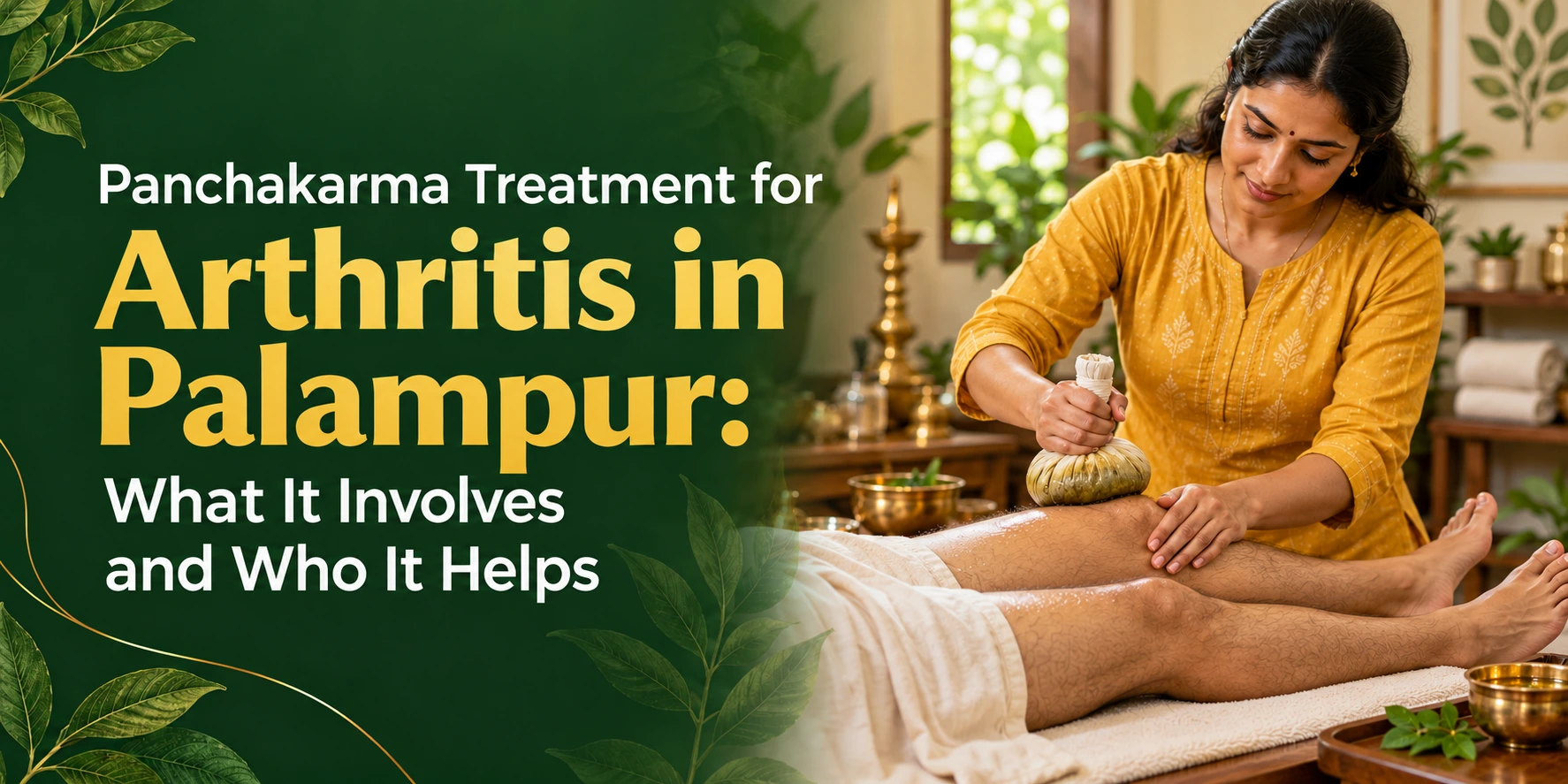
Panchakarma is an Ayurvedic course of oleation therapies, herbal steaming, medicated enemas (basti) and diet changes that some people use alongside regular medical care to manage arthritis pain and stiffness. At a centre in Palampur, a typical arthritis programme runs 14 to 21 days. It is not a cure and it should not replace prescribed arthritis medicines. What it may offer is better mobility, less stiffness and a plan you can continue at home. The right programme depends on which type of arthritis you have, so a proper examination comes first.
Key takeaways
'Arthritis' covers more than 100 conditions. Ayurveda treats osteoarthritis, rheumatoid arthritis and gout very differently.
The core therapies are oil massage, localised warm-oil treatments, herbal poultices and a basti course. Some people also receive virechana.
Evidence is limited. Small studies suggest benefit for pain and function in some people, but the quality of research is mixed.
Never stop disease-modifying drugs (like methotrexate), steroids or gout medicine without your doctor's agreement.
Palampur's cool, clean setting suits the rest-heavy routine, though winter damp can aggravate joint pain, so timing matters.
A first consultation should include history, joint examination, and a review of your blood tests and scans.
What is arthritis, and why does the type matter?
Arthritis simply means inflammation or damage in a joint. The cause is what matters for treatment.
If you have not been diagnosed, get a diagnosis first. Rheumatoid and psoriatic arthritis can damage joints permanently if untreated, and early use of proper medicines changes the outcome. A Vaidya who tells you to skip a rheumatology visit is not a good partner for your care.
How does Ayurveda understand arthritis?
Ayurveda describes joint disease mainly through three classical conditions.
Sandhigata vata is roughly matched to osteoarthritis. The idea is that vata, the dry, cold, moving principle, increases with age and depletes the lubricating tissue in the joint.
Amavata is the closest classical match to rheumatoid arthritis. It is described as the combination of ama (undigested metabolic residue from weak digestion) with aggravated vata lodging in the joints, causing pain, swelling and heaviness.
Vatarakta is usually matched to gout. Here vata and impure blood are thought to obstruct each other in the joints.
These are traditional frameworks, not laboratory diagnoses. A good centre will use them to plan therapy while still reading your X-rays, ESR, CRP, uric acid and rheumatoid factor in the usual way.
Which Panchakarma therapies are used for arthritis?
Not every patient gets every therapy. Here are the ones most often used and what each is meant to do.
Abhyanga and swedana
A warm medicated oil massage followed by herbal steam. Together they ease stiffness, improve circulation and prepare the tissues for deeper therapy. For osteoarthritis, sesame-based oils such as Mahanarayan taila are commonly used.
Janu basti, Kati basti and other local pooling therapies
A ring of dough is fixed around the knee (janu basti) or lower back (kati basti) and filled with warm medicated oil for 30 to 45 minutes. It is one of the most requested knee-arthritis treatments. It is gentle, and most people find it soothing. Patients whose pain is mainly in the spine may like to read about back and spine protocols.
Patra pinda sweda and pinda sweda
Bundles of herbs or cooked rice (shashtika shali pinda sweda) are heated in oil or milk decoction and pressed over the joints. The rice-bundle version is often used in conditions with muscle wasting and dryness. Leaf-bundle therapy is more common for stiff, painful joints.
Upanaha
A warm herbal paste is applied over a swollen joint and bandaged for several hours. It is used for localised swelling and pain.
Basti (medicated enema)
In Ayurveda, basti is the main treatment for vata disorders, and most joint conditions involve vata. Two types are usually combined:
Anuvasana basti: a small amount of medicated oil, which nourishes and lubricates.
Niruha (asthapana) basti: a larger herbal decoction with honey, salt and oil, which cleanses.
A course commonly runs 8 or 16 days, alternating the two. Studies on basti for arthritis exist but are small, so it should be presented as a promising traditional therapy, not a proven treatment.
Virechana
A controlled medicated purgation. It is more often used in conditions linked to heat and inflammation, such as gout or some forms of rheumatoid disease, after proper preparation.
Raktamokshana
Bloodletting, via leech therapy or small punctures, is sometimes used for localised hot, swollen joints in gout. It is a specialist procedure, not routine, and a reason to ask about the physician's experience.
Agnikarma
A fine, heated metal probe is touched to points around a painful joint. It is used for stubborn localised pain. It is quick and done with care, but some people prefer to skip it.
What does an arthritis programme look like day to day?
A sample 14-day plan for knee osteoarthritis might look like this. It will be adjusted for you.
A first-timer who wants to know what the rhythm of the day feels like can read this first-timer's day-by-day walkthrough.
What about diet?
Food is a big part of the plan, and rheumatoid arthritis in particular is linked in Ayurveda to poor digestion.
Usually encouraged
Warm, freshly cooked food
Moong dal, rice, cooked vegetables like bottle gourd and ridge gourd
Ginger, cumin, turmeric and garlic in cooking
Warm water through the day
Ghee in measured amounts
Usually reduced or avoided
Cold, raw and refrigerated food
Curd at night, sour pickles, fermented food
Fried and processed snacks
Excess red meat (especially for gout)
Alcohol, sugary drinks
Late dinners and heavy meals
For gout specifically, modern guidance also says to limit alcohol (especially beer), organ meats and sugary drinks, and to stay well hydrated. Ayurvedic and modern advice largely agree here.
Does excess weight make a difference?
Yes, and it is one of the most useful pieces of advice a doctor can give. For knee osteoarthritis, every extra kilogram of body weight is estimated to add several kilograms of load across the knee with each step. Losing even 5 to 10 per cent of body weight can reduce pain. If that applies to you, see our guide on how excess weight loads your joints and how a supervised programme can help.
Can Panchakarma replace my arthritis medicines?
No. This is the most important safety point in the article.
Rheumatoid arthritis: DMARDs such as methotrexate and biologics protect joints from permanent damage. Stopping them can cause flares and irreversible harm. Panchakarma, if used, should sit beside them.
Gout: Uric-acid lowering drugs such as allopurinol or febuxostat prevent attacks and kidney damage. Do not stop them without advice.
Osteoarthritis: Painkillers, physiotherapy and weight management remain the base. Panchakarma may add comfort and function.
Steroids: Never stop suddenly. This can be dangerous.
A reputable centre will ask for your reports, speak with your doctor if needed, and aim to reduce reliance on medicines only when your own doctor agrees.
What does the research say?
Honest answer: promising but incomplete.
Some small randomised and observational studies from India report improvement in pain, stiffness and joint function in knee osteoarthritis and rheumatoid arthritis with Panchakarma-based programmes.
Many studies are short, small or not well blinded, so it is hard to separate the effect of the therapy from rest, attention and diet change.
Larger, better-designed trials are still needed.
What this means for you: it is reasonable to try as a complement if you are well screened, supervised and keep up your medical care. It is not reasonable to expect a guaranteed result or to abandon proven treatment.
Who is most likely to benefit?
People who tend to report good experiences include those with:
Mild to moderate knee, hip or hand osteoarthritis
Chronic stiffness that responds to warmth and oil massage
Rheumatoid arthritis that is under medical control but with lingering stiffness and fatigue
Gout in between attacks, as a lifestyle and diet reset
Wear-and-tear neck or spine problems
People who need caution or a different route:
A hot, red, swollen joint with fever (see a doctor today; this may be an infection)
Severe joint deformity or advanced bone loss, where surgery may be the right option
Uncontrolled diabetes, heart disease or kidney disease
Pregnancy
Active infection or very high inflammatory markers without medical review
Psoriatic arthritis: a special case
If your arthritis comes with scaly skin patches, nail pitting or swollen 'sausage' fingers, it may be psoriatic arthritis. This needs rheumatology care. Ayurvedic therapies are sometimes added for joint comfort and skin balance. Read more about autoimmune skin conditions like psoriasis and how they are approached.
Why consider Palampur for arthritis care?
Clean, calm environment. Joint pain is aggravated by stress and poor sleep. A rested nervous system helps.
Moderate climate for much of the year. Spring and early autumn are the most comfortable seasons. Winters can be chilly and damp, which many arthritis patients find uncomfortable, so choose a centre with heated rooms.
Gentle walking terrain. Flat garden paths and nearby tea estates allow slow daily walks. Avoid steep climbs if your knees are painful.
Distance from daily routine. Being away from work and household demands means you actually follow the schedule.
Stress, sleep and joint pain
Pain and poor sleep feed each other. Many arthritis patients report anxiety, especially around flares. Practices like shirodhara, pranayama and a regular bedtime can lower the pain you feel. Our article on sleep and anxiety support explains these in more detail.
What happens after the programme?
The weeks after you leave matter as much as the days spent at the centre.
Follow the recovery diet for the period your Vaidya advises.
Do daily self-massage with warm sesame oil on painful joints before bathing.
Keep moving gently. Walking, swimming and low-impact yoga protect joints. Avoid deep squatting or sitting cross-legged for long if your knees hurt.
Keep your medical appointments, blood tests and scans.
Book a review at 4 to 6 weeks to judge what worked.
Consider repeat courses for chronic cases, usually once or twice a year, if you found them helpful.
What does it cost, and how do I choose a centre?
Prices vary widely by room type, length and therapies. Compare on what is included rather than on headline price alone. Ask about:
Doctor qualifications and registration
Whether the physician examines you personally
Whether treatments are personalised
Whether diet, medicines and follow-up are included
How emergencies are handled
Whether the centre will coordinate with your own doctor
Be wary of anyone who promises to 'cure arthritis permanently', asks you to stop your medicines, or sells the same package to everyone.
Frequently asked questions
Can Panchakarma cure arthritis?
No. Panchakarma may help reduce pain and stiffness and improve movement for some people, but it does not reverse cartilage loss or cure autoimmune arthritis. It works best as a complement to standard care.
How long does Panchakarma take for arthritis?
Most arthritis programmes run 14 to 21 days. Chronic cases often need repeat courses and home care, discussed after review.
Is Panchakarma good for knee pain?
Many people with knee osteoarthritis find janu basti, oil massage and basti courses helpful for comfort and movement. Results vary and it works better alongside weight management and strengthening exercises.
Which Ayurvedic treatment is best for rheumatoid arthritis?
There is no single best treatment. Traditional approaches begin with improving digestion and clearing ama, and then use therapies like basti and herbal medicines. They should be combined with, not replace, rheumatology treatment.
Can Panchakarma reduce uric acid?
Diet changes, weight loss, hydration and certain therapies may help some people, but there is little firm evidence that Panchakarma alone lowers uric acid reliably. Keep taking prescribed medicine and recheck blood levels.
Is Panchakarma safe for older adults?
Often yes, with modified, gentler programmes and careful monitoring. Heart, kidney and blood pressure status must be checked first.
Will I feel worse before I feel better?
Some people feel tired, heavy or have temporary body aches in the first week as the body adjusts. A true flare, with a hot, red, severely swollen joint, needs medical attention.
Can I do Panchakarma during a flare?
Usually not. Your Vaidya will normally wait until the acute flare settles, and your regular doctor should handle the flare first.
Is there an age limit for Panchakarma?
There is no strict age limit, but therapies are adapted for children and for the very elderly.
How do I know if I am a good candidate?
Book a consultation. A good candidate is medically stable, willing to follow diet and rest guidance, and keeping up their conventional care.
Finding Ayurvedic arthritis care in Palampur
If you are searching for Ayurvedic treatment for arthritis in Himachal, look for a centre that examines your joints, reviews your reports and works alongside your own doctor. When you are ready, you can book a Panchakarma consultation in Palampur and bring your scans and medicine list.
Related guides you may find useful:
Spine or sciatica pain on top of joint pain: Ayurvedic treatment for back pain in Palampur
Extra weight on painful knees: Panchakarma weight loss programme in Palampur
Pain that disturbs your sleep or mood: Panchakarma for anxiety and sleep problems
Book a consultation for arthritis in Palampur
If you want to find out whether Panchakarma suits your type of arthritis, start with a conversation. Bring your reports, scans and a list of medicines. At Ketav's Ayush Health Paradise, the first consultation covers your history, a joint examination, a review of your tests and a clear explanation of whether a programme makes sense, how long it would run and what it will cost.
Call or WhatsApp +91 88943 56919, email info@ayushpanchkarma.com (or doctor@ayushpanchkarma.com for medical questions before your visit), or visit ayushpanchkarma.com to book your consultation.
Address: V.P.O. Gopalpur, Tehsil Palampur, District Kangra, Himachal Pradesh 176061, India
If you have back pain on top of joint pain, our guide to back and spine protocols may also help you plan.
Medical disclaimer: This article is for general education and does not replace advice from your doctor. Arthritis is a medical condition that needs proper diagnosis. Do not stop or change prescribed medicines without consulting your physician. Seek urgent care for a hot, swollen joint with fever, sudden severe pain or inability to bear weight.