
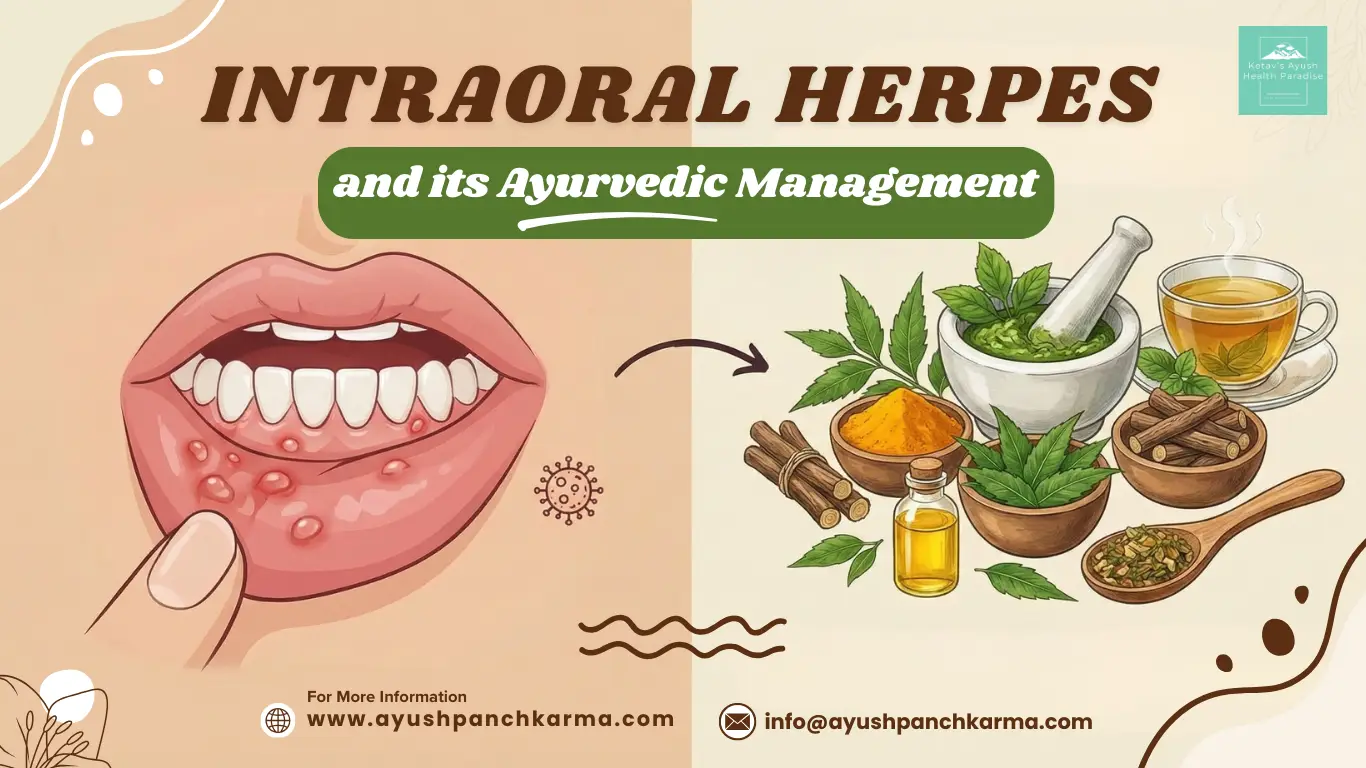
Intraoral herpes is a very common mouth infection caused by the Herpes simplex virus -1(HSV -1). It causes small, fluid-filled blisters to develop around or inside the lips or inside the mouth. These are commonly known as cold sores.
What is Intraoral Herpes?
Intraoral Herpes is one of the most common oral infections worldwide, caused by the Herpes Simplex Virus Type 1 (HSV-1). It produces small, fluid-filled blisters that develop on or inside the lips, gums, roof of the mouth, and surrounding facial skin. These are widely known as cold sores or fever blisters.
While Intraoral Herpes is generally a benign viral condition, it causes significant pain, discomfort, and frequently unsightly sores that affect daily life, eating, and self-confidence. After the initial infection, HSV-1 becomes dormant in the facial nervous tissue and can be reactivated at any time by certain triggering factors — causing recurring outbreaks.
With the right Ayurvedic treatment approach, it is possible to manage outbreaks effectively, strengthen the immune system to keep the virus dormant, and significantly reduce the frequency and severity of recurrences. Learn how our specialised Ayurvedic treatments at Ayush Panchkarma address the root cause of this condition.
Causes and Transmission of Intraoral Herpes
Understanding how HSV-1 spreads is essential for prevention. Common causes and routes of transmission include:
- Close personal contact with an infected individual — kissing, sharing food, drinks, or utensils
- Touching contaminated objects such as razors, towels, or dishes used by an infected person
- Parent-to-child transmission during routine daily contact and caregiving
- HSV-2 (genital herpes virus) can sometimes spread to the mouth during oral sex, causing oral herpes
- The virus is actively shed into saliva during outbreaks, making oral contact the primary route of spread
- Individuals with active sores should avoid close contact with infants and immunocompromised individuals, who are at highest risk of serious complications
Signs and Symptoms of Intraoral Herpes
Symptoms of Intraoral Herpes typically appear within 1 to 3 weeks after initial exposure and may last up to three weeks. Some individuals experience no symptoms at all during first infection; others have mild to severe presentations.
Common signs and symptoms include:
- Itching, burning, or tingling sensation on or around the lips and inside the mouth — often the earliest warning sign before blisters appear
- Sore throat, fever, swollen lymph glands, or painful swallowing in the prodromal phase
- Appearance of blisters or a rash on the gums, lips, mouth, throat, or palate
- Red blisters that break open and weep fluid (these are called an "outbreak")
- Small blisters filled with clear or yellowish fluid
- Smaller blisters merging into one large blister
- Blisters that turn yellow and crusty as they heal, eventually resolving into pink skin
Triggering Factors for Recurrent Outbreaks
Once HSV-1 is established in the nervous tissue, outbreaks can be triggered by a wide range of physical and emotional stressors:
- Hormonal changes — particularly around menstruation
- Excessive sun exposure, heat, wind, or cold
- Physical or emotional stress
- Fever or systemic illness
- Surgical procedures or trauma
- Immunosuppressant medications
- Lack of sleep and chronic fatigue
- Irritants like prolonged UV exposure
Managing these triggering factors — through Ayurvedic lifestyle guidance, stress reduction practices, and immune-strengthening Rasayana therapies — is central to preventing recurrent outbreaks. Our customised yoga and meditation programmes are particularly effective in reducing stress-triggered recurrences.
Diagnosis of Intraoral Herpes
Diagnosis is primarily clinical — based on the patient's history, location of lesions, and characteristic appearance of the sores. In most cases, no further investigation is required.
For patients with atypical presentations or suspected recurrent Intraoral Herpes, additional investigations may include cytology evaluation, biopsy, and PCR (Polymerase Chain Reaction) assessment for confirmatory diagnosis.
How to Differentiate Intraoral Herpes from Canker Sores
These two conditions are frequently confused. Here is how to tell them apart:
Location: Intraoral Herpes lesions form on firmly attached, keratinised (bone-bearing) tissues — gums and the roof of the mouth — tightly bound to underlying bone. Canker sores form on loose, non-keratinised tissues anywhere in the oral cavity.
Recurrence pattern: Herpes sores recur at the same location each time. Canker sores can recur anywhere in the mouth.
Cause: Intraoral Herpes is definitively caused by HSV-1. The cause of canker sores is not clearly established — they are associated with stress, fatigue, hormonal changes, or minor trauma.
Contagiousness: Herpes sores are contagious. Canker sores are not.
Prevention — How to Reduce Outbreaks and Stop Spread
Both public education and personal hygiene play a vital role in controlling Intraoral Herpes:
- Limit personal contact (especially transfer of saliva) while lesions are active
- Develop awareness of your personal outbreak triggers and apply prophylactic measures
- Apply soothing agents like coconut oil or ice for symptomatic relief during outbreaks
- Wash towels and linens in hot water after each use during an active outbreak
- Do not share utensils, glasses, straws, or food items with others
- Avoid hot, spicy, salty, or citrus foods that irritate active sores
- Gargle with cool water frequently to soothe the oral mucosa
- Avoid oral sex during active outbreaks — the virus can be transmitted to the genitals
Ayurvedic Understanding of Intraoral Herpes — Mukhapaka
The rising prevalence of oral health problems in modern times is closely linked to increasing pollution, fast-paced stressful lifestyles, junk food habits, and addictions that progressively compromise immunity and oral hygiene. Ayurveda recognised and documented this condition thousands of years ago.
In classical Ayurvedic texts, the signs and symptoms of Intraoral Herpes correlate with the condition described as Mukhapaka — defined as vedana (pain) and shopha (inflammation) with vrana (ulcers or wounds) in the mukha guha pratyangas (oral cavity).
Charaka, Sushruta, and Madhava Nidana described three types of Mukhapaka based on Dosha involvement. Vagbhata expanded this to five types:
- Vataja Mukhapaka — dry, painful, with cracking and stiffness
- Pittaja Mukhapaka — burning, yellowish, with intense inflammation
- Kaphaja Mukhapaka — wet, sticky, with thick discharge
- Raktaja Mukhapaka — bleeding, deeply inflamed
- Sannipataja Mukhapaka — involving all three Doshas simultaneously (most complex)
Pathophysiology: Causative factors vitiate the Doshas, which then lodge in the Dhatus (tissues) of the oral cavity and produce ulcers, sores, and inflammation — correlating precisely with the modern understanding of HSV-1 reactivation in local nerve and tissue structures.
Ayurvedic Treatment for Intraoral Herpes at Ayush Panchkarma
At Ketav's Ayush Health Paradise, our treatment protocol for Intraoral Herpes follows a structured three-stage approach aligned with classical Ayurvedic principles — tailored to the patient's Prakriti, Dosha involvement, severity, and immune status. All treatment begins with a thorough Nadi Pariksha (pulse diagnosis) and Prakriti assessment.
Stage 1 — Shamana (Palliative Treatment) for Acute Cases
For recent-onset or mild presentations of oral herpes, Shamana (palliative) therapy is the first line of intervention. This includes:
- Gandusha (oil pulling) and Kavala (medicated gargling) — powerful Ayurvedic oral therapies that reduce inflammation, cleanse the oral mucosa, and accelerate healing of active sores
- Local Kalka (herbal paste) applications using ingredients with proven anti-inflammatory and antiviral properties — including coconut oil, butter, Neem, Chandana (sandalwood), Daruharidra, Khadira, Madhu (honey), Yashtimadhu (liquorice), and Tila (sesame)
- Oral Ayurvedic herbal supplements — Amla (Amalaki), Tulsi, Guduchi, Neem, Shallaki, and Mulethi — chosen for their immunomodulatory, antiviral, and anti-inflammatory properties
These therapies are available as part of our classic Ayurvedic treatments.
Stage 2 — Shodhana (Purificatory / Detoxification Treatment) for Chronic Cases
In cases of chronic, recurrent, or severe Intraoral Herpes, deeper intervention through Shodhana (Panchakarma detoxification therapy) is recommended. The body is systematically prepared through Purvakarma (preparatory therapies), followed by complete Panchakarma detoxification to:
- Achieve Dosha balance at a deep systemic level
- Remove accumulated Ama (toxins) from the body's channels
- Address the underlying immunological weakness driving frequent recurrence
Our classical Panchakarma treatments — including Vamana, Virechana, Basti, and Nasya — are selected based on the predominant Dosha imbalance identified during consultation.
Stage 3 — Rasayana (Immune Rejuvenation Therapy)
Reduced immunity is the central reason why the dormant HSV-1 virus reactivates and causes repeated outbreaks. Rasayana (rejuvenation) therapy directly addresses this root vulnerability by rebuilding the body's immune reserve (Ojas).
Classical Rasayana formulations such as Giloy (Guduchi), Brahma Rasayana, and Amalaki Rasayana are administered to:
- Boost and regulate the immune system
- Keep the HSV-1 virus in a dormant, non-reactivating state
- Rebuild strength, vitality, and resistance to triggering factors
Explore our Rasayana and rejuvenation treatment programmes to understand how immune rebuilding forms the foundation of long-term herpes management.
Integrated Holistic Programme
Beyond the three therapeutic stages, every patient's plan at Ayush Panchkarma includes:
- Ahara-Vihara (therapeutic diet and daily routine) — avoiding trigger foods and following a Prakriti-specific anti-inflammatory diet prepared fresh in our in-house kitchen
- Yoga and Pranayama — to manage stress (one of the strongest reactivation triggers) and support immune function
- Dhyana (meditation) — to build mental resilience and reduce emotional stress-driven outbreaks
Our customised Panchakarma retreat packages integrate all these elements into a seamless healing programme.
For patients requiring residential treatment, our homestay facility in Palampur offers a peaceful, Himalayan healing environment with Ayurvedic meals and a structured daily routine.
"Panchakarma roots out all toxins from body and mind, fights aging, and gives longevity of life."
Book Your Free Consultation Today | Call: +91 8894356919
Related reading: Ayurvedic Treatment for Thyroid Disorders | Ayurvedic Treatment for Anxiety and Depression | Ayurvedic Treatment for Migraine and Chronic Headaches